
Botswana drug shortages deepen as diamond slump squeezes state procurement
Patients pushed into private medicine markets despite universal-care promise, decade-old reform warnings sit unanswered
Images
 Boitumelo Mosege shows the growing lump on her neck after months without consistent access to her prescribed medication. Photograph: Kefilwe Monosi/The Guardian
theguardian.com
Boitumelo Mosege shows the growing lump on her neck after months without consistent access to her prescribed medication. Photograph: Kefilwe Monosi/The Guardian
theguardian.com
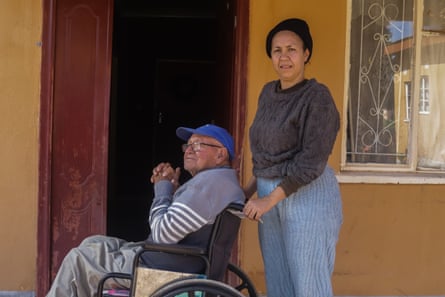 Kelly Jansen has become the full-time caregiver for her 83-year-old father, Gerhardus Jansen. Photograph: Kefilwe Monosi/The Guardian
theguardian.com
Kelly Jansen has become the full-time caregiver for her 83-year-old father, Gerhardus Jansen. Photograph: Kefilwe Monosi/The Guardian
theguardian.com
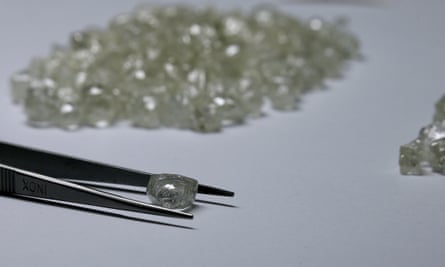 Diamonds on display in Gaborone. Photograph: Siphiwe Sibeko/Reuters
theguardian.com
Diamonds on display in Gaborone. Photograph: Siphiwe Sibeko/Reuters
theguardian.com
 Oratile Olorato Kgatle has been applying for public relations jobs for 18 months and her mental health has suffered. Photograph: Kefilwe Monosi/The Guardian
theguardian.com
Oratile Olorato Kgatle has been applying for public relations jobs for 18 months and her mental health has suffered. Photograph: Kefilwe Monosi/The Guardian
theguardian.com
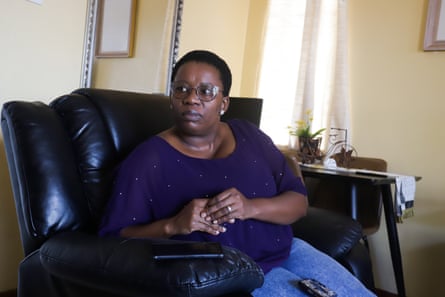 Phenyo Tanka has not found a job since graduating in agriculture in 2011, despite applying for numerous positions in the sector. Photograph: Kefilwe Monosi/The Guardian
theguardian.com
Phenyo Tanka has not found a job since graduating in agriculture in 2011, despite applying for numerous positions in the sector. Photograph: Kefilwe Monosi/The Guardian
theguardian.com
Natural diamond prices have fallen sharply over the past four years, and in Botswana the consequences are now showing up in pharmacy queues rather than trading screens. According to The Guardian, patients who expected universal free care are being told to buy basic medicines themselves, while the state procurement system struggles to keep shelves stocked.
One woman near Molepolole, diagnosed with hyperthyroidism, told the paper she has received medication only sporadically through the public system and has gone months without buying it privately because the cost exceeds what her family can reliably raise. Another household described spending a large share of an elderly man’s pension on supplies that are supposed to be routine in a functioning primary-care system. The shortages are not new: President Duma Boko declared a public health emergency in 2023 after essential medicines and supplies ran short, and he has blamed the Central Medical Stores (CMS), the state agency responsible for procurement, for raising drug prices.
The diamond slump turns what might otherwise be a management problem into a budgetary one. Diamonds make up the bulk of Botswana’s exports, and the downturn has fed into higher unemployment and weaker public finances just as the health system needs predictable purchasing power. When a single buyer base and a single commodity underwrite a large share of state capacity, procurement becomes the first place where delays and opaque decisions translate into direct harm: tenders stall, inventories run down, and patients are pushed into out-of-pocket markets where only some can pay.
The Guardian reports that health procurement has been dysfunctional for years, with a University of Botswana health policy lecturer saying the CMS’s problems have been known since at least 2010 and that a government report that year recommended wide-scale reforms. A procurement agency that can operate for more than a decade with acknowledged structural faults is, in practice, protected by the fact that it is the only gate through which public money can buy medicine. When revenue is plentiful, that protection looks like stability; when revenue tightens, it looks like rationing.
Botswana’s broader story makes the contrast starker. The country moved from deep poverty at independence to one of Africa’s higher GDP-per-capita levels, and the diamond era funded free schooling and major public-health campaigns, including against HIV/AIDS. Yet the same reporting notes maternal death rates remain higher than in similarly wealthy countries, suggesting that income levels do not automatically deliver dependable services when the plumbing of procurement and logistics is weak.
In Molepolole, the immediate question is not whether diamonds recover, but whether the next clinic visit ends with a prescription that can actually be filled.