
Amivantamab injection clears tumours in head-and-neck cancer trial
Results presented at ASCO after chemotherapy and immunotherapy resistance, complete responses arrive alongside a mass rollout of new oncology shots
Images
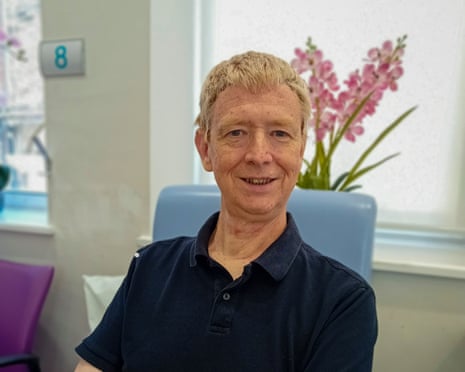 Carl Walsh, 56, who was diagnosed with tongue cancer in May 2024, joined the OrigAMI-4 trial at the Royal Marsden in July 2025. Photograph: Handout
theguardian.com
Carl Walsh, 56, who was diagnosed with tongue cancer in May 2024, joined the OrigAMI-4 trial at the Royal Marsden in July 2025. Photograph: Handout
theguardian.com
Fifteen of 102 patients in an international head-and-neck cancer trial saw their tumours disappear after receiving a new “triple-action” injection, according to results reported by The Guardian ahead of a presentation at the American Society of Clinical Oncology meeting in Chicago. The drug, amivantamab, was tested in people whose cancer had spread or returned after standard treatment and who were resistant to both chemotherapy and immunotherapy. In total, tumours shrank or vanished in 43 patients.
The numbers are small, but the patient group is the kind oncology trials often struggle to help: people who have already “failed” the established options and are running out of lines of therapy. The Guardian reports that the treatment is given as a small injection under the skin once every three weeks, rather than as an intravenous infusion, and that most side effects were mild to moderate, with fewer than one in ten patients stopping because of adverse effects. If those practical advantages hold up, they matter as much as the response rates: clinics can deliver a subcutaneous jab with less chair time than an infusion, and patients can stay on treatment longer when the side-effect burden is lower.
Amivantamab was developed by Johnson & Johnson and is being evaluated across dozens of trials, mostly in lung cancer but also in other tumour types, The Guardian reports. The mechanism described—blocking EGFR and MET pathways while also activating immune attack—fits the industry’s current direction: combine targeted interference with tumour growth signals and immune engagement, then search for the subgroups that respond dramatically. That search can cut both ways. A drug that produces complete responses in a minority can become a new standard for that niche, but it also creates pressure to expand use beyond the patients most likely to benefit, particularly when the headline number is “tumours eradicated.”
The Guardian’s story centres on Carl Walsh, diagnosed with tongue cancer in 2024 and enrolled in the OrigAMI-4 trial at the Royal Marsden in 2025 after chemotherapy and immunotherapy did not work. He told the paper he could speak and eat more easily after swelling and pain eased, and that he experienced fewer life-disrupting effects than with chemotherapy. For now, his experience is being used to illustrate a broader claim that Professor Kevin Harrington of the Institute of Cancer Research and the Royal Marsden called an “unprecedentedly strong” response in a hard-to-treat population.
The trial results are being unveiled at a major oncology conference, but the next test will be whether the same kind of complete responses appear again when the drug is used outside a tightly controlled study. In the meantime, the most concrete figure in the report remains unchanged: 15 patients in a 102-person trial had no detectable tumours after treatment.