
US labels Brazil PCC and Comando Vermelho terrorist groups
State Department expands material-support penalties and bank-risk pressure, election-season meeting politics shadow the designation
Images
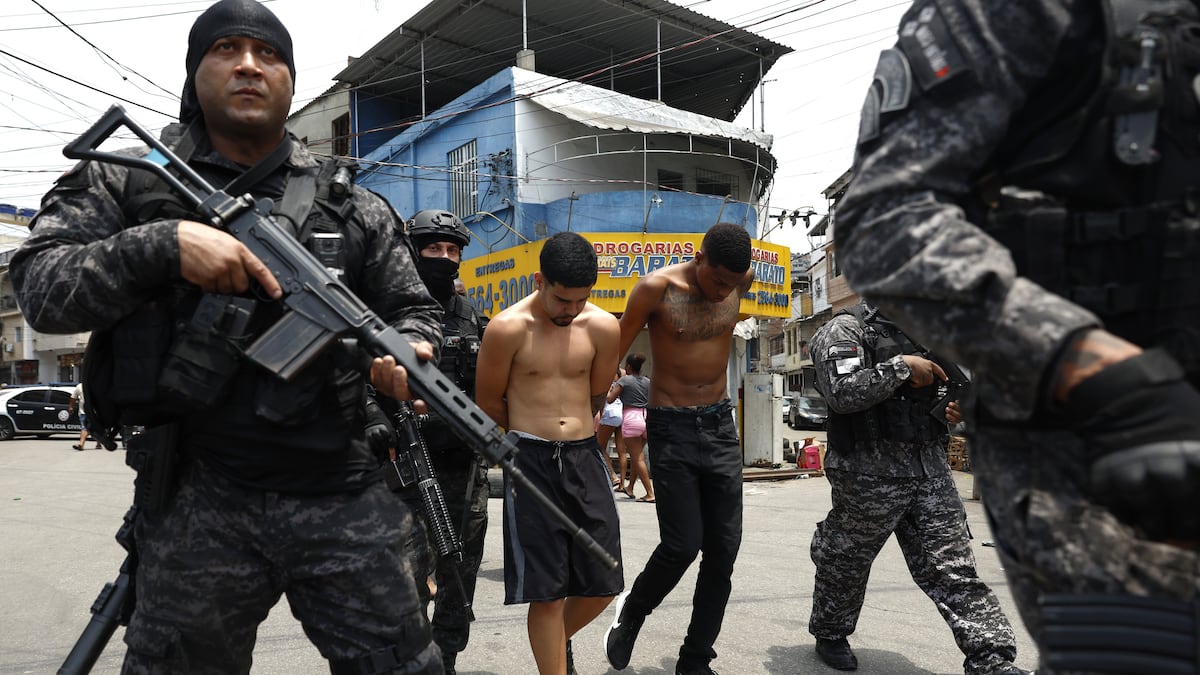 United States designates two Brazilian criminal gangs as terrorist organizations
english.elpais.com
United States designates two Brazilian criminal gangs as terrorist organizations
english.elpais.com
 bnonews.com
 bnonews.com
 bnonews.com
 bnonews.com
 bnonews.com
The US State Department says it will add Brazil’s Comando Vermelho and Primeiro Comando da Capital to its list of Foreign Terrorist Organizations effective June 5, expanding a Trump-era practice of treating major criminal networks as terrorism cases. According to El País, the move lands four months before Brazil’s 2026 presidential election and follows a private Oval Office meeting in which Senator Flávio Bolsonaro asked President Donald Trump to make the designation.
The designation matters less for symbolism than for what it enables. A Foreign Terrorist Organization listing brings criminal penalties for “material support” and broadens the legal room to target people and entities accused of assisting the groups; the State Department had already designated both gangs as Specially Designated Global Terrorists, a step that allows asset freezes under US jurisdiction and bans US persons from doing business with them, BNO News reports. In practice, that pushes banks, payment intermediaries, and counterparties to over-comply, because the cost of getting it wrong is measured in investigations and lost access to US markets. Brazil’s government, which opposed the move, has argued it could spill into sanctions pressure on financial institutions and create a pretext for US operations that Brasília neither requests nor controls.
Washington’s public rationale is that the groups are among Brazil’s most violent criminal organizations and that their networks extend through Latin America and into the United States, as Secretary of State Marco Rubio put it in the announcement cited by both outlets. Brasília’s rebuttal is narrower: Comando Vermelho and PCC are profit-driven criminal enterprises, not ideology-driven insurgents, and the terrorism label does not fit Brazilian law. That legal mismatch is not a technicality; it determines whether Brazilian prosecutors, judges, and police can treat US requests as routine cooperation or as an attempt to import a different legal regime through finance and diplomacy.
The timing also exposes how the designation tool has become portable across theatres. El País notes that the Trump administration has used similar labels in the region to justify actions that go well beyond financial disruption, including the operation that captured Venezuela’s Nicolás Maduro earlier this year after he was designated as the leader of the Cartel of the Suns. The same reporting describes US strikes on suspected narco-speedboats in international waters that critics, including Democratic lawmakers, have called extrajudicial killings, with Washington not publicly presenting evidence linking the targeted vessels or crews to drug trafficking.
For Brazil, the immediate question is not whether PCC and Comando Vermelho are violent—they are—but which country gets to decide what violence counts as “terrorism,” and what enforcement follows from that definition. The State Department’s notice sets an effective date; the downstream compliance memos at banks and the next set of US requests to Brazilian authorities will arrive quietly after June 5.