
Hungary seeks EU deal to unfreeze billions
Péter Magyar meets Ursula von der Leyen as Recovery Fund deadline nears, grants move faster than constitutional reforms
Images
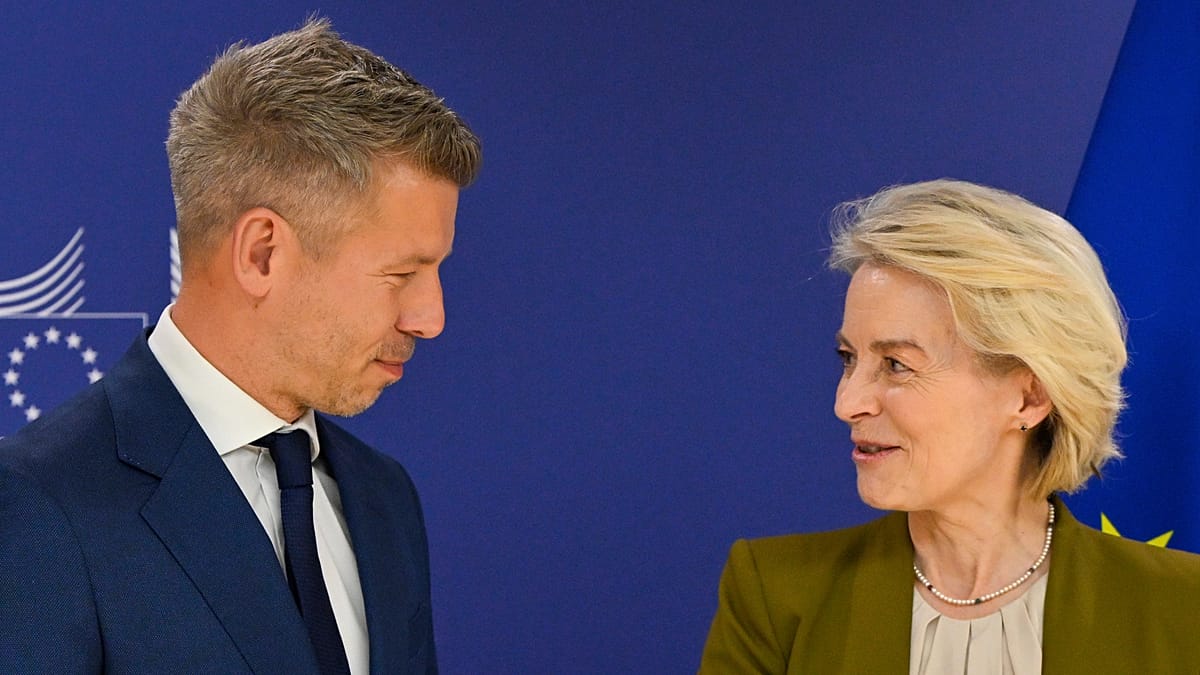 Magyar says Hungary and EU 'close to a deal' on releasing frozen cash
euronews.com
Magyar says Hungary and EU 'close to a deal' on releasing frozen cash
euronews.com
Hungary’s new prime minister Péter Magyar is set to meet European Commission president Ursula von der Leyen in Brussels on Friday, as Budapest makes a last-minute push to unlock EU money frozen during Viktor Orbán’s 16-year rule. According to Euronews, negotiators are trying to salvage as much as possible of roughly €17 billion withheld over rule-of-law and corruption concerns, with parts tied to the EU’s post-pandemic Recovery Fund and cohesion funding.
The talks are happening under a clock that Brussels built into the system. Hungary risks losing part of its Recovery Fund allocation if it fails to meet an end-of-August deadline, and the Commission has urged Budapest to prioritise the non-refundable grant portion rather than the loan component. Euronews reports that members of Magyar’s government held talks with Commission officials on Thursday focused on the Recovery Fund, and that Hungary has already received an advance payment. That structure matters: grants are politically easier to sell at home, while loans add debt and invite scrutiny over what exactly is being financed.
Magyar is also negotiating over how much “reform” is real and how much is paperwork that can be checked off. Euronews says agreement has been reached on conditions relating to the governance of public-interest foundations and on extending the mandate of Hungary’s Integrity Authority, the anti-corruption body created under EU pressure. But other money remains tied to reforms that are politically sensitive inside Hungary, including changes to anti-LGBTIQ+ legislation, asylum rules, and restoration of academic freedom. One option, Euronews notes, is to abandon the recovery loan and the most contentious cohesion-fund conditions, securing a smaller but more achievable tranche.
For Brussels, the incentive is not just to punish past behaviour but to bring a difficult member state back into the EU’s funding-and-compliance machinery. The Commission has already shown with Poland in 2024 that frozen funds can be released after a change of government and a package of guarantees, and Hungarian officials are clearly trying to replicate that playbook. For Budapest, the incentive is immediate: Magyar has presented the talks as a fight to bring money home and revive the economy, while publicly insisting that the negotiations are “unrelated to Ukraine,” even as Hungary’s positions on Russian energy imports and EU policy toward Kyiv sit in the background of its wider relationship with Brussels.
The unresolved items are the ones that cannot be solved by extending an agency’s mandate or rewriting a governance statute. On Friday afternoon, the argument will come down to how much the Commission is willing to accept on constitutional and politically loaded reforms in exchange for turning the funding tap back on.
Magyar has said recovering all the money may not be realistic. The number that will matter is how much Hungary leaves Brussels with on paper when the meeting ends.