
Yemen former president Abdrabbuh Mansour Hadi dies
Leader spent years in Riyadh exile as war fragmented authority, state mourning marks a title that outlasted control
Images
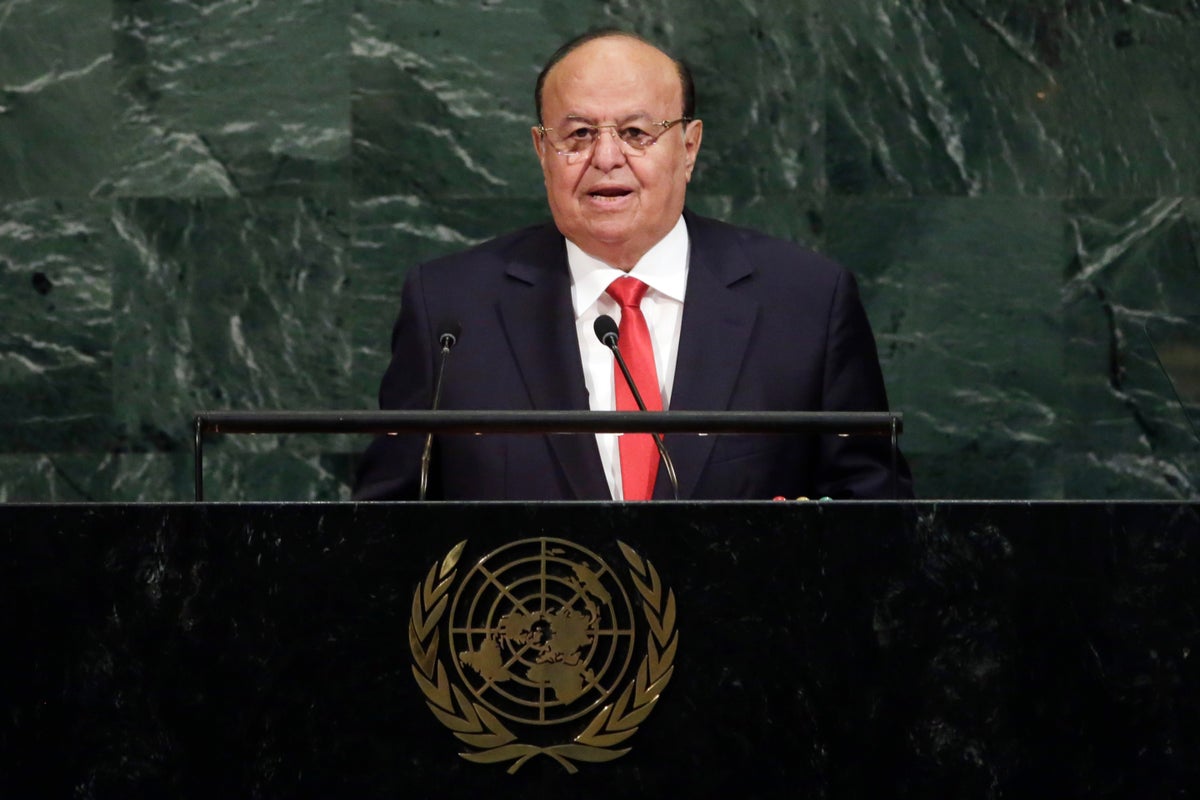 Former Yemen President Abdrabbuh Mansour Hadi, who governed mostly from exile, dies at 80
independent.co.uk
Former Yemen President Abdrabbuh Mansour Hadi, who governed mostly from exile, dies at 80
independent.co.uk
Yemen’s former president Abdrabbuh Mansour Hadi has died in Riyadh, where he spent years in exile while Yemen’s internationally recognised government fractured and the war ground on. Yemen’s state-run television said Hadi died at his residence in the Saudi capital, and the government announced three days of mourning with flags flown at half-staff, according to The Independent. Hadi, who stepped down in 2022, was widely seen as a leader whose formal title outlasted his practical control.
Hadi’s ascent was itself a product of managed transition. He became president in 2012 after Ali Abdullah Saleh resigned during the Arab Spring, emerging as a compromise candidate in a one-person election meant to steer Yemen toward a new political order, The Independent reports. The state he inherited was held together by patronage networks and competing armed factions, and one of Hadi’s early ambitions—unifying disparate forces under a single command—ran into the reality that Yemen’s security institutions were already split along regional and political lines.
The unraveling accelerated in 2014 when Houthi fighters swept south and captured Sanaa amid anger over economic hardship and political instability. By early 2015 the Houthis, backed by forces loyal to Saleh, had taken control of the presidential palace; Hadi resigned, escaped to Aden, then later withdrew his resignation. A Saudi-led coalition intervened in March 2015 to restore his government, but the war that followed pushed decision-making outward: although Hadi remained the internationally recognised president, Saudi Arabia and the United Arab Emirates increasingly shaped what his side could do and where it could operate.
Those external backers did not always pull in the same direction. The Independent describes how Hadi’s authority weakened as the anti-Houthi alliance splintered, including tensions with the UAE after he dismissed senior Emirati-backed figures such as Aidarous al-Zubaidi, who led the separatist Southern Transitional Council. The STC went on to take control of Aden and parts of southern Yemen and refused to place its forces under Hadi’s command, leaving the “government” confined to exile in Riyadh and scattered territory in the east. Even the political accusations were revealing: the STC charged Hadi’s camp with accommodating Islamist factions linked to the Islah party, Yemen’s branch of the Muslim Brotherhood.
By the time Hadi transferred power in 2022 to a Saudi-backed presidential council led by Rashad al-Alimi, his public role had already narrowed. He spent his final years largely out of view in Riyadh, a head of state whose country’s front lines, ports, and militias were negotiated by others.
Yemeni television announced his death from Saudi Arabia, and the government responded with a formal period of mourning.