
Delhi heatwave strains informal workers, BBC reports daily wages override safety advice
Government orders Delhi Gymkhana Club to vacate prime land
Images
 Tuk tuk driver Mohammad Umar had to miss a day of work because he could not cope with the heat
bbc.com
Tuk tuk driver Mohammad Umar had to miss a day of work because he could not cope with the heat
bbc.com
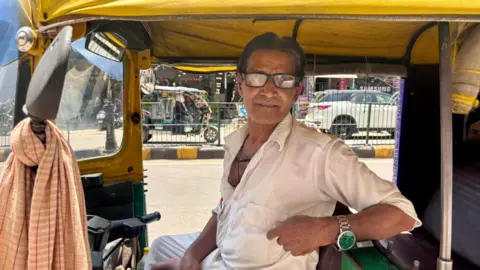 Tuk tuk driver Mohammad Umar had to miss a day of work because he could not cope with the heat
bbc.com
Tuk tuk driver Mohammad Umar had to miss a day of work because he could not cope with the heat
bbc.com
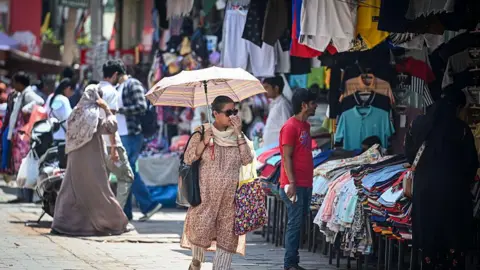 People cover their heads with umbrellas or cotton scarves to avoid direct sunlight
bbc.com
People cover their heads with umbrellas or cotton scarves to avoid direct sunlight
bbc.com
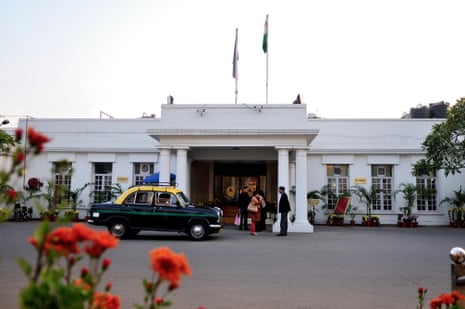 India’s ministry of housing and urban affairs has directed the Delhi Gymkhana Club to hand over its sprawling site in the heart of New Delhi by 5 June, citing urgent public interest requirements. Photograph: Hindustan Times/Getty Images
theguardian.com
India’s ministry of housing and urban affairs has directed the Delhi Gymkhana Club to hand over its sprawling site in the heart of New Delhi by 5 June, citing urgent public interest requirements. Photograph: Hindustan Times/Getty Images
theguardian.com
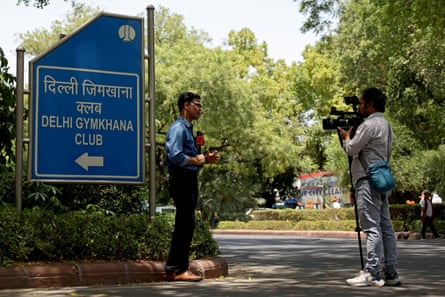 A reporter stands outside the entrance of the exclusive Delhi Gymkhana Club. Photograph: Bhawika Chhabra/Reuters
theguardian.com
A reporter stands outside the entrance of the exclusive Delhi Gymkhana Club. Photograph: Bhawika Chhabra/Reuters
theguardian.com
 An employee draws the curtains in the billiards room at the club. Photograph: Manish Swarup/AP
theguardian.com
An employee draws the curtains in the billiards room at the club. Photograph: Manish Swarup/AP
theguardian.com
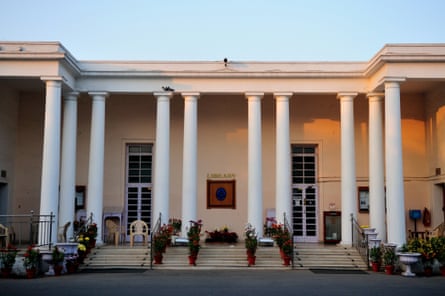 The club, which includes buildings more than a century old, remains one of the most sought after memberships in the capital, with long waiting lists and a reputation as a hub of influence. Photograph: Hindustan Times/Getty Images
theguardian.com
The club, which includes buildings more than a century old, remains one of the most sought after memberships in the capital, with long waiting lists and a reputation as a hub of influence. Photograph: Hindustan Times/Getty Images
theguardian.com
 Since taking office, Modi has positioned himself as a challenger to India’s traditional elites. Photograph: Manish Swarup/AP
theguardian.com
Since taking office, Modi has positioned himself as a challenger to India’s traditional elites. Photograph: Manish Swarup/AP
theguardian.com
Delhi’s thermometers have been touching 45C, and in its busiest markets the contrast is immediate: air-conditioned showrooms behind glass, and outside them cycle-rickshaw drivers and street vendors working in heat above 40C, according to the BBC. The city’s heat season runs from April to early July, but the people who keep the streets moving are paid by the day, not by the forecast.
Nearly 90% of India’s workforce is informal, the BBC reports, meaning most workers have no contract, no sick leave and no job security. The practical instruction to “avoid the afternoon sun” lands differently when a missed shift is a missed meal. The BBC follows a cycle-rickshaw driver who cools himself at a public tap and rests in whatever shade he can find, describing how he sent his wife and children back to a village in Bihar because Delhi’s summer has become harder to bear each year. Another driver says he was forced to stay home after feeling his heart race and his body weaken in the heat.
Officials have plans on paper. The Delhi government issues colour-coded heat alerts and public advisories; heat action plans include water kiosks and cooling centres. Prime Minister Narendra Modi has urged people on X to stay hydrated and watch for heat exhaustion, especially among children and the elderly. But the city’s built environment — concrete, traffic and limited greenery — traps heat, and the people most exposed are those least able to change their routines. Climate scientists cited by the BBC say extreme heat in South Asia is becoming longer, harsher and more unpredictable as global warming intensifies.
The same week, a different part of Delhi’s social map is fighting a different kind of pressure. The Guardian reports that India’s ministry of housing and urban affairs has ordered the Delhi Gymkhana Club — an exclusive institution founded in 1913 on a peppercorn rent — to hand over its 11-hectare site in central New Delhi by 5 June, citing “urgent public interest” needs including defence-related infrastructure. Lawyers sought relief in the Delhi high court, which declined to intervene; the government’s solicitor general told the court any action would be taken strictly in accordance with law.
The club’s amenities — courts, bars, dining rooms, a library and dozens of guest cottages — are not the point of the dispute so much as the land beneath them. In a city where informal workers queue at public taps and improvise shade, the state is also asserting that prime public land used as a private enclave can be reclaimed quickly when strategic needs are invoked. The Guardian notes that membership is difficult to obtain, with waiting lists that can run decades, and that the club’s members include senior civil servants, military officers and business people.
In Delhi, heat safety is framed as personal responsibility while the ability to comply depends on income, housing and access to cooling. And in the capital’s centre, the government is telling one of the country’s most protected social institutions to vacate on a deadline.
On the streets, stopping work still means no earnings. At the club, the court record now includes a date: 5 June.