
Portugal sets May heat record at Mora
Western Europe scrambles with alerts school closures and transport tweaks, exam timetables and televised sport meet the limits of improvised cooling
Images
 bbc.com
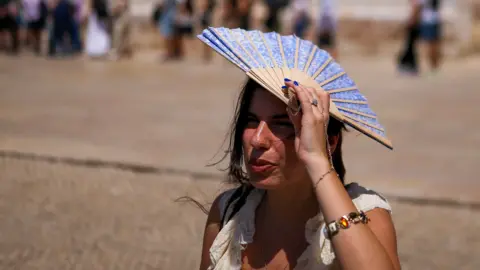 Getty Images A woman shades her head with a fan in front of Jeronimos Monastery in Belem, Portugal
bbc.com
Getty Images A woman shades her head with a fan in front of Jeronimos Monastery in Belem, Portugal
bbc.com
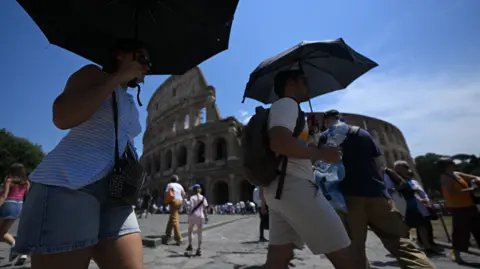 Red heatwave alerts have been issued in several Italian cities including Rome
bbc.com
Red heatwave alerts have been issued in several Italian cities including Rome
bbc.com
Portugal hit 40.3C in May at Mora, a new national record for the month, as a surge of heat spread across western Europe this week. According to the BBC, France convened ministers to review preparedness, Italy issued red heat alerts for major cities, and public services from schools to transport began improvising around temperatures more typical of midsummer.
The heat is arriving in places where daily life is organised around the assumption that May is still a shoulder season. In France, baccalaureate exams were set to continue even as some schools closed because classrooms became unworkable; one primary school in Souston was reported to have recorded indoor temperatures of 53C earlier in the week. A union survey cited by the BBC found large numbers of schools above 30C, and teachers reportedly brought tools to open windows—small, physical workarounds for a system designed for a different climate and building stock.
Cities responded with measures that reveal what can be changed quickly and what cannot. Paris police eased traffic rules temporarily, lowered speed limits, and offered a single fare across the public transport network. These are short-run levers: they reduce friction at the margins, but they do not create shade, insulation, or cooling capacity in classrooms and apartments. Meanwhile, the costs of keeping normal schedules fall unevenly: exam candidates sit where they are told, while administrators defend the calendar.
The same pattern appeared in sport. At the French Open, world number one Jannik Sinner withdrew after reporting dizziness and lethargy, though he said personal factors were to blame rather than the weather. Either way, the tournament’s product—midday matches on a main court—meets a hard limit when bodies stop cooperating. Extreme heat does not need to be officially classified as a “heatwave” to force cancellations; Spain’s forecast was described as typical of July and August, which is precisely the problem in May.
Meteorologists described a ‘heat dome’—high pressure trapping warm air—while scientists noted that climate change makes heat extremes more frequent and intense, even if any single event is difficult to attribute. What is easier to observe is the administrative trail: ministerial meetings, alert systems, and advice to be “very vigilant” as temperatures climb into ranges that turn routine public services into risk management exercises.
Portugal’s record was set in a central town better known for quiet spring weather than 40C afternoons. By the weekend, parts of Europe were still planning exams, matches and commutes on the assumption that the heat would be tolerated rather than avoided.