
JD Vance says US and Iran still lack ceasefire extension deal
Negotiators argue over enrichment language as Hormuz shipping and oil sanctions sit inside draft terms, White House calls leaked memorandum a fabrication
Images
 bbc.com
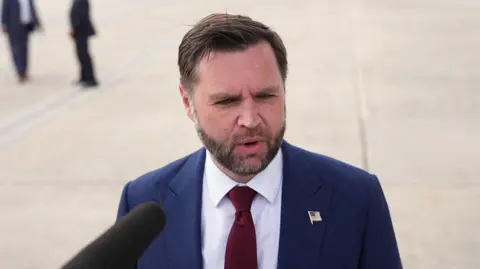 Reuters JD Vance speaking to reporters
bbc.com
Reuters JD Vance speaking to reporters
bbc.com
US and Iran still haggle over ceasefire extension language, vice-president JD Vance says negotiators are stuck on enrichment wording and timing, shipping and sanctions hinge on a document neither side will fully own
US Vice-President JD Vance said Washington and Tehran remain “very close” to extending their ceasefire, but that several sticking points still need to be resolved, according to the BBC. The talks would reportedly extend the truce for 60 days and open negotiations over the future of Iran’s nuclear programme, with the “question of enrichment” singled out as one of the remaining arguments over language.
The episode is a reminder that the most consequential parts of a deal are often the clauses that can be interpreted later. US officials briefed the BBC that a framework had been agreed, pending approval by President Donald Trump and Iran’s leadership, while Iran’s semi-official Tasnim agency said nothing had been finalised or confirmed. That gap—between what negotiators say privately and what each side can admit publicly—has been a recurring feature of the conflict since the initial ceasefire came into effect in April.
The reported outline is not just about nuclear centrifuges. Reports cited by the BBC say the proposal could include “unrestricted” passage through the Strait of Hormuz, a chokepoint through which a large share of global oil and liquefied natural gas normally passes. The draft terms circulating in the region have included Iran removing mines from the strait within a set period, while the US would lift its blockade and issue sanction waivers to allow Iran to resume selling oil—steps that would immediately shift insurance pricing, freight planning and fuel markets.
The White House has also tried to keep distance from paper it does not control. After Iranian state media reported elements of an unofficial draft memorandum, the White House called that document a “complete fabrication,” even as US officials acknowledged active negotiations and Treasury Secretary Scott Bessent declined to confirm whether a deal had been reached. Trump has publicly suggested multiple options for dealing with Iran’s stockpile of highly enriched uranium—taking it, diluting it, or moving it elsewhere—without committing to a single mechanism.
Vance said the US believed Iran was negotiating in “good faith,” but officials have simultaneously warned that “option B,” a return to combat operations, remains available. For Gulf state allies and energy traders, the practical question is whether the ceasefire is a stable arrangement or a temporary pause that can be revoked once the next disputed sentence is read differently in Tehran and Washington.
The BBC’s reporting left the negotiations where they started: a ceasefire that exists on the water and in the air, and a document still being edited for a signature neither side wants to make look like a concession.