
Austrian court jails man for Taylor Swift concert terror plot
CIA tip led to Vienna cancellations affecting nearly 200000 fans, soft-target security costs paid upfront
Images
 Beran A (centre) had earlier admitted the main charges surrounding the plot
bbc.com
Beran A (centre) had earlier admitted the main charges surrounding the plot
bbc.com
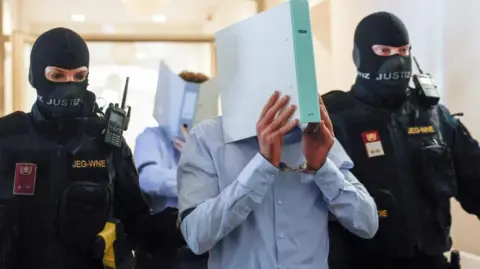 Beran A (centre) had earlier admitted the main charges surrounding the plot
bbc.com
Beran A (centre) had earlier admitted the main charges surrounding the plot
bbc.com
An Austrian court sentenced a 21-year-old man to 15 years in prison for plotting a jihadist attack on a Taylor Swift concert in Vienna, after he admitted the charges. The BBC reports the case centered on a planned attack during Swift’s Eras tour in August 2024, with the suspect arrested shortly before three sold-out shows at Vienna’s Ernst Happel stadium. The arrest led to the immediate cancellation of all three concerts, affecting nearly 200,000 fans, according to the BBC.
The prosecution case, as described by the BBC, portrays a familiar European security pattern: a young man radicalised into Islamic State ideology, trying and failing to obtain weapons, and aiming at a crowded “soft target” where the casualty potential is high and the security perimeter is hard to seal. Prosecutors said the man had sworn allegiance to IS and attempted to illegally buy weapons including a machine gun and a hand grenade. A court psychiatrist testified there was no psychiatric explanation for the radicalisation, leaving the process to be explained by social networks, propaganda, and opportunity rather than illness.
The case also shows how prevention often depends on intelligence sharing rather than visible policing. The BBC says the arrest followed a tip-off from the CIA, and it happened just before the first concert, when the costs of a false alarm are maximal: cancelled events, sunk travel, and reputational damage for organisers and authorities. In this instance, the cancellation became part of the public record of the plot itself — a security decision that effectively confirmed the threat to hundreds of thousands of ticket-holders.
The trial widened beyond the concert plot. The BBC reports prosecutors said the defendant was also involved in planning attacks in Mecca and other cities months earlier, and that a second 21-year-old defendant from Slovakia was accused of being part of an IS-affiliated cell but was not involved in the Vienna concert plan. That split matters: it suggests both networked activity and individual target selection can coexist in the same case file, complicating the neat categories of “lone actor” versus “cell.”
The sentence lands two years after the concerts were cancelled and the crowds stayed home. The stadium remained intact; the court record is what changed.