
Argentina university protests target Milei budget refusal
UBA-linked schools occupied and faculty strike as Supreme Court weighs financing law, austerity collides with court orders to pay salaries under existing statute
Images
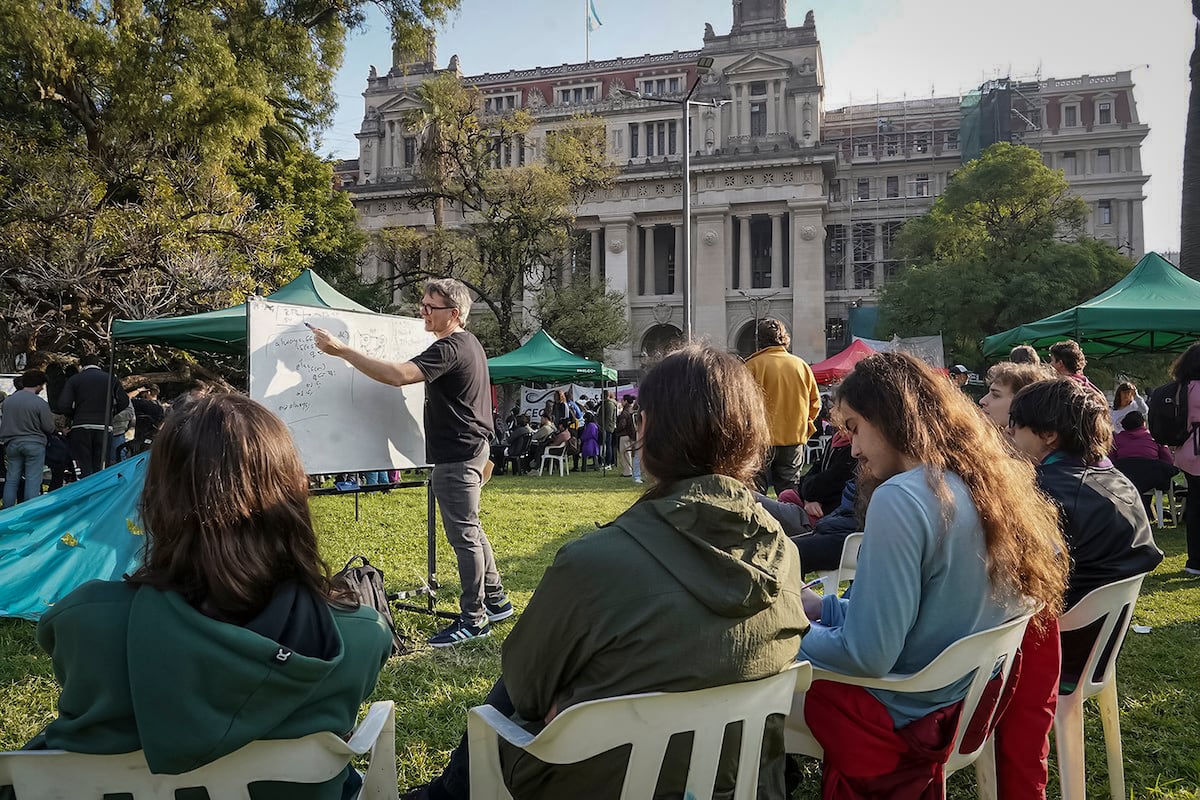 University demands against Argentina’s Milei escalate with student protests and faculty strikes
english.elpais.com
University demands against Argentina’s Milei escalate with student protests and faculty strikes
english.elpais.com
Argentine public universities returned to occupations and strike action this week as students and faculty press President Javier Milei’s government to comply with a university financing law passed by Congress. El País reports that schools affiliated with the University of Buenos Aires were occupied from May 26, while faculty unions staged strikes nationwide as the academic community awaited a Supreme Court decision on the executive’s refusal to implement the statute.
The dispute is unusually concrete: it is not a negotiation over future budgets but a fight over whether an existing law will be executed. According to El País, Congress approved the financing law in 2025 to update university budgets and salaries in line with cumulative inflation since Milei took office; Milei vetoed it, and Congress then ratified it. The executive branch argues it lacks funds, but the National Interuniversity Council (CIN) estimates a cumulative real decline of 45.6% in resource transfers to higher-education institutions between 2023 and 2026, with wages losing roughly 37% of purchasing power.
The numbers also show why the conflict has spread beyond campus politics. Argentina’s 64 national universities serve more than 2.1 million students on an annual budget of 4.8 trillion pesos (about $3.4 billion), El País reports. Implementing the law would require an additional 2.5 to 3.1 trillion pesos, which CIN frames as about 0.36% of GDP—less, it says, than various tax exemptions the government maintains. That juxtaposition has become central to the protests: demonstrators are not only asking for more money, but pointing to choices about which constituencies are protected during austerity.
Courts have begun to pull the conflict into the constitutional realm. El País reports that two appeals-court rulings ordered precautionary measures requiring the executive to pay salaries as set out in the law while judges decide on the statute’s validity; Milei appealed to the Supreme Court, which had not ruled as of May 28. On May 26, professors and students protested outside the Palacio de Tribunales in downtown Buenos Aires, holding public classes and assemblies at Plaza Lavalle under signs accusing the government of ignoring the law.
The occupations at the Escuela Carlos Pellegrini and the Colegio Nacional de Buenos Aires are being reviewed daily by student assemblies, El País reports. For now, the immediate question is not whether Argentina can afford universities, but whether a government can treat a congressional statute as optional until a court forces compliance.