
PFAS pollution in the Solent tests above safe thresholds
Researchers find combined-toxicity failures even when individual chemicals sit under legal limits, water treatment cannot filter what regulation still permits
Images
 A family looking for marine life on the Isle of Wight. The study found one source of Pfas was from treated effluent from Southern Water plants on the mainland. Photograph: Nikreates/Alamy
theguardian.com
A family looking for marine life on the Isle of Wight. The study found one source of Pfas was from treated effluent from Southern Water plants on the mainland. Photograph: Nikreates/Alamy
theguardian.com
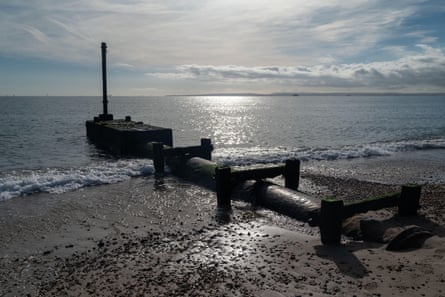 A sewage outlet pipe on Eastney beach, Portsmouth. Water utilities cannot remove Pfas so the EU is imposing a blanket ban. The UK said it would consult on setting limits. Photograph: Alamy
theguardian.com
A sewage outlet pipe on Eastney beach, Portsmouth. Water utilities cannot remove Pfas so the EU is imposing a blanket ban. The UK said it would consult on setting limits. Photograph: Alamy
theguardian.com
Scientists have found high levels of PFAS “forever chemicals” in the Solent, the Channel strait between the Isle of Wight and England’s south coast, according to The Guardian. The reporting cites samples in which PFAS pollution was measured at up to 13 times above a safe threshold for coastal waters, with contamination detected in soil, water and across the marine food chain.
The Solent matters because it is both a busy, populated coastline and a receiving basin for multiple, routine pollution pathways that are hard to pin on any single actor. Researchers cited by The Guardian combined government datasets, water-utility testing and their own sampling of a dozen species of fish, seaweed and invertebrates, and they also point to harbour porpoise livers containing individual PFAS chemicals above existing legal limits. A recurring complication is that some samples can sit below legal limits for individual substances while still failing a newer European Union test designed to capture combined toxicity from PFAS mixtures. The Guardian reports that all but seven English surface waters tested failed that combined-toxicity test, with several remote Scottish lochs and burns also failing—suggesting the issue is not confined to one industrial hotspot.
The suspected sources described are familiar and politically awkward: treated effluent from wastewater plants, sewage outflows, historic landfills, and nearby military sites. In the Solent, PFAS were found entering via treated effluent from wastewater plants in Portsmouth and Fareham run by Southern Water, the company that provides drinking water and sewerage services for Kent, Sussex, Hampshire and the Isle of Wight, The Guardian reports. The study also mapped 194 combined sewer overflow outfalls and more than 500 nearby historic landfills that could contribute to PFAS pollution, a list that turns cleanup into a coordination problem across regulators, legacy waste sites and today’s water infrastructure.
Unlike an oil spill, where a discrete event can be investigated and billed, sewage-linked contamination diffuses into “normal operations” and rarely triggers habitat restoration paid by the polluter, University of Portsmouth professor Alex Ford told The Guardian. Ford also said water companies lack the capacity to treat PFAS compounds, pushing attention upstream toward restricting or banning PFAS at the source—chemicals used for durability in products such as non-stick cookware, food packaging and waterproof clothing. Southern Water, in a statement cited by The Guardian, agreed new legislation is needed to restrict or ban certain chemicals and argued that preventing PFAS entering pipes and the environment is the most sustainable route.
The study’s map of overflows and landfills sits alongside a simpler data point: some Solent samples were measured at 13 times above a safe threshold, and the contamination still arrived through “treated” water.