
CDC tightens Ebola screening for some DRC-linked travellers
WHO declares international health emergency over Bundibugyo outbreak, border rules exclude citizens while hospitals prepare downstream
Images
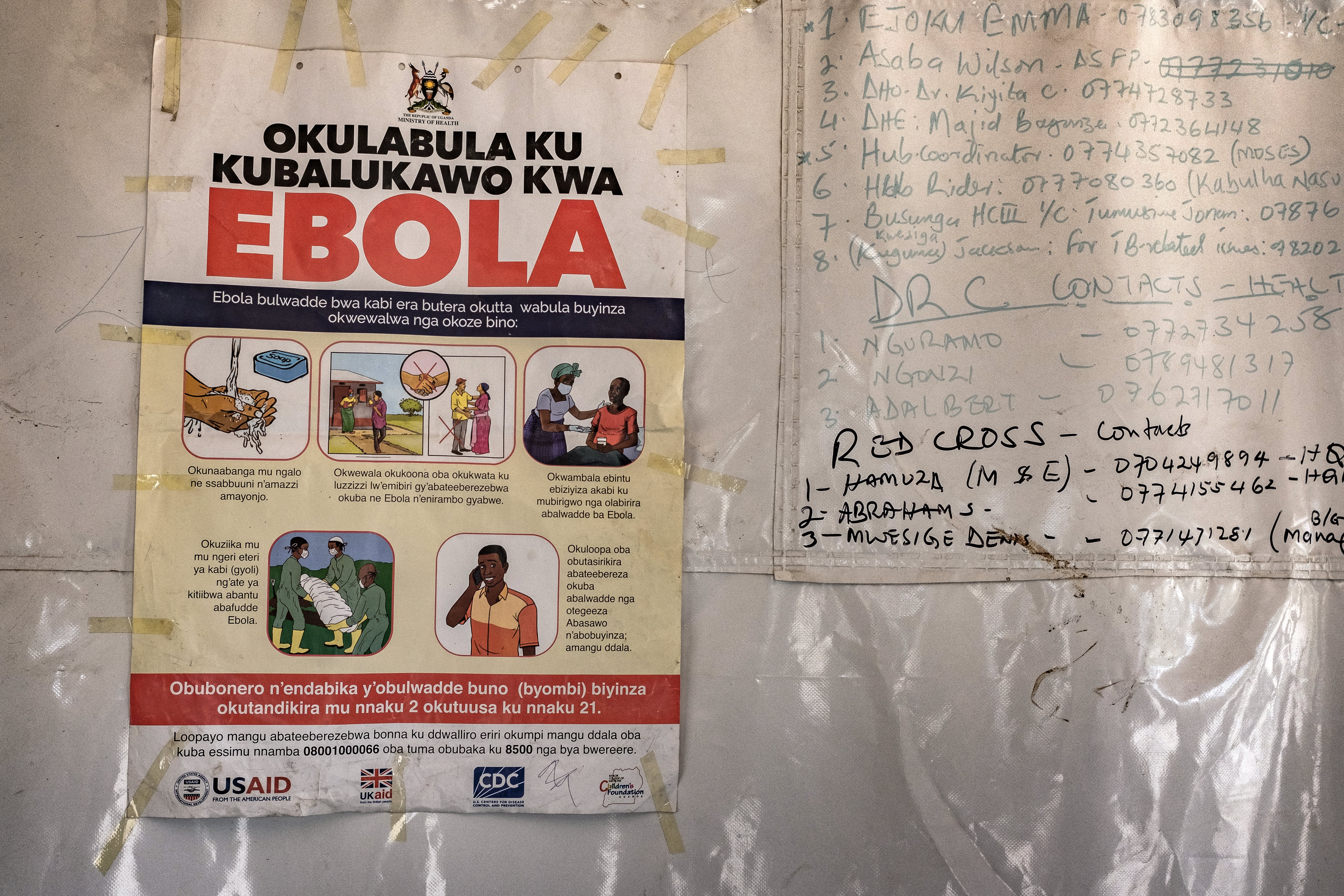 The World Health Organization declared an international health emergency on May 17 over an outbreak of an Ebola strain in the Democratic Republic of Congo that has killed more than 80 and for which there is no vaccine (AFP/Getty)
AFP/Getty
The World Health Organization declared an international health emergency on May 17 over an outbreak of an Ebola strain in the Democratic Republic of Congo that has killed more than 80 and for which there is no vaccine (AFP/Getty)
AFP/Getty
The US Centers for Disease Control and Prevention is introducing new screening and monitoring for some travellers who have recently been in the Democratic Republic of Congo, Uganda or South Sudan, after the World Health Organization declared the latest Ebola outbreak in eastern DRC an international health emergency. According to the Independent, US officials say the immediate threat to Americans remains low, but the measures are aimed at catching cases during the virus’s incubation period, which can last up to 21 days.
The CDC plan, as described by the Independent, adds a layer of monitoring on arrival for travellers with recent presence in the affected countries, alongside efforts to strengthen contact tracing, expand laboratory testing capacity and ensure hospitals are prepared to manage potential cases. The WHO’s emergency declaration reflects concern about wider transmission, particularly after two Ebola cases were confirmed in neighbouring Uganda. The outbreak involves the Bundibugyo strain, and the Independent reports there is no vaccine available for this variant; the outbreak has killed more than 80 people.
The travel focus highlights a recurring constraint in outbreak control: border health measures are politically legible and administratively simple compared with the expensive work of building local containment capacity where transmission is happening. A 21-day incubation window means symptom-based checks can miss infected people who feel well enough to travel, pushing authorities toward follow-up monitoring rather than one-off temperature screens. At the same time, the Independent reports the CDC order is set to last 30 days, a time horizon that fits emergency bureaucracy better than epidemic dynamics, where chains of transmission can outlast the paperwork.
The Independent also reports that the new protocols will not apply to US citizens, US nationals or lawful permanent residents. In practice, that leaves public-health agencies trying to manage risk while explicitly carving out the categories of travellers who cannot be turned away. The result is an enforcement gap that has to be filled with downstream measures—contact tracing, clinical preparedness, lab readiness—whose effectiveness depends on compliance and on local capacity in hospitals that may only rarely see Ebola patients.
For the public, the CDC’s symptom guidance is a reminder of how easily early Ebola can be mistaken for routine illness. The Independent notes that initial “dry” symptoms include fever, aches, severe headache, weakness and sore throat, with “wet” symptoms such as vomiting, diarrhoea and unexplained bleeding often emerging days later.
The WHO declaration was issued on May 17. The CDC’s response, according to the Independent, is built around the 21-day clock that makes international travel possible before anyone knows they are sick.