
Trump immigration crackdown spooks undocumented taxpayers
Guardian reports up to 479 billion dollars in lost revenue over decade, IRS data-sharing push turns compliance into risk
Images
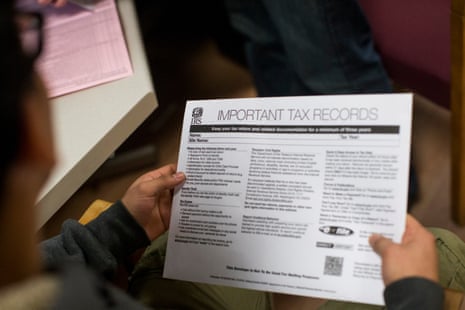 Last year, the IRS made an agreement to share the names and addresses of undocumented immigrants with the Department of Homeland Security. Photograph: Boston Globe/Getty Images
theguardian.com
Last year, the IRS made an agreement to share the names and addresses of undocumented immigrants with the Department of Homeland Security. Photograph: Boston Globe/Getty Images
theguardian.com
479 billion dollars is the number attached to the Trump administration’s immigration crackdown in a new warning about lost US tax receipts over the next decade. The Guardian reports that tax advisers serving Latino clients say many undocumented workers refused to file this year after enforcement changes made ordinary compliance feel like a liability. The concern, according to the paper, is rooted in a proposed or attempted pipeline between the IRS and the Department of Homeland Security, which oversees ICE.
The mechanics are not abstract. Undocumented immigrants are required to pay taxes, and many do so using taxpayer identification numbers even when they lack work authorisation, partly to show a record of compliance that might help in future immigration proceedings. The Guardian cites the Institute on Taxation and Economic Policy estimating that in 2022 undocumented immigrants paid about 96.7 billion dollars in taxes, while roughly half of undocumented households typically file income tax returns. When filing is perceived as a way to hand over an address, the state’s enforcement arms can end up cutting off the revenue stream they were counting on.
The article describes two policy shifts that change the calculus. One is the attempt to share taxpayer data with immigration enforcement, a departure from the IRS’s longstanding emphasis on confidentiality as a practical tool for getting people to self-report. A federal judge paused the IRS–DHS data-sharing agreement and later ruled it violated federal law, but the reporting suggests the reputational damage to the system persists: once people believe the firewall is gone, the incentive to participate collapses faster than any court order can repair. The second shift is the removal of tax benefits for immigrant parents starting in 2025, including ineligibility for the child tax credit for parents without legal status even if their children are US citizens. The Guardian notes that the credit can amount to thousands of dollars, and that losing it reduces the immediate financial reason to file.
For the government, the trade-off is a familiar one: enforcement that depends on information also depends on voluntary disclosure. The IRS can pursue non-payment, but the article notes it is harder to chase undocumented workers who do not file, especially when they are already trying to stay out of view. For employers and local economies, a drop in filing can be an early signal of wider retreat from formal systems—workers shifting jobs, avoiding banks, or leaving jurisdictions—effects that do not show up in deportation tallies but do show up in tax bases.
In Springfield, Virginia, one adviser told the Guardian her firm lost as many as 75% of its clients this tax season. The same customers who used to pay into the system are now treating a tax return as a map for ICE.