
Ukraine launches near 600-drone strike across Russia
Deaths reported in Moscow region and Belgorod, air-defence tallies compete with images of damaged housing and refineries
Images
 A multi-storey residential building was hit by a Ukrainian drone in Moscow's region, local officials said
bbc.com
A multi-storey residential building was hit by a Ukrainian drone in Moscow's region, local officials said
bbc.com
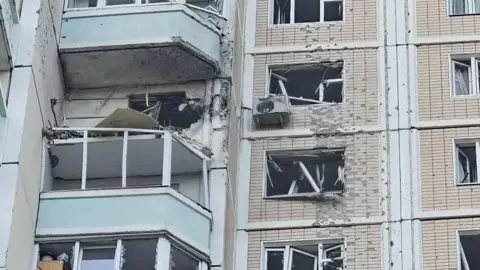 A multi-storey residential building was hit by a Ukrainian drone in Moscow's region, local officials said
bbc.com
A multi-storey residential building was hit by a Ukrainian drone in Moscow's region, local officials said
bbc.com
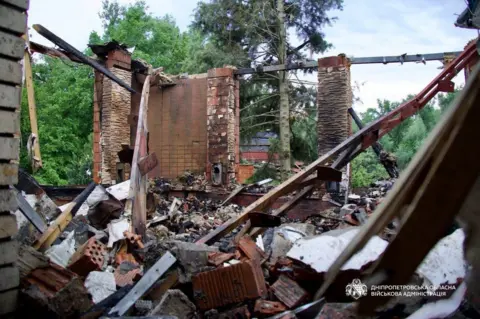 Ukraine said a number of houses were damaged or destroyed in the Dnipropetrovsk region in Russian drone attacks and shelling
bbc.com
Ukraine said a number of houses were damaged or destroyed in the Dnipropetrovsk region in Russian drone attacks and shelling
bbc.com
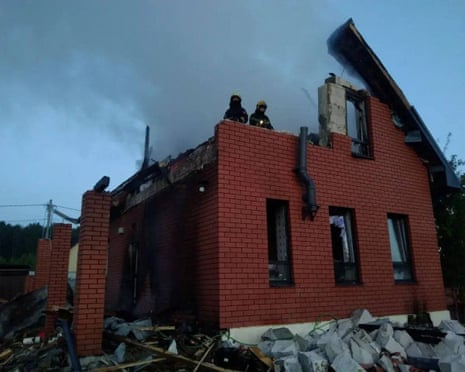 Firefighters working at a damaged house after a Ukrainian drone attack in the Moscow region. Photograph: Moscow regional governor Andrei Vorobyov/Reuters
theguardian.com
Firefighters working at a damaged house after a Ukrainian drone attack in the Moscow region. Photograph: Moscow regional governor Andrei Vorobyov/Reuters
theguardian.com
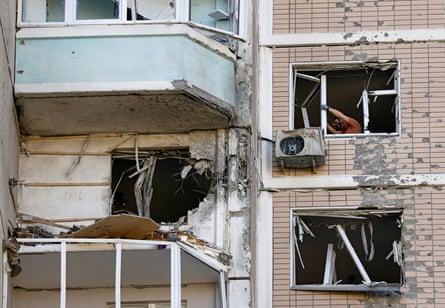 Residents clear broken windows in a damaged apartment building in the Moscow region. Photograph: Reuters
theguardian.com
Residents clear broken windows in a damaged apartment building in the Moscow region. Photograph: Reuters
theguardian.com
 Drone flies over Russia as Moscow faces biggest attack in over a year
theguardian.com
Drone flies over Russia as Moscow faces biggest attack in over a year
theguardian.com
Almost 600 Ukrainian drones struck across Russia overnight, according to Russian officials, with deaths reported in the Moscow region and Belgorod as Moscow and Kyiv resumed large-scale exchanges after a short truce. The BBC and the Guardian reported damage to housing and infrastructure around Moscow, including incidents near an oil refinery and drone debris falling inside the perimeter of Sheremetyevo airport.
Russian authorities said air defences intercepted or neutralised hundreds of drones across multiple regions, while local officials described casualties in several locations. In the Moscow region, the governor Andrei Vorobyov said a woman was killed when a home was hit in Khimki and rescuers were searching rubble for another person; he also reported additional injuries and damaged houses. The Guardian said two men were killed in Pogorelki after debris fell on a construction site, and that one person was killed in Belgorod when a drone hit a lorry.
For Ukraine, the strikes are presented as a way to impose costs on the Russian rear, especially energy and industrial sites that keep the war running. Volodymyr Zelenskyy has framed attacks on oil facilities and military production as legitimate targets, and both outlets noted his argument that long-range strikes are a response to repeated Russian attacks on Ukrainian cities. Russia’s side of the ledger is easier to quantify in public statements—numbers of drones shot down, lists of regions hit—while the operational impact is often described in narrowly worded reassurances that production was not disrupted.
The exchange also shows how much of the conflict’s escalation management now runs through air-defence capacity and public messaging rather than territorial movement. Russia’s claims of mass interceptions sit alongside reports of residential buildings struck and workers wounded, a reminder that “downed” drones still come down somewhere. Airports and refineries appear in the same paragraphs as apartment blocks, and regional governors become the de facto spokesmen for what would once have been treated as national-security information.
In Ukraine, officials reported another night of Russian drone attacks, with strikes and debris damage recorded across multiple locations. The truce that briefly paused the pattern has ended, and both sides are again counting the night in drones.