
Bulgaria wins Eurovision 2026
Dara tops Vienna final as Israel places second again, organisers face boycotts and voting-rule tweaks while planning shifts to first-time host
Images
 Dara, representing Bulgaria, the winner of the 2026 Eurovision song contest, holds the trophy during the grand final in Vienna, Austria. Photograph: Lisa Leutner/Reuters
theguardian.com
Dara, representing Bulgaria, the winner of the 2026 Eurovision song contest, holds the trophy during the grand final in Vienna, Austria. Photograph: Lisa Leutner/Reuters
theguardian.com
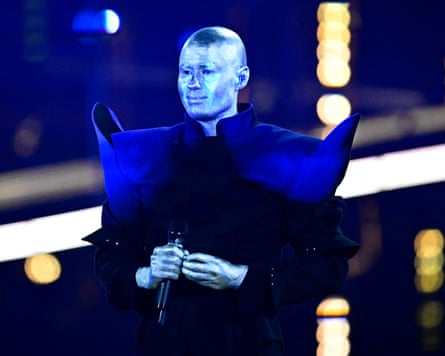 Lithuanian singer Lion Ceccah performed Solo Quiero Mas at the contest. Photograph: Tobias Schwarz/AFP/Getty Images
theguardian.com
Lithuanian singer Lion Ceccah performed Solo Quiero Mas at the contest. Photograph: Tobias Schwarz/AFP/Getty Images
theguardian.com
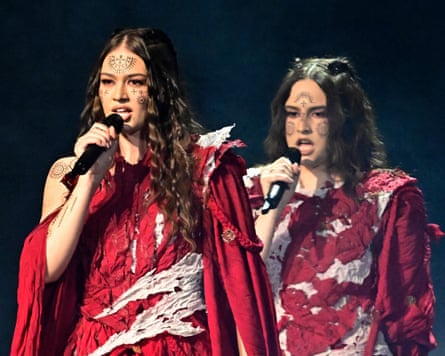 Lelek performing at Eurovision. Photograph: Tobias Schwarz/AFP/Getty Images
theguardian.com
Lelek performing at Eurovision. Photograph: Tobias Schwarz/AFP/Getty Images
theguardian.com
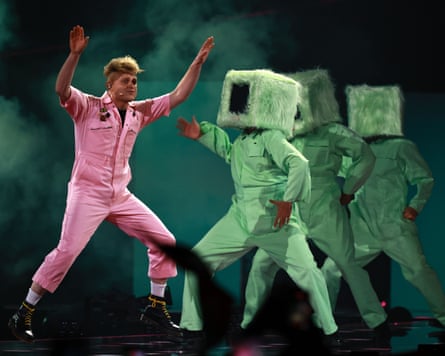 Look Mum No Computer performs in Vienna. Photograph: Hannibal Hanschke/EPA
theguardian.com
Look Mum No Computer performs in Vienna. Photograph: Hannibal Hanschke/EPA
theguardian.com
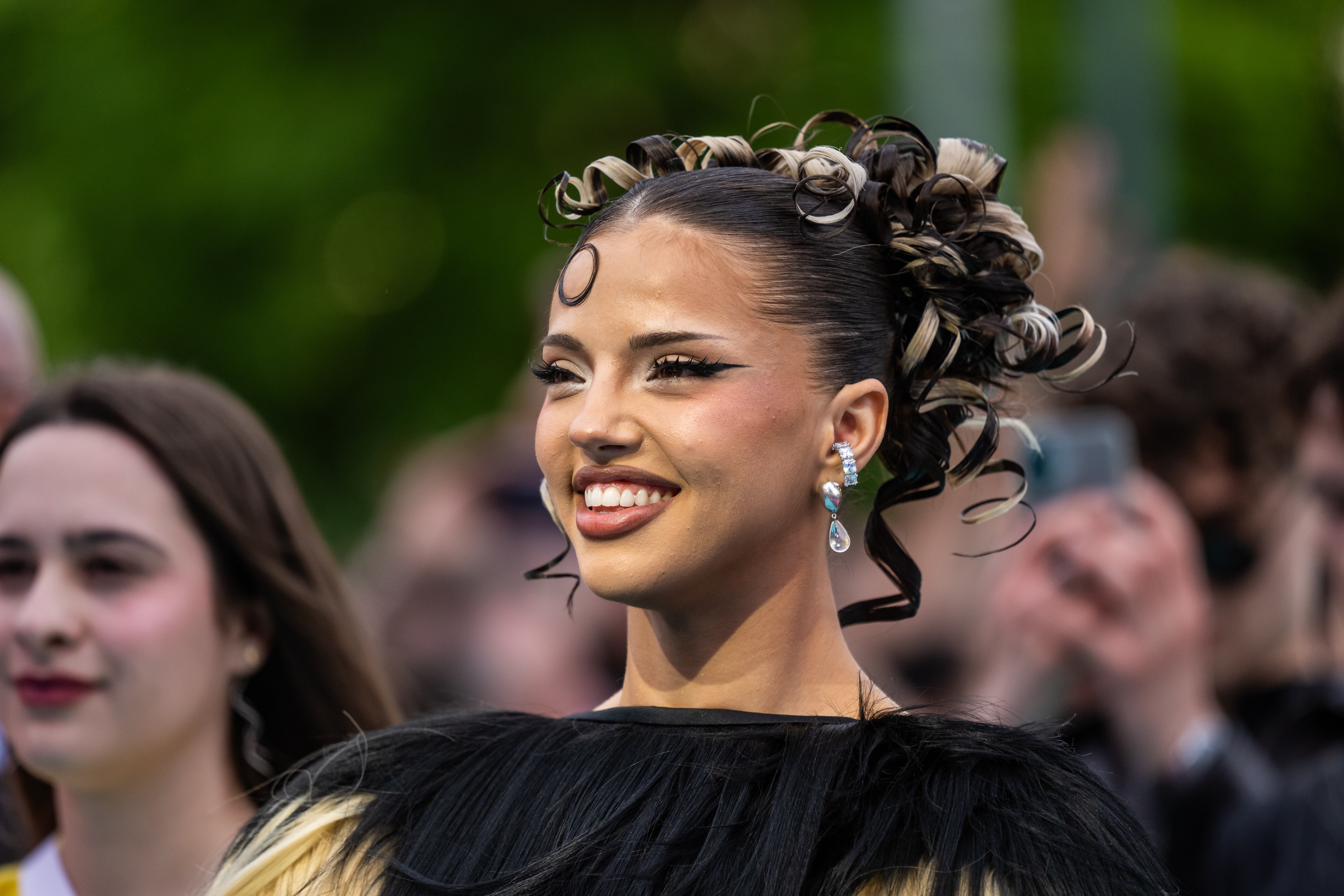 Dara is representing Bulgaria at ESC (Getty)
Getty
Dara is representing Bulgaria at ESC (Getty)
Getty
Bulgaria won the Eurovision Song Contest in Vienna with 516 points, taking its first victory in the competition’s history, according to The Guardian and The Independent. The winner, the Bulgarian singer Dara, topped a grand final watched in an arena audience of about 10,000 and a TV audience expected to exceed 100 million. Israel finished second for the second consecutive year, while the UK ended last with a single point.
The result landed in a year when Eurovision’s organisers were trying to reduce the political drag that has come to define the event as much as the songs. The Guardian reports that five countries boycotted the 2026 contest because of Israel’s participation amid the war in Gaza, and that protests took place in Vienna on the day of the final. The European Broadcasting Union (EBU) also tightened voting rules after concerns from broadcasters about multiple votes and state-sponsored promotion on social media, while still allowing Israel’s broadcaster to compete.
Those rule changes underline how Eurovision has become a contest not just of performers but of mobilisation capacity: who can turn attention into votes, and who can do it without triggering a backlash that forces the EBU to rewrite procedures. Israel’s entries have performed strongly in the public vote in recent years, and organisers have had to manage live-audience reactions as carefully as the scoreboard. Austria’s broadcaster ORF did not use anti-booing technology for home viewers this year, The Guardian notes, and while the crowd reaction to Israel’s performer was warmer than in 2025, some booing still broke out during the announcement of Israel’s public vote.
Bulgaria’s win offers the EBU a different kind of logistical problem: how to stage a major, expensive television event in a country that has not hosted before. Bulgaria joined Eurovision in 2005 and had been absent for the previous three editions, meaning broadcasters and sponsors now face a quick pivot from comeback story to host-nation obligations. The Guardian also notes that a Bulgarian victory spares Eurovision 2027 from the difficulties that would have come with hosting in Israel in the current climate—an outcome that will be read in some capitals as relief, regardless of what the voting public intended.
Dara’s winning song, Bangaranga, was presented as pop with Bulgarian folklore elements, drawing inspiration from the kukeri ritual of costumed, bell-wearing performers meant to chase away bad spirits, according to both outlets. In a contest increasingly shaped by external disputes, the winning pitch was resolutely internal: a national tradition repackaged for a pan-European prime-time audience.
The EBU now has a year to move from vote-integrity tweaks and protest policing to venue contracts, security planning, and broadcast budgets. Eurovision’s 70th anniversary ended with a folklore-inflected chorus; the next edition begins with a host broadcaster that has never had to build the machine.