
Bangkok rail crossing crash kills at least eight
Freight train hits bus near airport rail link, red light and barrier timing become focus of investigation
Images
 Train collision with bus in Bangkok kills at least eight people – video
theguardian.com
Train collision with bus in Bangkok kills at least eight people – video
theguardian.com
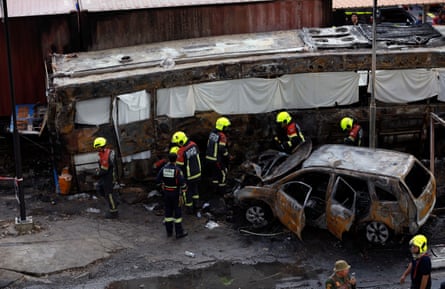 Rescue workers search the wreckage. Photograph: Rungroj Yongrit/EPA
theguardian.com
Rescue workers search the wreckage. Photograph: Rungroj Yongrit/EPA
theguardian.com
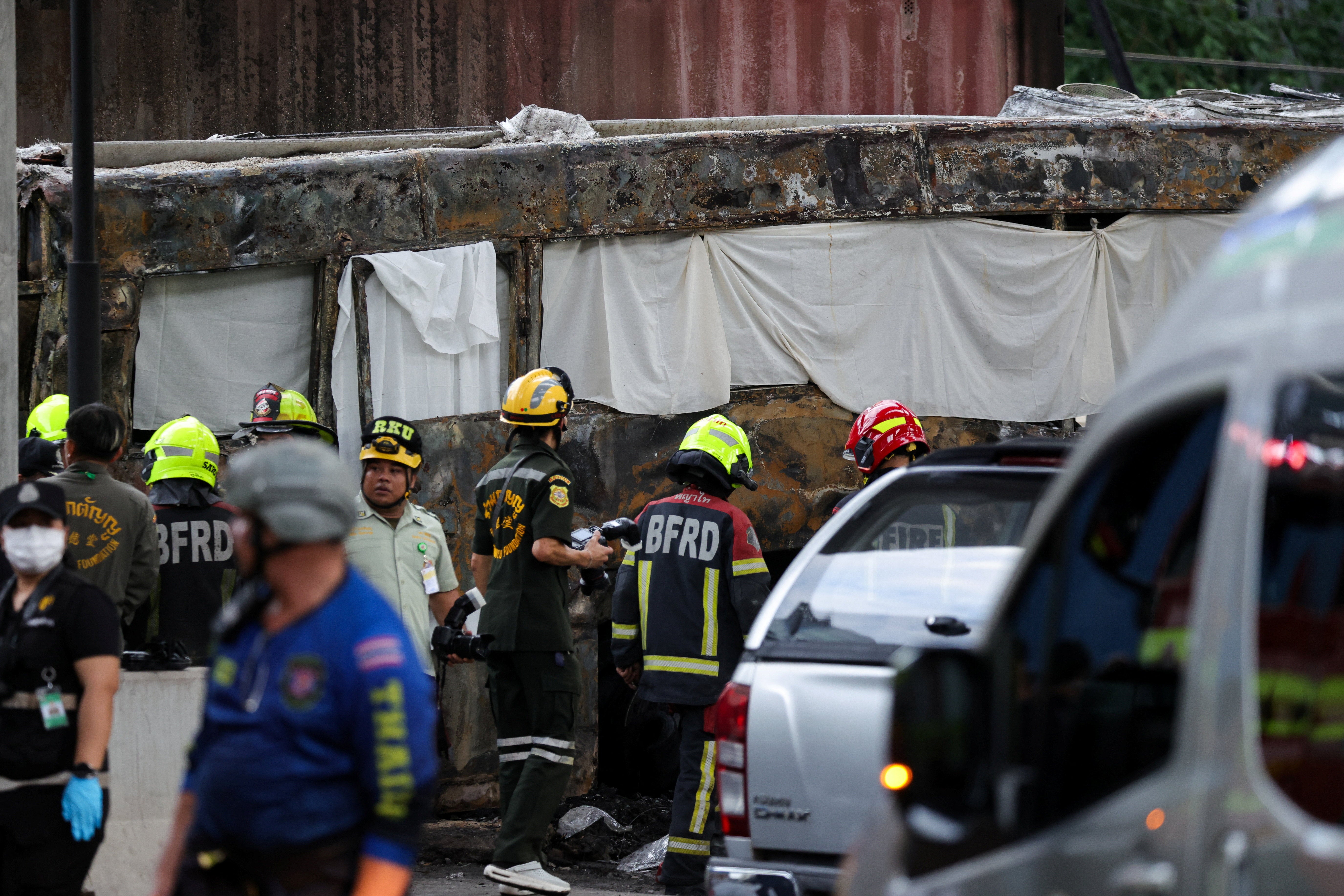 Emergency services at the scene on Asok-Din Daeng Road (Reuters)
Reuters
Emergency services at the scene on Asok-Din Daeng Road (Reuters)
Reuters
At least eight people were killed when a freight train struck a public bus at a rail crossing in Bangkok, with dozens more injured, according to Reuters and emergency services cited by the Associated Press via the Independent. The crash happened near Makkasan station on the airport rail link, where videos circulating on social media showed the train ploughing into an orange bus and dragging other vehicles along the track. Fire broke out immediately after the impact, leaving rescuers to pull victims from a burning, crushed vehicle.
Initial accounts point to a failure cascade at the boundary between road traffic control and rail safety systems. Reuters reports the bus was stopped on the tracks at a red light, preventing the crossing barriers from closing, and that the train could not stop in time. The Independent reports uncertainty over whether the bus stopped on the tracks and whether the barriers had lowered properly, and notes that it was unclear how many people were on board. Either way, the scene described by witnesses—vehicles queued at a crossing, a train approaching, and a bus occupying the danger zone—illustrates how level crossings turn small timing errors into mass-casualty events.
Bangkok has spent years expanding and marketing rail-based mobility, including airport links and urban lines that promise predictable travel times in a congested city. But the collision underlines that the hardest part of “modern transport” is often the unglamorous interface: signals, barriers, road-light coordination, and enforcement that keeps drivers from blocking tracks when traffic backs up. Reuters notes the bus being trapped by a red light; that implies a road network where queues can extend into areas that are supposed to be kept clear, and where a driver’s ability to reverse or manoeuvre is constrained by surrounding cars.
The aftermath also shows how quickly a traffic incident becomes a public emergency. Reuters says firefighters and rescue crews were dispatched as flames engulfed the bus and nearby vehicles, and that crews later cooled the area and continued searching for victims. The Independent describes rescuers entering the burnt bus after the fire was controlled and quotes a witness who found someone trapped under his car with a broken leg after the train had dragged vehicles along the tracks. In dense urban traffic, the crash footprint expands beyond the initial point of impact, turning bystanders into secondary victims and complicating triage.
Thailand’s broader safety record provides the background noise to the investigation now underway. Reuters cites the World Health Organization ranking Thailand’s roads among the world’s deadliest, pointing to weak enforcement of safety standards. Level crossings sit at the intersection of those weaknesses: even a well-maintained barrier system depends on drivers not gambling on gaps, buses not being routed through chokepoints they cannot clear, and traffic police—or automated systems—being able to keep the crossing box empty.
Authorities say they are investigating what happened at the crossing near Makkasan station. The bodies, Thailand’s deputy transport minister said according to the Independent, were found on the bus.