
Israel and Lebanon extend ceasefire for 45 days
US State Department schedules Pentagon security track and June political talks, border violence continues during negotiations
Images
 Lebanese army soldiers man a checkpoint in Beirut
bbc.com
Lebanese army soldiers man a checkpoint in Beirut
bbc.com
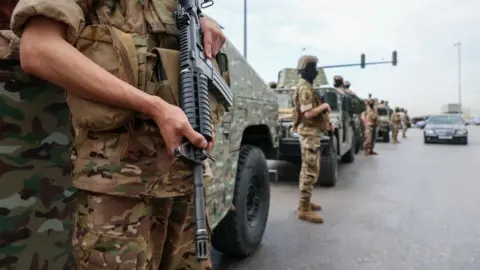 Lebanese army soldiers man a checkpoint in Beirut
bbc.com
Lebanese army soldiers man a checkpoint in Beirut
bbc.com
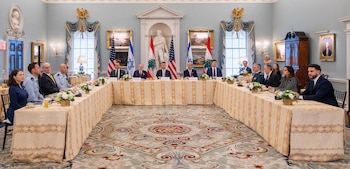 Personas en trajes y uniformes sentadas alrededor de una mesa formal en forma de U con banderas de EE.UU., Israel y Líbano; la sala tiene decoraciones clásicas y estatuas
infobae.com
Personas en trajes y uniformes sentadas alrededor de una mesa formal en forma de U con banderas de EE.UU., Israel y Líbano; la sala tiene decoraciones clásicas y estatuas
infobae.com
 Equipos de rescate trabajan en el lugar de un ataque israelí en Kfar Jouz, Líbano, el 11 de mayo de 2026. REUTERS/Stringer
infobae.com
Equipos de rescate trabajan en el lugar de un ataque israelí en Kfar Jouz, Líbano, el 11 de mayo de 2026. REUTERS/Stringer
infobae.com
Israel and Lebanon have agreed to extend their ceasefire for 45 days after two days of talks in Washington, the US State Department said, according to the BBC. The extension follows a truce that President Donald Trump announced in mid-April, but which has not stopped cross-border violence. Lebanon’s health ministry said Israeli air strikes killed 22 people including eight children in southern Lebanon this week, even as diplomats were finalising the new timeline.
The deal underscores how the border has become a managed crisis rather than a settled one. The US is presenting the extension as a bridge to “lasting peace” and “genuine security” along the Israel–Lebanon frontier, but the mechanics described by Washington point to a process built around sequencing and supervision: a “political track” of negotiations is due to resume in June, and a separate “security track” will begin at the Pentagon later this month with military delegations from both countries, the BBC reports.
That split is telling. Political language about sovereignty and territorial integrity sits alongside a parallel channel focused on military arrangements—buffer zones, rules of engagement, and verification—where the parties can bargain over facts on the ground. Hezbollah is not part of the negotiations, according to Infobae’s summary of wire reporting, yet it remains a central variable: Israel has demanded Hezbollah’s disarmament, while Beirut has demanded the withdrawal of Israeli troops from Lebanese territory. A ceasefire that depends on actors outside the room tends to be enforced through deterrence and retaliation rather than compliance.
The extension also keeps the United States in the role of broker and scheduler. By setting dates and venues in Washington and at the Pentagon, the US effectively turns a contested border into a recurring administrative calendar. That can reduce the immediate risk of escalation—when deadlines and meetings exist, both sides have something to lose by blowing them up—but it also normalises a situation where violations are absorbed as background noise so long as the process continues.
For civilians, the practical meaning is narrower: a longer pause on paper, with the expectation of further strikes and rockets in practice. The State Department said it would reconvene talks in June. The same week Lebanon reported dozens killed in air strikes, Washington was announcing the next meeting date.