
Trump wraps up Xi summit in Beijing
Trade and Iran dominate closed-door agenda as Taiwan stays in careful language, claimed deals outnumber published terms
Images
 (AFP/Getty)
AFP/Getty
(AFP/Getty)
AFP/Getty
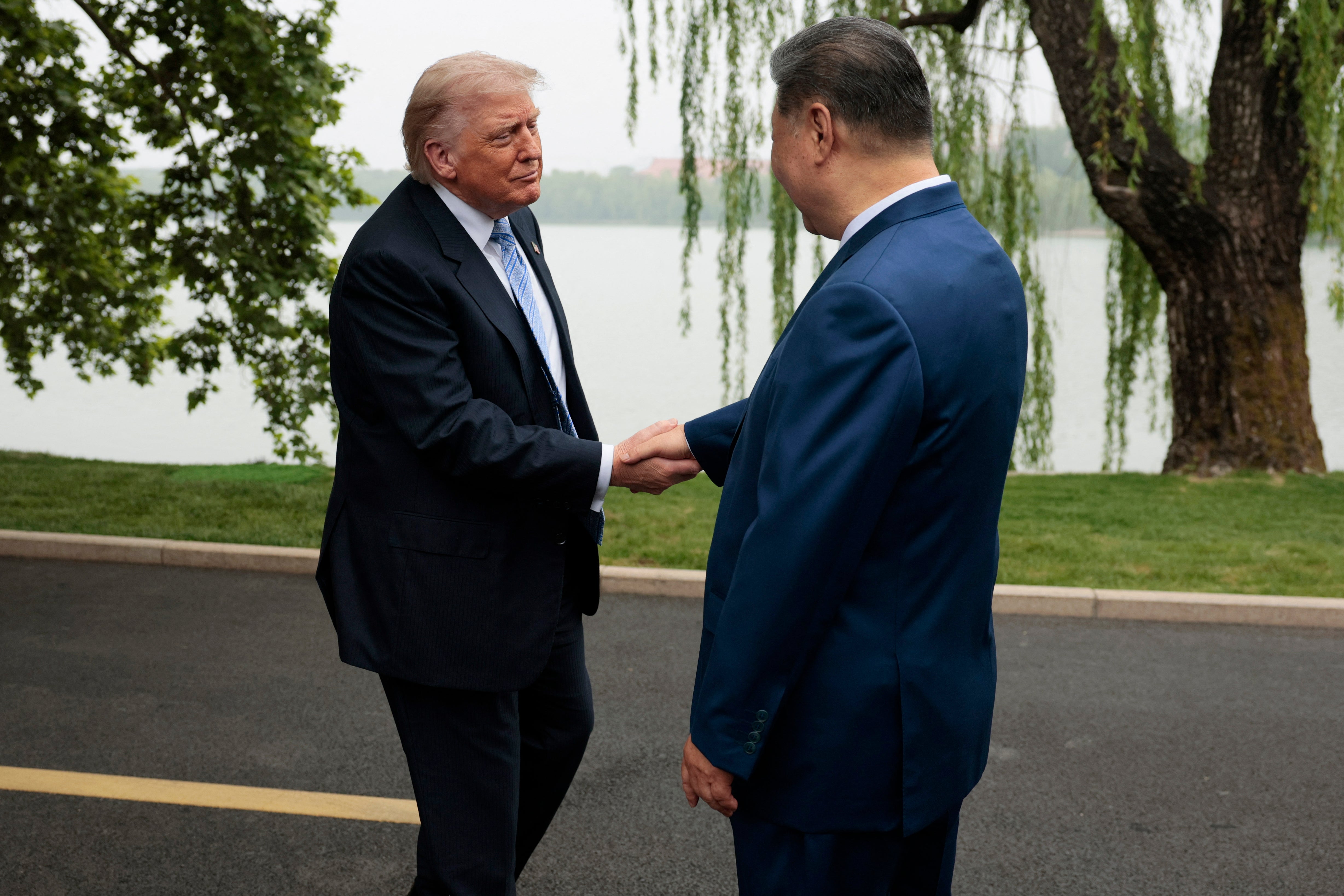 US President Donald Trump (L) is greeted by Chinese President Xi Jinping at Zhongnanhai Garden (AFP/Getty)
AFP/Getty
US President Donald Trump (L) is greeted by Chinese President Xi Jinping at Zhongnanhai Garden (AFP/Getty)
AFP/Getty
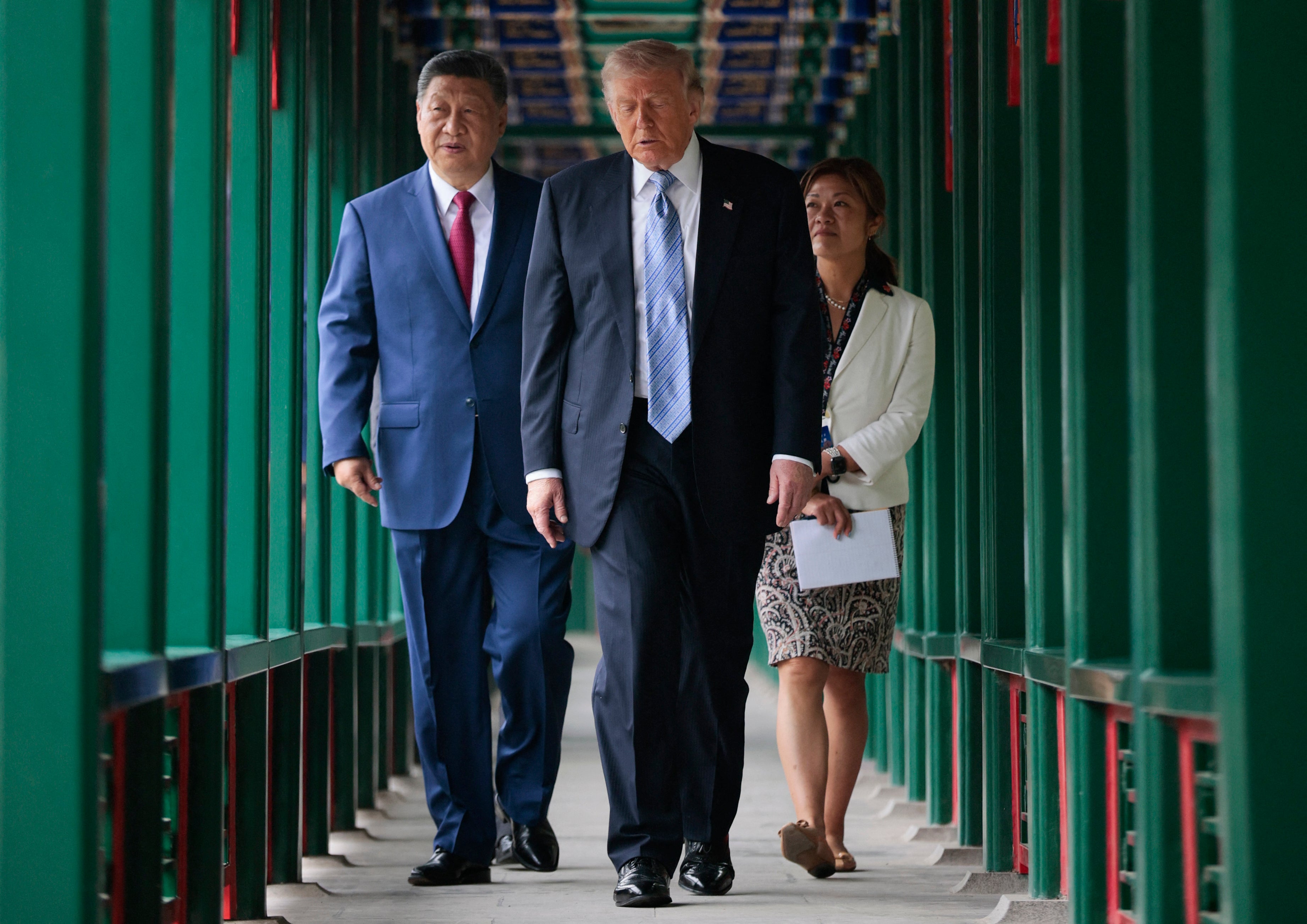 US President Donald Trump (C) walks with China's President Xi Jinping (L) at Zhongnanhai Garden (AFP/Getty)
AFP/Getty
US President Donald Trump (C) walks with China's President Xi Jinping (L) at Zhongnanhai Garden (AFP/Getty)
AFP/Getty
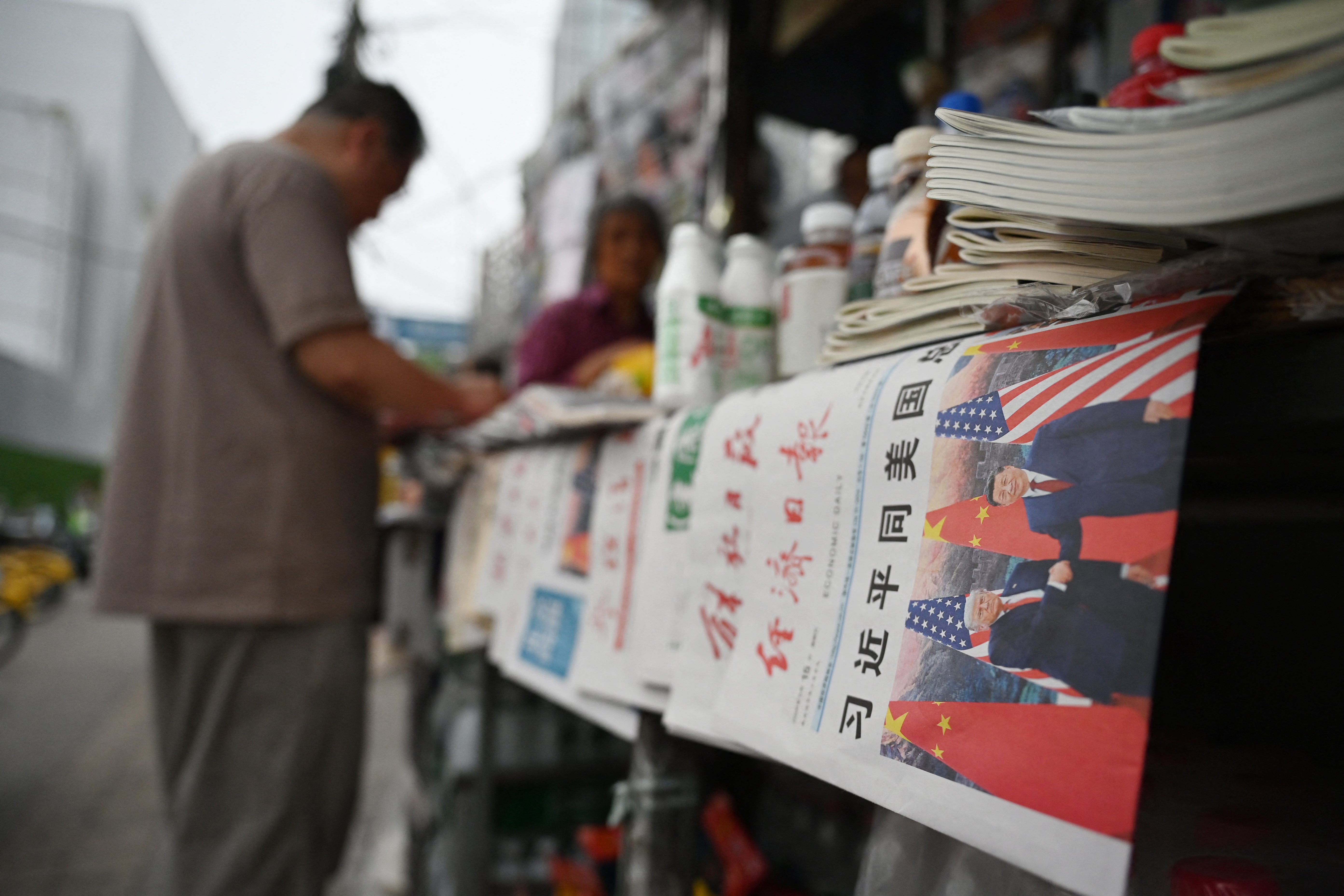 A copy of the Economic Daily newspaper with a front page photo and headline which reads "Xi Jinping holds talks with US President Trump", are displayed at a news stand in Beijing on May 15, 2026. Trump said he had made "fantastic trade deals" with China's Xi Jinping (AFP/Getty)
AFP/Getty
A copy of the Economic Daily newspaper with a front page photo and headline which reads "Xi Jinping holds talks with US President Trump", are displayed at a news stand in Beijing on May 15, 2026. Trump said he had made "fantastic trade deals" with China's Xi Jinping (AFP/Getty)
AFP/Getty
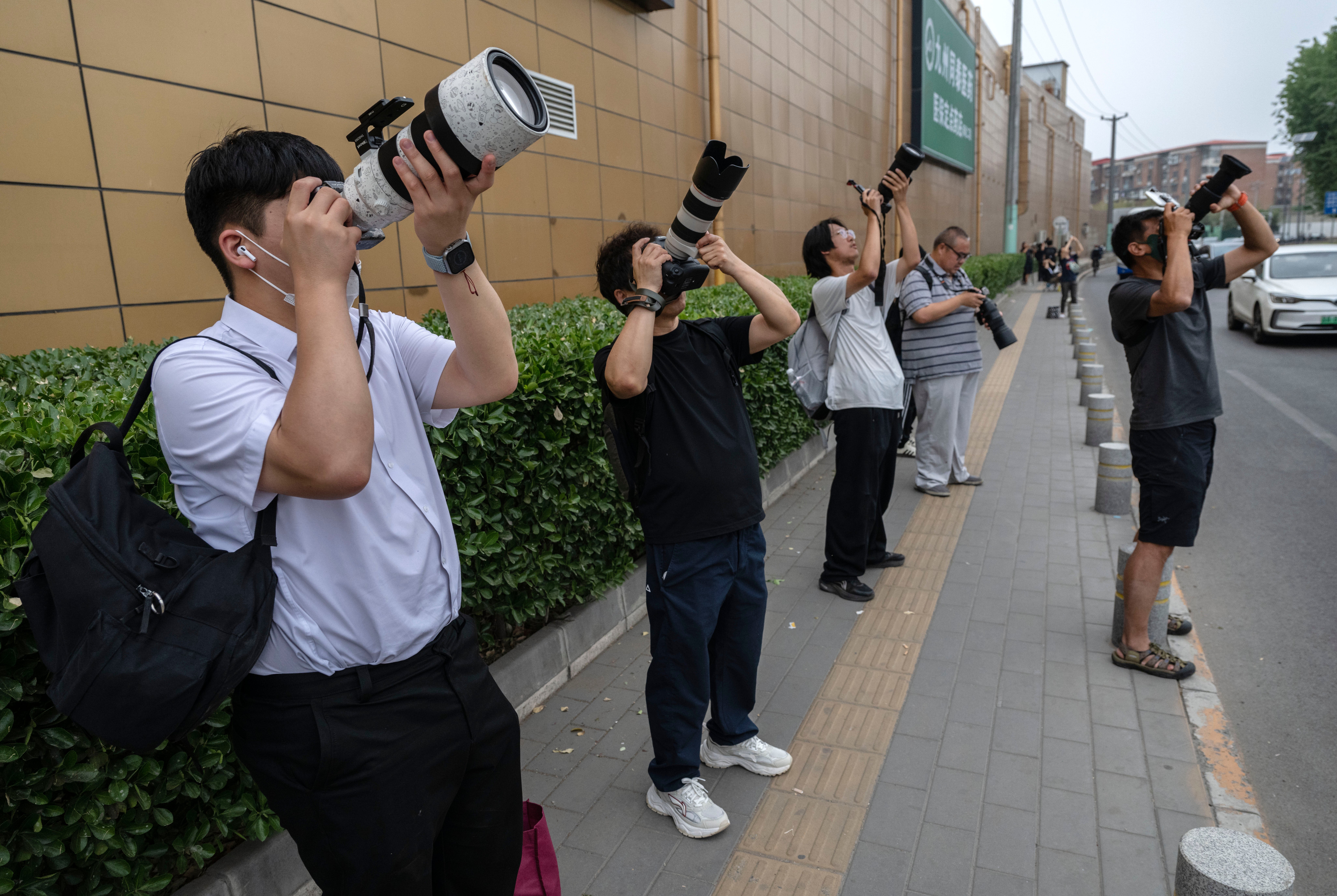 Chinese plane spotters take photos of a plane taking off as they crowd to try to catch a glimpse of Air Force One taking off with U.S. President Donald Trump on board, outside Beijing Capital Airport (Getty)
Getty
Chinese plane spotters take photos of a plane taking off as they crowd to try to catch a glimpse of Air Force One taking off with U.S. President Donald Trump on board, outside Beijing Capital Airport (Getty)
Getty
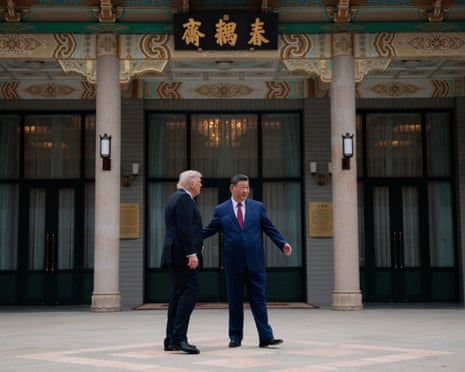 Donald Trump and Xi Jinping in the walled-off Zhongnanhai compound in Beijing on Friday. Photograph: Evan Vucci/AFP/Getty Images
theguardian.com
Donald Trump and Xi Jinping in the walled-off Zhongnanhai compound in Beijing on Friday. Photograph: Evan Vucci/AFP/Getty Images
theguardian.com
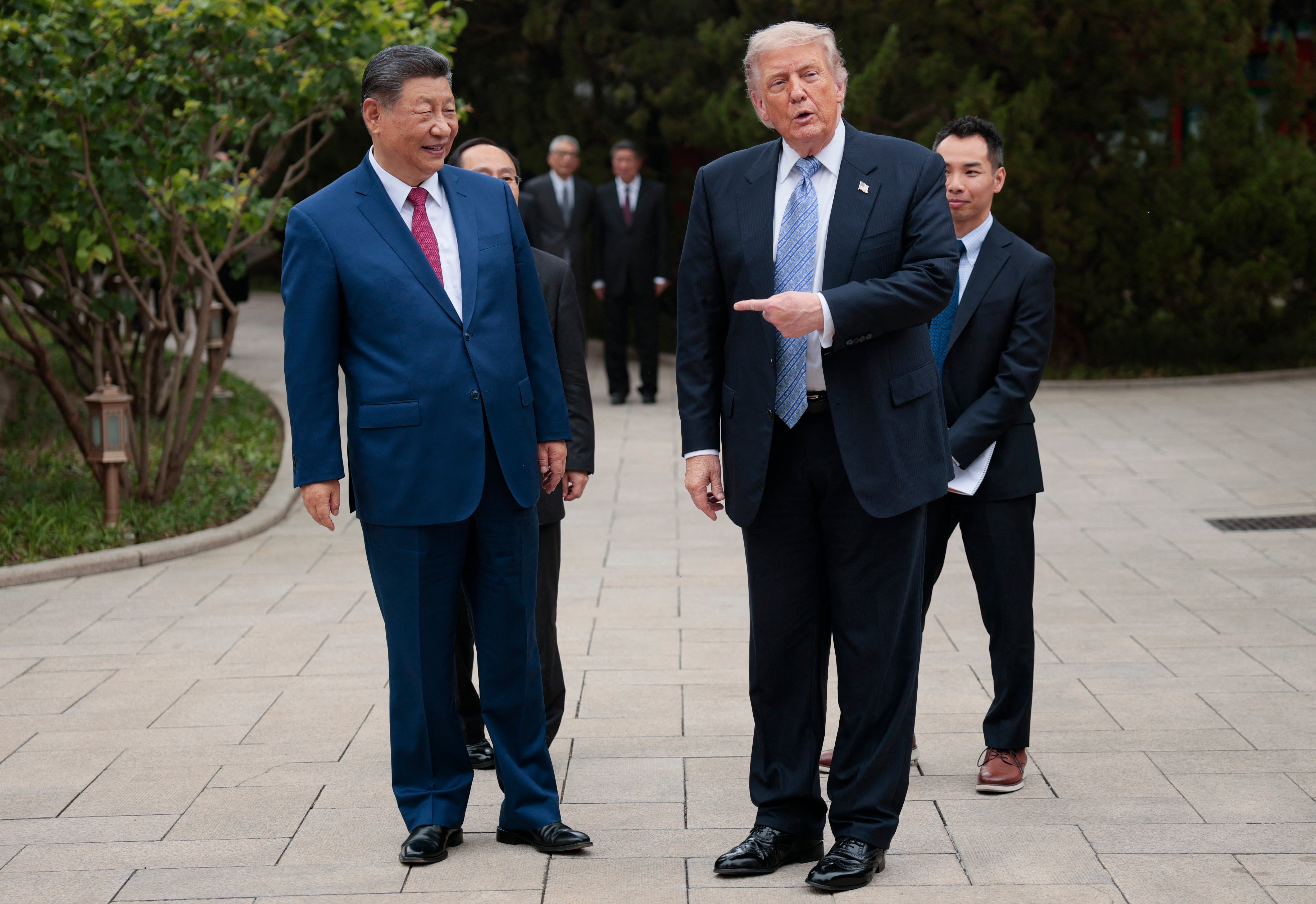
Donald Trump ended a two-day summit with Xi Jinping in Beijing on Friday claiming “fantastic trade deals,” while US officials offered few published terms and outside analysts saw little in the way of concrete breakthroughs. The final talks took place inside Zhongnanhai, the Chinese leadership compound, after an agenda that remained largely closed to the public, according to the Guardian’s live reporting and The Independent.
The White House said Trump and Xi agreed on the need to keep the Strait of Hormuz open, folding an acute Middle East shipping risk into a meeting that was marketed primarily as a reset in US-China relations. Trump told Fox News that his patience with Iran was “running out,” and linked his remarks to a ship reportedly seized by Iran off the United Arab Emirates. In the same interview, he described the hunt for Iran’s enriched uranium as partly a political demand driven by Israel, a framing that sits uneasily beside Washington’s repeated insistence that the issue is non-negotiable.
Trade messaging had a similar split between headline and paperwork. The US trade representative, Jamieson Greer, said an agreement involving “double-digit billions” of dollars in agricultural sales was expected after the summit, and suggested both sides were open to extending a trade truce due to expire later in the year. The Independent reported that beyond an announcement involving Boeing jets and familiar promises around soybeans and energy purchases, observers struggled to identify market-moving decisions. That gap matters because the costs of a breakdown—tariffs, export controls, and investment restrictions—are borne by companies and consumers long before any formal communiqué arrives.
Taiwan, the issue most likely to turn rhetoric into force, was handled in carefully limited public language. Secretary of state Marco Rubio said US policy had not changed across administrations, while Trump, speaking aboard Air Force One after leaving Beijing, downplayed the island and expressed doubts about proceeding with a major arms package. Xi, for his part, warned that mishandling Taiwan could lead to “clash or even conflict,” and Chinese state messaging portrayed the meeting as “historic” and stabilising.
The summit also became a stage for selective pressure. Rubio said Washington hoped China would respond positively to US appeals for the release of jailed media tycoon Jimmy Lai and others, tying human cases to a broader relationship that increasingly runs through deal-making and leverage rather than shared rules.
Trump departed Beijing with a fist pump and a claim that “a lot of problems” had been settled. By the end of the trip, the clearest deliverable visible to the public was still the photo of the two leaders walking through Zhongnanhai.