
Cuba says CIA director met officials in Havana
Fuel shortages push grid into critical state as protests erupt, Washington offers aid conditional on bypassing the Cuban government
Images
 Already suffering from severe electricity shortages and fuel scarcity, Cuba says it now has no diesel or fuel oil because of a US oil blockade. Photograph: Norlys Perez/Reuters
theguardian.com
Already suffering from severe electricity shortages and fuel scarcity, Cuba says it now has no diesel or fuel oil because of a US oil blockade. Photograph: Norlys Perez/Reuters
theguardian.com
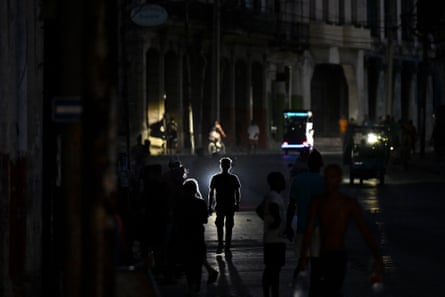 Blackouts are now a regular occurrence in Havana. Photograph: Yamil Lage/AFP/Getty Images
theguardian.com
Blackouts are now a regular occurrence in Havana. Photograph: Yamil Lage/AFP/Getty Images
theguardian.com
Cuba says CIA director John Ratcliffe met Cuban officials in Havana on Thursday for talks aimed at improving political dialogue, as the island’s fuel shortage pushed the power grid into crisis, according to The Guardian. The reported visit came a day after Cuba announced it had run out of diesel and fuel oil, and after protests in Havana where residents shouted for electricity and banged pots and pans.
The Guardian reports that Cuba’s energy minister described the national grid as being in a “critical state” with no fuel reserves, and that blackouts in Havana can last 22 hours or more. Against that backdrop, a senior US intelligence visit—if accurately described by Havana—signals that practical channels remain open even as public relations and sanctions policy point the other way. The CIA did not immediately respond to requests for comment, The Guardian notes.
The meeting lands in a relationship shaped less by speeches than by choke points: fuel, banking access, shipping, and who controls distribution inside the country. The Guardian says the US imposed a fuel blockade in January, while Cuba’s president urged the US to lift its blockade and argued that relaxing it would quickly ease the damage. Washington, meanwhile, has tried to route assistance around the Cuban state: The Guardian reports that US secretary of state Marco Rubio offered aid conditional on distribution by the Catholic Church.
Havana’s statement also pushed back on the logic of US pressure, saying Cuba does not threaten US national security and contesting its inclusion on the US terrorism list, while referencing allegations of a Chinese presence on the island. That combination—denial of threat, complaint about designation, and an intelligence contact—reads like a government trying to negotiate room to breathe without conceding control at home.
The Guardian reports that intergovernmental talks have continued despite the deterioration in relations, including a high-level diplomatic meeting in Havana on 10 April that marked the first time a US government plane landed there since 2016. With the grid running on fumes and the streets demanding light, even a discreet visit becomes part of the energy story.
Cuba says it has no fuel reserves. The CIA has not publicly confirmed the Havana meeting.