
UK Border Force officer convicted of spying for China
Home Office immigration database used to track Hong Kong dissidents, access logs did not stop searches on days off
Images
 Chi Leung "Peter" Wai and Chung Biu "Bill" Yuen were found guilty on Thursday after a trial at the Old Bailey
bbc.com
Chi Leung "Peter" Wai and Chung Biu "Bill" Yuen were found guilty on Thursday after a trial at the Old Bailey
bbc.com
 Chi Leung "Peter" Wai and Chung Biu "Bill" Yuen were found guilty on Thursday after a trial at the Old Bailey
bbc.com
Chi Leung "Peter" Wai and Chung Biu "Bill" Yuen were found guilty on Thursday after a trial at the Old Bailey
bbc.com
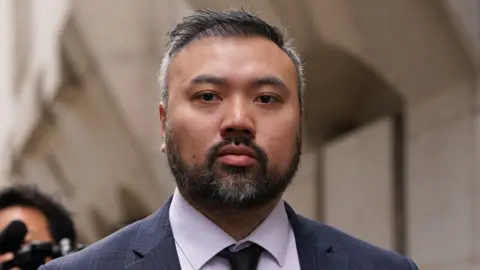 Wai misused his access to the Home Office computer system
bbc.com
Wai misused his access to the Home Office computer system
bbc.com
A UK Border Force officer at Heathrow was convicted of spying for China after using Home Office systems to track Hong Kong dissidents living in Britain, according to the BBC. The officer, Chi Leung “Peter” Wai, was found guilty of assisting a foreign intelligence service under the National Security Act and of misconduct in public office; a second man, Chung Biu “Bill” Yuen, was also convicted.
The case turns less on exotic tradecraft than on ordinary access. Prosecutors said Wai’s job granted him entry to the main immigration database holding extensive personal information on foreign nationals, and that he carried out searches on days off and even while on sick leave. The BBC reports he was paid for information passed to Chinese contacts, and that the material collected focused on Hong Kongers who had fled after pro-democracy crackdowns. The court heard that “special attention” was also paid to British politicians, including Conservative MP Sir Iain Duncan Smith.
The operational weakness described in court is familiar across modern government: the system records who looked up what, but does not stop someone from looking. The BBC says there appeared to be no checks to prevent misuse, leaving oversight to after-the-fact investigation rather than real-time control. Wai’s background also shows how security screening can become a box-ticking exercise when agencies are under pressure to staff roles: he had held multiple positions across policing, the military and private security, and later obtained a sensitive post with routine access to high-value data.
Diplomatically, the conviction is being treated as a state-to-state issue. The BBC reports the Chinese ambassador will be summoned by the Foreign Office, and Security Minister Dan Jarvis called the activities an infringement of UK sovereignty. Yet the immediate harm is borne by individuals whose immigration records become a surveillance tool, and by a government that must now explain why a frontline officer could run targeted searches without triggering internal alarms.
Wai and Yuen were remanded in custody and are due to be sentenced at a later date, with a hearing scheduled for 15 May. The database they used remains the same one the Home Office relies on to process the next day’s arrivals.