
Bolivia orders Evo Morales arrest
Court cites failure to appear in child trafficking case, warrant tests state reach in Chapare stronghold
Images
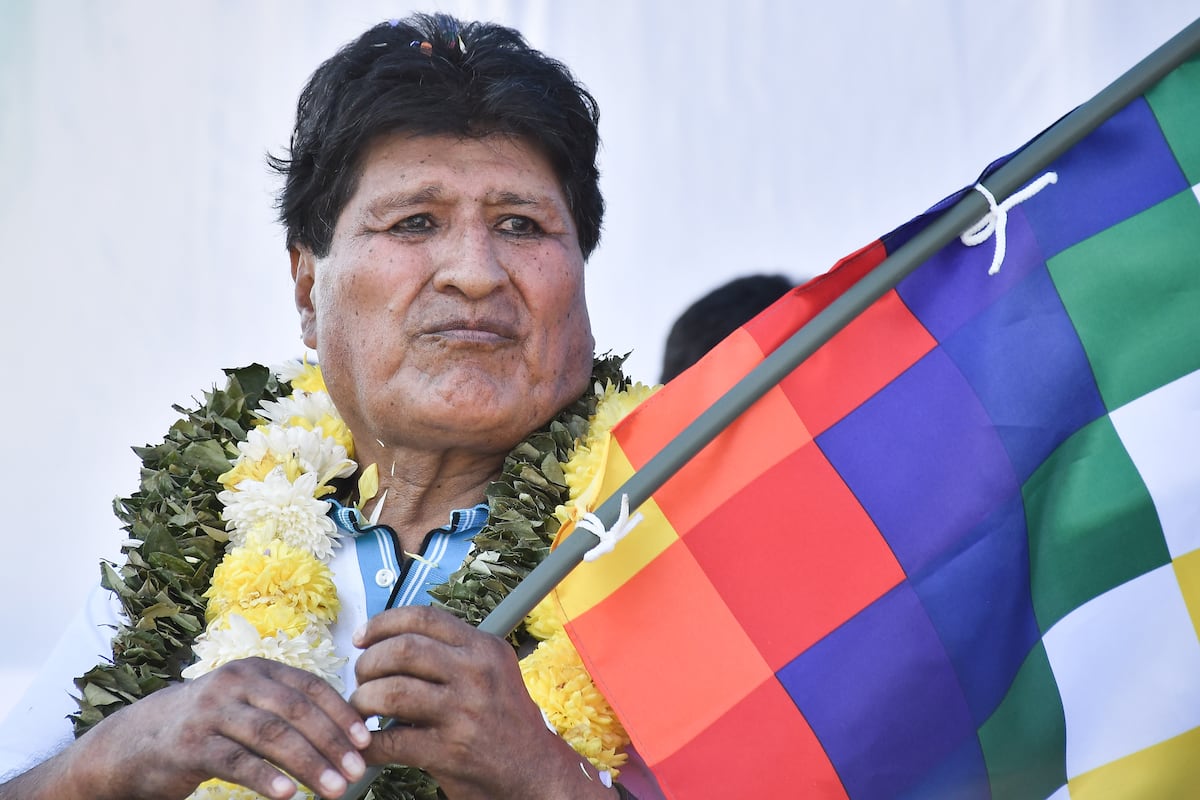 Bolivia orders arrest of Evo Morales for failing to appear at child trafficking trial
english.elpais.com
Bolivia orders arrest of Evo Morales for failing to appear at child trafficking trial
english.elpais.com
 cabildeodigital.com
Bolivia’s judiciary has ordered the arrest of former president Evo Morales after he failed to appear before a court in Tarija in a case alleging human trafficking involving a minor. According to El País, Judge Carlos Oblitas declared Morales in contempt, issued an arrest warrant and imposed a travel ban after his lawyers said he would not attend and described the prosecution as political persecution.
The case centres on an allegation that Morales impregnated a 15-year-old girl while he was president, with prosecutors arguing the relationship was enabled by political and economic favours to the girl’s family, El País reports. The dispute is not only over the underlying accusation but over whether the state can physically reach a former head of government who has been effectively out of reach since 2024, when he went into hiding in Chapare, a coca-growing region where he retains strong social backing. El País describes local farmers and coca growers providing protection, a reminder that in parts of Bolivia the line between political loyalty and territorial control is enforced by organised groups rather than institutions.
The timing of the judicial escalation sits inside a broader power struggle on the left. El País says the case was first opened during the interim presidency of Jeanine Áñez, later dismissed after Luis Arce—Morales’s former economy minister and ally—took office, and then reopened in 2024 as Arce and Morales fell out. That sequence matters because it shows how criminal cases can be paused and restarted as alliances shift, leaving the public to guess whether the driver is evidence, politics, or both. El País also reports that the Prosecutor’s Office says it has assembled more than 170 pieces of evidence, while the defence argues the notification process was improper and that Morales should have been served personally rather than by edict.
A second local report, Cabildeo Digital, says Tarija’s departmental prosecutor José Ernesto Mogro intends to seek a 20-year sentence for aggravated human trafficking and that the court issued a new arrest warrant and travel restrictions for Morales and a co-defendant. The same report says prosecutors plan to proceed even though the alleged victim has submitted a statement denying the facts—arguing that because the alleged crime involved a minor, authorities can act ex officio. In practice, that stance shifts the case away from the willingness of a complainant and toward the state’s capacity to enforce its own claims.
Morales, El País adds, is simultaneously organising a march to La Paz to protest government policy, while the government has accused him of destabilisation and circulated audio it attributes to him—recordings that fact-checkers said were old. The result is a country trying to run an election-season political calendar while also attempting to arrest one of its most powerful political actors.
The warrant is now a test of logistics as much as law: Bolivian police have been tasked with executing an order against a former president who is protected in his own stronghold. The court’s paperwork exists; the question is whether the state can make it matter in Chapare.