
Trump meets Xi in Beijing
Rubio ties Iran crisis to falling demand for Chinese exports, summit choreography masks bargaining over costs
Images
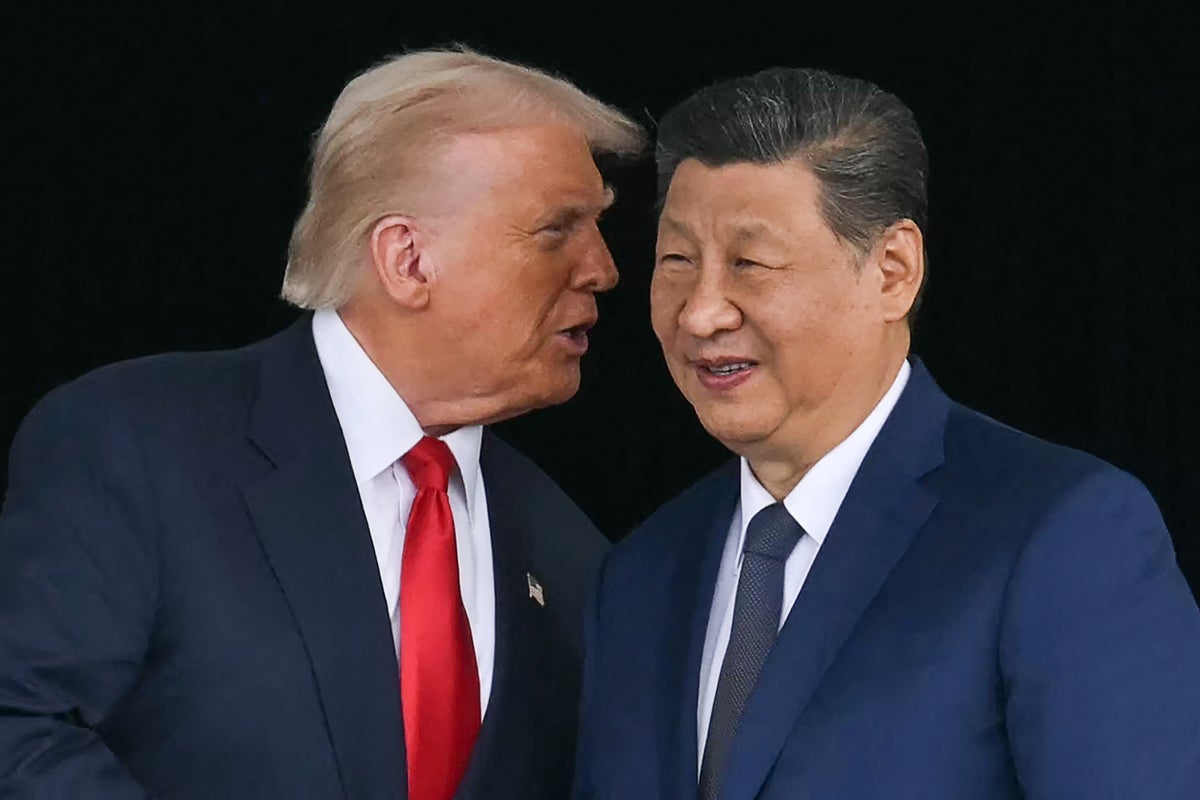 independent.co.uk
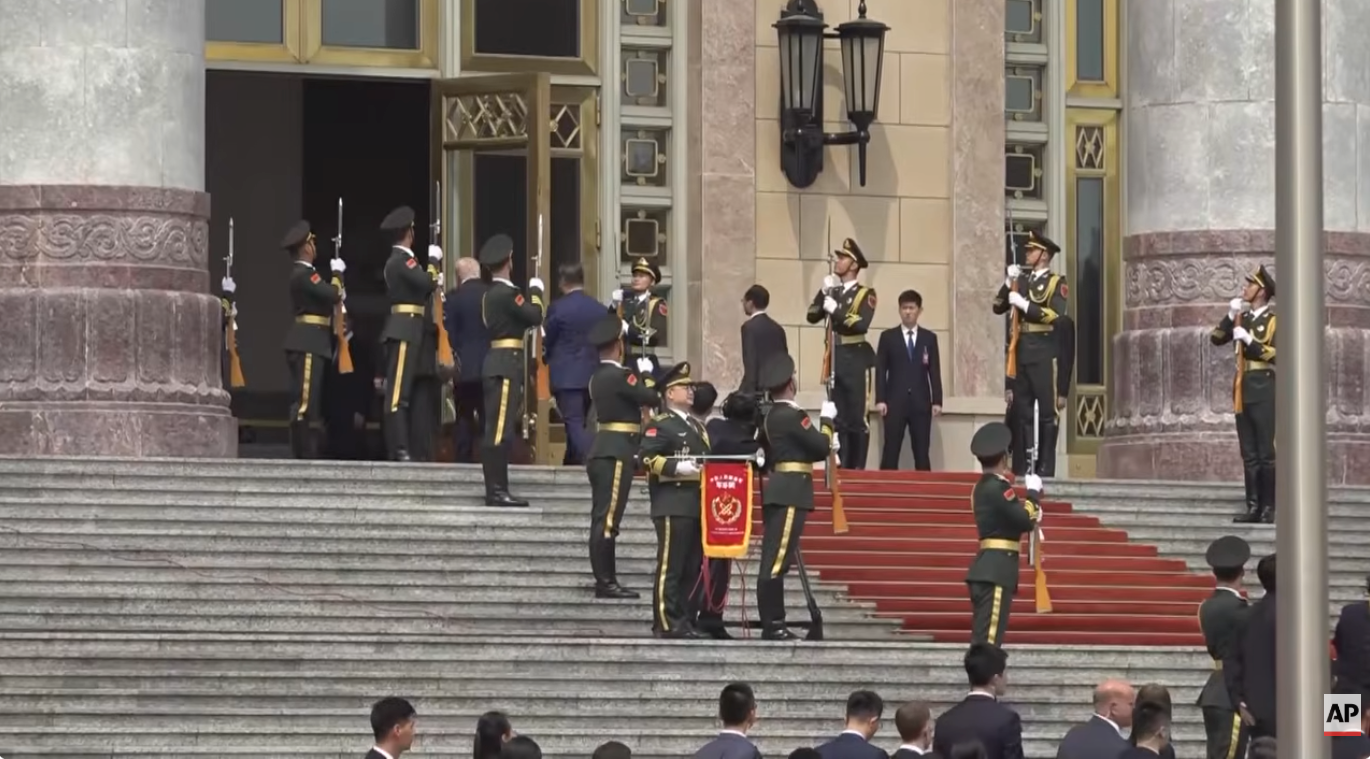 Donald Trump and Xi Jinping enter Great Hall of the People (AP)
independent.co.uk
Donald Trump and Xi Jinping enter Great Hall of the People (AP)
independent.co.uk
Donald Trump meets Xi Jinping in Beijing, Rubio frames Iran crisis as economic pressure point in US-China talks, corporate delegation arrives as Gulf risk ripples through trade
U.S. President Donald Trump and Chinese President Xi Jinping opened a summit in Beijing on Thursday, with closed-door talks scheduled for most of the day at the Great Hall of the People, according to the Independent’s live reporting. The visit began with a formal welcome including a gun salute and military display, and was set to include a tour of the Temple of Heaven and a state banquet.
The U.S. delegation includes Secretary of State Marco Rubio, who told Fox News that China is Washington’s “top political challenge” and described the bilateral relationship as the most important to manage. Rubio said the administration would press Beijing on the economic spillovers of the Iran crisis, arguing that global economies are suffering and that consumers are buying fewer Chinese products as uncertainty rises. That pitch effectively treats Middle East volatility as a lever in a separate negotiation: if shipping and energy risks are pushing up costs and dampening demand, Beijing is being asked to help contain the source of the shock.
Trump, by contrast, downplayed differences with Xi over Iran before leaving Washington, saying Iran was “very much under control” and not a major topic of discussion, the Independent reports. In Beijing, Xi used the opening to cast the meeting in civilisational terms, asking whether the two countries can avoid major-power conflict and calling for a “new chapter” in relations. Trump praised Xi and highlighted the size of the corporate delegation travelling with him, placing business access and deal-making alongside strategic messaging.
The split-screen matters because China’s role in any Iran-related de-escalation is indirect and transactional. Beijing’s incentives run through energy security, shipping stability, and the price of imported commodities, while Washington’s run through both the Gulf crisis and the larger competition over technology, trade and alignment. When U.S. officials argue that Iran-driven disruption is hurting Chinese exports, they are also signalling that the costs of confrontation will be counted in quarterly numbers, not only in communiqués.
After the anthems and the procession into the Great Hall, the two leaders were left to negotiate behind closed doors, with the day’s public choreography doing what it usually does: project control while the agenda remains opaque.