
Adult weight gain ties to higher cancer risk
Lund University study tracks over 600000 people from ages 17 to 60, prevention depends on what happens before symptoms do
Images
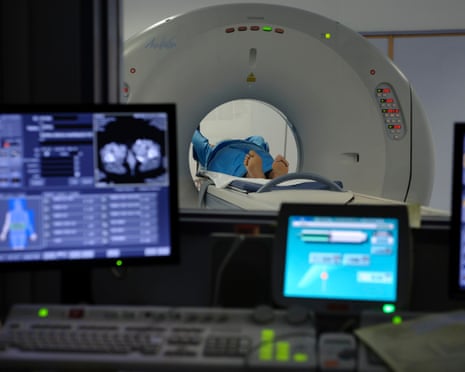 A patient inside a CT scanner. The Swedish study found that increased cancer risk was associated with heavier initial weight in early adulthood as well as weight gained during adulthood. Photograph: Sergio Azenha/Alamy
theguardian.com
A patient inside a CT scanner. The Swedish study found that increased cancer risk was associated with heavier initial weight in early adulthood as well as weight gained during adulthood. Photograph: Sergio Azenha/Alamy
theguardian.com
Adult weight gain is being linked to markedly higher risks of several cancers in a large Swedish analysis that followed more than 600,000 people from adolescence into middle age. Researchers at Lund University tracked repeated weight measurements taken between ages 17 and 60 and matched them to cancer diagnoses recorded up to 2023, according to The Guardian. The results were presented at the European Congress on Obesity in Istanbul, where the team argued that there is no “safe” period in adulthood to add excess weight without raising later cancer risk.
The study separates two related exposures that often blur together in public debate: starting adulthood at a higher weight and then gaining more weight over time. Lead author Anton Nilsson, an associate professor at Lund University, said both were associated with higher cancer incidence, suggesting that prevention is not only about avoiding obesity in one’s 40s or 50s but also about what happens earlier. The strongest relative risks were concentrated in cancers already considered obesity-related, but the patterns differed by sex and age. For men, associations were stronger when weight gain happened before age 45, with particularly strong links to oesophageal and liver cancer; for women, weight gain after age 30 was strongly associated with endometrial cancer, postmenopausal breast cancer and meningioma, while colon cancer tracked female weight changes after 30.
The Guardian reports some of the most striking comparisons in those who became obese before age 30: men had about five times higher risk of liver cancer than men who remained slim, and women had about 4.5 times higher risk of endometrial cancer than women who never became obese. The analysis also suggests a gradient rather than a cliff edge. People who gained the most weight—an average of 32 kg—were only modestly more likely overall to develop cancer than those who gained the least—an average of 8 kg—yet within that average sat much larger increases for particular cancer types, including liver cancer in men and endometrial cancer in women.
Nilsson suggested one reason earlier weight gain appears more damaging is simply time: inflammation and persistently raised insulin levels have longer to act on tissues. That framing has practical consequences. Health systems tend to intervene late, when weight-related disease has already emerged and treatment can be coded, billed and scheduled. Prevention, by contrast, depends on repeated measurement, earlier feedback, and sustained lifestyle change—work that is harder to standardise and easier to postpone.
In the Lund dataset, weight was measured on average four times per person across four decades. Cancer was then counted, not debated, through registry follow-up to 2023.