
Kevin Warsh confirmed as Federal Reserve chair
Partisan Senate vote hands Trump a new face at the central bank, Powell stays on the board as White House scrutiny continues
Images
 Kevin Warsh attends a Senate banking committee confirmation hearing in Washington DC on 21 April. Photograph: Bloomberg/Getty Images
theguardian.com
Kevin Warsh attends a Senate banking committee confirmation hearing in Washington DC on 21 April. Photograph: Bloomberg/Getty Images
theguardian.com
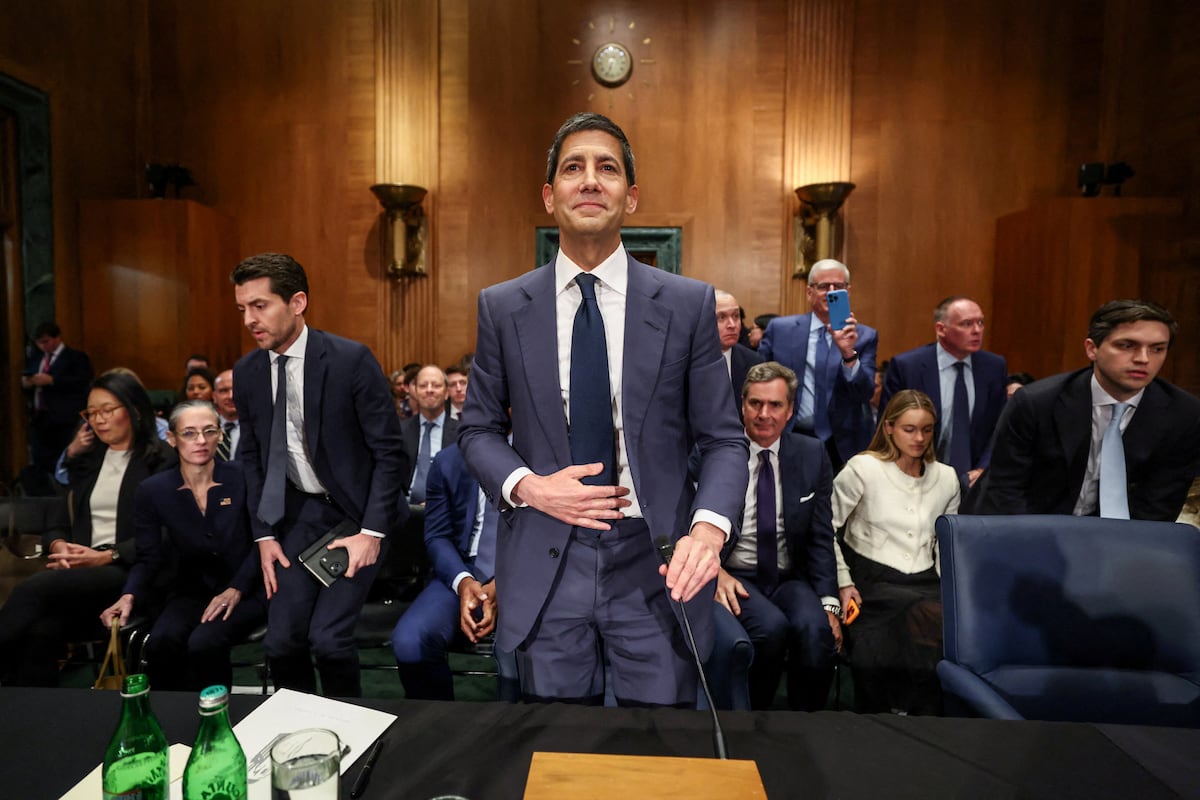 Kevin Warsh officially confirmed as Federal Reserve chair
english.elpais.com
Kevin Warsh officially confirmed as Federal Reserve chair
english.elpais.com
Kevin Warsh will take over as chair of the US Federal Reserve after the Senate confirmed him in a 54–45 vote, according to The Guardian and El País. He replaces Jerome Powell as Powell’s term ends, with Warsh set to assume the role immediately after. The confirmation was almost entirely partisan, with Pennsylvania Democrat John Fetterman the lone crossover vote.
Warsh arrives as US inflation accelerates to 3.8% and fuel costs rise amid the war involving Iran, a backdrop that has turned interest-rate settings into a front-line political issue. President Donald Trump nominated Warsh after months of pushing for lower rates, and Warsh has echoed that preference in recent public comments, even as he told senators he would preserve the Fed’s independence. The chair, however, is only one vote on the rate-setting committee; any pivot still requires persuading other voting members, and El País describes a board environment increasingly shaped by the same polarization visible in Congress.
The dispute is not only about the next rate move but about the boundaries of the institution itself. El País reports that Warsh has argued for a “regime change” in monetary policy, including a more conservative tone, a less exposed communications strategy, and closer coordination with the Treasury, while also advocating shrinking the Fed’s balance sheet. The Guardian notes Warsh’s earlier reputation as an “inflation hawk” during his 2006–2011 stint as a Fed governor, and that he left amid disagreements over post-crisis stimulus—history that can be read as either a warning against money creation or a willingness to break with consensus when the White House wants a different outcome.
Powell’s departure does not remove him from the building. Both outlets report he intends to remain on the Fed’s Board of Governors after stepping down as chair, a choice that keeps him inside a system now under direct White House scrutiny. The Guardian ties that scrutiny to cost overruns in renovations at the Fed’s headquarters, which Powell has described as a “pretext” for pressure to cut rates; El País adds that the Trump administration has pursued other avenues to test the Fed’s autonomy, including an attempt to remove Fed governor Lisa Cook that is still before the Supreme Court.
Warsh’s first months will be watched less for speeches than for the vote tallies and the balance-sheet runoff schedule. The Senate has now put a new chair in place, and the Fed’s borrowing costs will still be set meeting by meeting.