
Camden Highline project is scrapped
London’s planned elevated park ran into construction inflation and energy shock, one completed stretch survives inside Coal Drops Yard development
Images
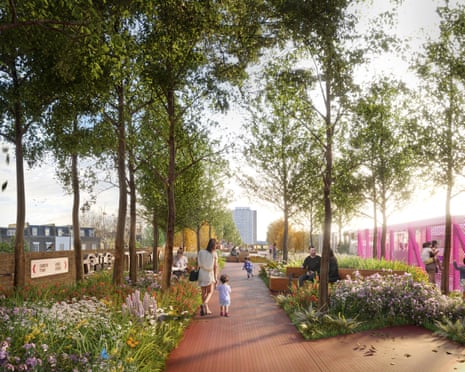 A visualisation of the Camden Highline. The project intended to turn a disused rail line into a walking and cycling route. Illustration: Hayes Davidson
theguardian.com
A visualisation of the Camden Highline. The project intended to turn a disused rail line into a walking and cycling route. Illustration: Hayes Davidson
theguardian.com
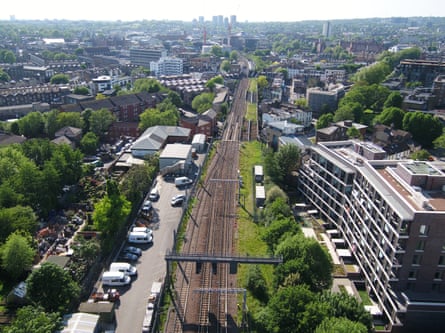 An aerial view of the proposed route for the Camden Highline. It was supported by the local business association and 1,200 donors. Photograph: Handout
theguardian.com
An aerial view of the proposed route for the Camden Highline. It was supported by the local business association and 1,200 donors. Photograph: Handout
theguardian.com
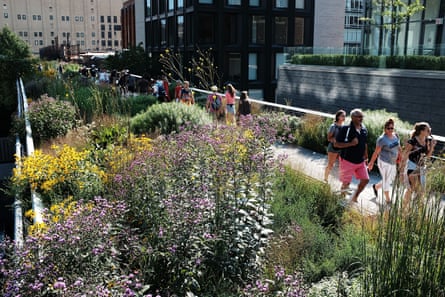 New York’s popular High Line has been credited with revitalising post-industrial neighbourhoods in Manhattan. Photograph: Spencer Platt/Getty Images
theguardian.com
New York’s popular High Line has been credited with revitalising post-industrial neighbourhoods in Manhattan. Photograph: Spencer Platt/Getty Images
theguardian.com
Plans for the Camden Highline—an elevated park and walking route intended to run from Camden to King’s Cross—have been scrapped after organisers said rising costs and the current economic climate made the project unviable, The Guardian reports. The scheme was conceived nearly a decade ago as London’s answer to New York’s High Line, aiming to convert a disused rail line into a green corridor for walking and cycling. Organisers said the project has been paused with immediate effect.
The High Line idea travels well on paper: a neglected strip of infrastructure becomes public space, property values rise nearby, and the city gets a photogenic ribbon of greenery. But the London version ran into the part that is harder to photograph—financing, construction inflation, and the competition between “nice-to-have” capital projects and statutory services. The Guardian reports that UK construction costs have risen well above general inflation over recent years, and that the emerging 2026 energy shock has further squeezed budgets.
The Camden Highline group said support has increasingly been focused on essential services, leaving less room for discretionary projects. That shift is not unique to Camden: elevated-park proposals often depend on a narrow window when borrowing is cheap, philanthropy is abundant, and local authorities have spare capacity to shepherd long planning processes. When any of those inputs tighten, the project’s value is still discussed in brochures, but its invoices arrive in real time.
The scheme did produce a tangible fragment. The Guardian notes that a stretch was completed as part of the Coal Drops Yard development, including a bridge across Regent’s Canal from Camley Street nature reserve, and has become a landscaped walkway used by office workers and tourists. The rest of the proposed route—passing Camden Road overground station and ending near York Way—will now remain what it was before: a line on a map that never became a place.
Over the past decade, the organisers held walking tours, ran school workshops, and gathered donors and planning support. The elevated park itself will not be built.