
Asian households return to wood and charcoal as cooking gas prices surge
Guardian reports LPG shortages and Hormuz-linked supply disruption, indoor smoke becomes the cheapest fuel when imports fail
Images
 Across Asia, firewood is being collected to use for cooking as gas has become prohibitively expensive. Photograph: Ritesh Shukla/Getty Images
theguardian.com
Across Asia, firewood is being collected to use for cooking as gas has become prohibitively expensive. Photograph: Ritesh Shukla/Getty Images
theguardian.com
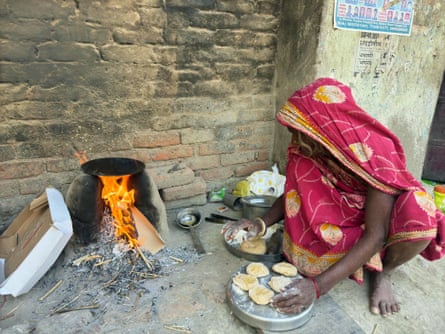 A woman cooks over firewood outside her home in Prayagraj, India. Photograph: Rajesh Kumar Singh/AP
theguardian.com
A woman cooks over firewood outside her home in Prayagraj, India. Photograph: Rajesh Kumar Singh/AP
theguardian.com
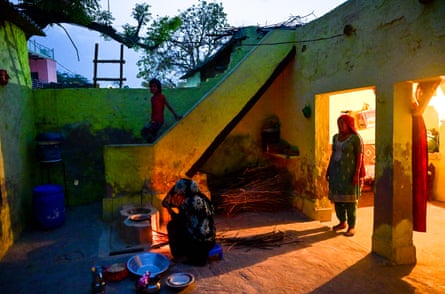 Women and children are the most vulnerable to the effects of ambient and household air pollution. Photograph: Ritesh Shukla/Getty Images
theguardian.com
Women and children are the most vulnerable to the effects of ambient and household air pollution. Photograph: Ritesh Shukla/Getty Images
theguardian.com
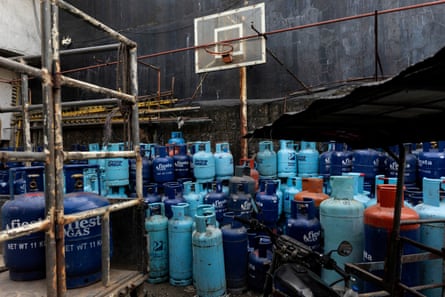 In the Philippines, prices for a small tank of LPG have tripled. Photograph: Eloisa Lopez/Reuters
theguardian.com
In the Philippines, prices for a small tank of LPG have tripled. Photograph: Eloisa Lopez/Reuters
theguardian.com
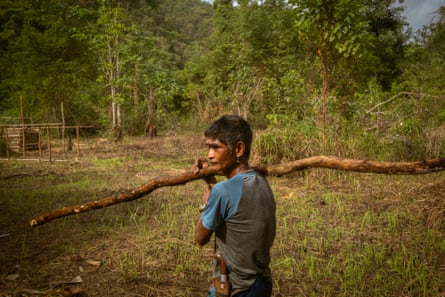 A man carries wood to make charcoal in the foothills of Mount Gantung, Brooke’s Point, Palawan. Photograph: Jes Aznar/The Guardian
theguardian.com
A man carries wood to make charcoal in the foothills of Mount Gantung, Brooke’s Point, Palawan. Photograph: Jes Aznar/The Guardian
theguardian.com
Cooking gas has become scarce and unaffordable across parts of Asia, pushing households back to wood and charcoal and raising the health toll from indoor smoke, The Guardian reports. In a south Delhi slum, one mother described spending hours collecting firewood after abandoning a small gas stove she had used to cook for her children. The Guardian ties the shift to disrupted liquefied petroleum gas supply chains and higher prices during the Middle East conflict, with India—one of the region’s biggest consumers—importing a large share of its LPG.
The change is visible at street level but driven by logistics and finance. LPG is a traded commodity that depends on shipping lanes, insurance, and reliable access to ports; when those inputs become uncertain, supply tightens and informal markets set the marginal price. The Guardian cites India’s dependence on imported LPG and notes that a large portion of those imports normally transit the Strait of Hormuz, where conflict has constrained flows. Official messaging can insist there is “no shortage,” but households respond to what they can actually buy and at what price.
The second-order effects are not limited to kitchens. When families switch to solid fuels, time is reallocated to fuel collection, cash that might have gone to food or school fees goes to energy, and respiratory exposure rises inside small homes with poor ventilation. The Guardian notes that smoke from burning wood stings eyes and throats, and that solid-fuel pollutants are linked in medical literature to respiratory disease, lung cancer, strokes, and heart disease. Those costs do not arrive as a single crisis moment; they accumulate as clinic visits, missed workdays, and chronic illness, often in households least able to pay.
The episode also tests the region’s energy-transition narrative. LPG has been sold as a cleaner bridge away from biomass, but the bridge depends on import capacity and stable maritime transit. When the price quadruples in informal markets, as one Delhi resident told The Guardian, the transition reverses without any policy vote—just a shortage and a weekly budget constraint.
India’s government has urged austerity, and an Indian minister cited by The Guardian warned that petroleum gas reserves could last only weeks. In the slums where families are already cooking on open fires again, the adjustment has already been made.