
Two men plead guilty over antisemitic TikTok abuse in Stamford Hill
Met Police link street harassment to online amplification, court process moves slower than reposts
Images
 bbc.com
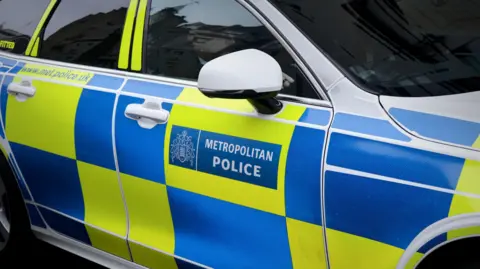 Getty Images A police car with a Metropolitan Police log and blue and yellow chequerboard pattern on the side
bbc.com
Getty Images A police car with a Metropolitan Police log and blue and yellow chequerboard pattern on the side
bbc.com
Two men who travelled across London to harass and film Orthodox Jews in Stamford Hill have pleaded guilty to a religiously aggravated public order offence, after recording the abuse for TikTok. The Metropolitan Police said the pair, Adam Bedoui and Abdelkader Amir Bousloub, attempted to flee but were detained by officers, and later appeared at Thames Magistrates’ Court. Sentencing is scheduled for early June, according to the BBC.
The case sits in a wider pattern the police say they are now confronting: offences designed not only to intimidate a target in the street, but to create content that can be reposted and amplified online. Detective Superintendent Oliver Richter, who leads policing in Hackney and Tower Hamlets, described the incident as deliberate and targeted antisemitism, aggravated by the intent to spread the footage on social media. The Met says it has arrested around 50 people for antisemitic hate crimes over the past four weeks, with 10 charged.
That combination—low-cost filming, instant distribution, and the prospect of algorithmic reach—changes what “harm” looks like in a public-order case. The immediate victim is confronted once; the clip can circulate indefinitely, copied beyond the platform where it was first uploaded. The policing response, by contrast, is still tied to identifiable suspects, specific incidents, and court timetables that move at the speed of paperwork. Even when arrests are quick, the content can outlive the case.
The BBC notes that the incident comes amid multiple attacks on synagogues and other Jewish sites in recent months, including stabbings in Golders Green and an arson attack on ambulances owned by the Jewish charity Hatzola. In that environment, a filmed street confrontation is not treated as “just” online provocation; it is one more data point in a security picture that communities and police are already updating in near real time.
On the day officers detained the men, the street encounter ended quickly. The video they recorded was built to travel further than they did.