
Russian cargo ship sank off Spain with possible reactor cargo for North Korea
Investigators cite undeclared components and interrupted Spanish rescue, a deep-water wreck becomes the evidence locker
Images
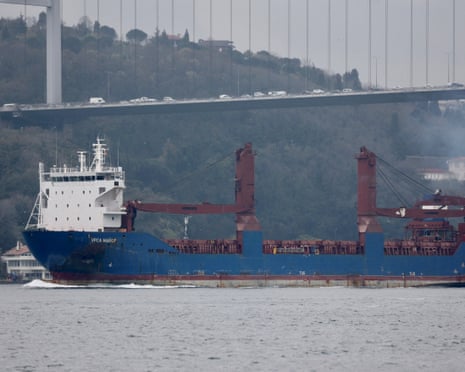 The Ursa Major in the Bosphorus in Istanbul. The Russian cargo ship was purportedly sailing from St Petersburg to Vladivostok when it sank off the coast of Spain in 23 December 2024. Photograph: Yoruk Isik/Reuters
theguardian.com
The Ursa Major in the Bosphorus in Istanbul. The Russian cargo ship was purportedly sailing from St Petersburg to Vladivostok when it sank off the coast of Spain in 23 December 2024. Photograph: Yoruk Isik/Reuters
theguardian.com
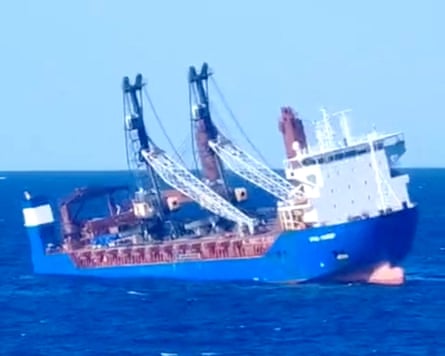 The Ursa Major pictured listing before it sank 62 nautical miles off the coast of Murcia. Photograph: Social media/Reuters
theguardian.com
The Ursa Major pictured listing before it sank 62 nautical miles off the coast of Murcia. Photograph: Social media/Reuters
theguardian.com
A Russian-flagged cargo ship that sank off Spain in late 2024 may have been carrying nuclear reactor components intended for North Korea, according to the Guardian, citing a Spanish investigation and a CNN report. The vessel, Ursa Major, went down after its crew reported explosions in the engine room, and Spanish rescue efforts were interrupted when a Russian warship arrived and ordered Spanish boats to withdraw. The ship now lies deep underwater, and the undeclared cargo has turned an ordinary maritime incident into a proliferation-adjacent mystery.
The Guardian reports that Spain’s maritime rescue service dispatched aircraft and vessels after a distress call, and that the ship had slowed markedly in the day before. As the situation deteriorated, the crew abandoned ship; the captain later told Spanish investigators that large “manhole covers” listed on the manifest were in fact nuclear reactor components similar to those used by submarines, though he said no nuclear fuel was being transported. Satellite imagery cited in the reporting showed two large containers on the stern, and a source familiar with the investigation told CNN the captain believed the ship would be diverted to the North Korean port of Rason to deliver the reactors.
If the cargo was what investigators suspect, the logistics tell their own story. Moving extremely heavy components across Russia and onward through Central and South Asia is harder to hide, insure, and physically execute than putting them on a ship and letting paperwork do the disguising. A manifest describing “non-dangerous merchandise” shifts scrutiny onto customs and port officials who typically triage risk by declared category, not by the weight and geometry of a container seen in satellite photos. The alleged destination—North Korea—also changes the meaning of a mid-voyage emergency: salvage decisions, access to the wreck, and control of the scene become part of the cargo’s security.
The Guardian notes that Spanish rescue attempts were curtailed when the Russian warship took over operations and fired flares. CNN, in an investigation referenced by the paper, reported seismic signatures resembling explosions shortly after the flares were fired, raising questions about what happened in the water as the ship foundered. The result is a case where the most valuable evidence may be unreachable: the ship lies at great depth, and the parties with the strongest interest in the cargo’s secrecy are best positioned to obstruct inspection.
Ursa Major sank, but the unanswered question is what was supposed to arrive intact. Two large containers disappeared into deep water off Spain, and the paperwork still says “non-dangerous merchandise.”