
Bahamas votes in three-way election
Immigration from Haiti dominates campaign alongside cost-of-living strain, sovereignty slogans compete with tourism-era stability pitch
Images
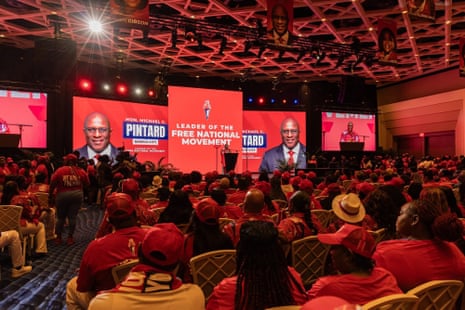 A Free National Movement election meeting. The Bahamas opposition party is campaigning on the slogan ‘Save our sovereignty’
theguardian.com
A Free National Movement election meeting. The Bahamas opposition party is campaigning on the slogan ‘Save our sovereignty’
theguardian.com
Voters in the Bahamas went to the polls on Tuesday in a three-way general election where immigration—particularly arrivals from Haiti—has become a central dividing line. The Guardian reports more than 200,000 people are registered to vote across 41 constituencies, with the governing Progressive Liberal Party (PLP) facing the opposition Free National Movement (FNM) and a smaller Coalition of Independents (COI). The contest is also being fought against a backdrop of cost-of-living pressure and fuel prices that local voters and campaigners link to the wider Middle East crisis.
The campaign’s headline issue is sovereignty, and the way it is being operationalised is through citizenship rules. According to the Guardian, the FNM has pushed a “Save our Sovereignty (SOS)” message and argues that anyone entering illegally should have no pathway to citizenship, emphasising that a legal process exists. That stance does not require building new institutions; it requires tightening the gate and making fewer exceptions, which is politically legible and administratively simple.
The governing PLP, led by Philip ‘Brave’ Davis, has framed the choice as stability versus uncertainty, pointing to post-pandemic recovery and record tourism growth, the Guardian reports. That argument asks voters to treat the state’s current trajectory as an asset worth protecting—especially in a small, tourism-dependent economy where external shocks arrive quickly through prices and visitor numbers. But it also leaves the government defending the everyday costs that voters feel most directly. The Guardian quotes an FNM figure citing a high price for a gallon of gas in New Providence and noting the Bahamian dollar’s one-to-one peg to the US dollar, a reminder that monetary stability does not guarantee cheap imports.
Third parties have historically struggled to win seats in the Bahamas, and the Guardian notes the COI’s previous vote total without suggesting it is poised for a breakthrough. Still, its social media presence matters in a close race: it can siphon votes, force the major parties to harden their messaging, and turn immigration into a loyalty test rather than a policy debate. The Guardian also reports the candidacy of former basketball champion Rick Fox for the FNM, a celebrity entry that draws attention but also creates moments of volatile retail politics.
On election day, the choice on the ballot is between parties. The argument on the street, as the Guardian’s reporting shows, is about who gets to stay—and who gets to decide.