
Trump heads to Beijing for Xi summit
Trade truce extension and new Board of Trade floated as deliverables, courts and wars narrow what tariff politics can actually change
Images
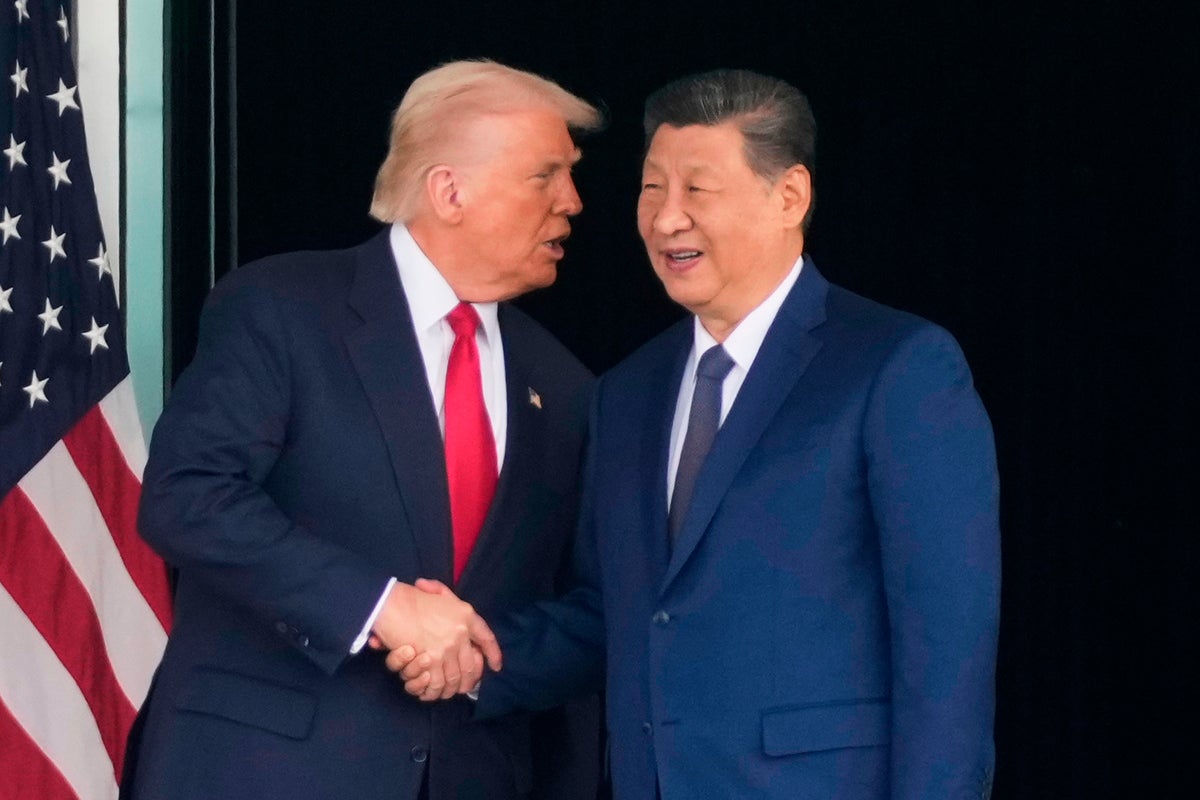 Trump and Xi dialed down the trade war, but challenges lurk at their China summit
independent.co.uk
Trump and Xi dialed down the trade war, but challenges lurk at their China summit
independent.co.uk
 bbc.com
 BBC Donald Trump's head in profile on the left and Xi Jinping's head in profile on the right. They are both wearing shirts and suit jackets. Xi's head is overlaid with a red design element.
bbc.com
BBC Donald Trump's head in profile on the left and Xi Jinping's head in profile on the right. They are both wearing shirts and suit jackets. Xi's head is overlaid with a red design element.
bbc.com
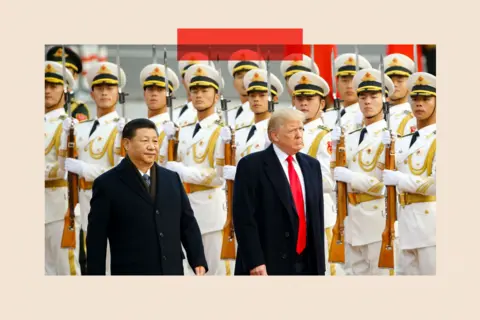 This is the first visit by a US president since Trump's last one in 2017
bbc.com
This is the first visit by a US president since Trump's last one in 2017
bbc.com
Donald Trump travels to Beijing for talks with Xi Jinping, the meeting is framed as a bid to keep a trade truce alive while Taiwan and Iran sit in the room anyway, corporate delegations arrive as courts and tariffs limit what either leader can promise
Security has been tightened around Beijing’s Tiananmen Square ahead of US President Donald Trump’s visit, the BBC reports, amid online speculation that China is preparing a highly choreographed welcome. Trump is due to depart for a summit with Xi Jinping that includes talks and a banquet, and a visit to the Temple of Heaven, according to the BBC. The Independent describes the trip as an attempt to stabilise the economic relationship, with only modest policy announcements expected and an extension of last year’s trade truce seen as likely.
On paper the agenda is trade management. The Independent says US officials have floated a government-to-government “Board of Trade” to keep dialogue going on goods that do not trigger national security alarms, while leaving sensitive technology outside the room. It also reports that China may announce plans to buy more US soybeans, beef and Boeing airplanes. The numbers behind the choreography point to why both sides want the optics of normalisation: the Independent cites US Census Bureau data showing China bought nearly $50 billion less in American products last year than in 2022, and puts the US trade imbalance at $202 billion.
But the trade story now runs through detours. The Independent says China has routed US-bound products through other Asian countries, while American companies have shifted supply chains for computers and electronics to Vietnam and India. It adds that China’s share of US goods imports has fallen sharply since Trump’s first term. Even if a truce is extended, the practical effect is a supply chain that has already been re-plumbed to survive tariff shocks, with factories and logistics contracts sitting outside the summit hall.
The legal backdrop also narrows what can be promised. The Independent notes that the US Supreme Court ruled Trump lacked authority to impose many of last year’s tariffs unilaterally, and that a federal court last week deemed temporary replacement tariffs illegal. That leaves the administration looking for mechanisms that can survive domestic review, while still signalling toughness to voters and predictability to businesses.
Meanwhile, the BBC places Taiwan, advanced technology competition and the Iran war among the issues that could still derail the relationship. Beijing has tried to position itself as a mediator in the conflict, the BBC says, while US officials publicly urge China to press Iran over disruptions in the Strait of Hormuz. The result is a summit marketed as trade housekeeping but shaped by security crises that move faster than any “Board of Trade” can meet.
Trump will dine in Beijing while lawyers and customs officers continue to define the limits of the deal.