
UK moves to nationalise British Steel
Scunthorpe blast furnaces drive public interest case after talks with Jingye fail, audit office warns supervision costs could pass £1.5bn by 2028
Images
 bbc.com
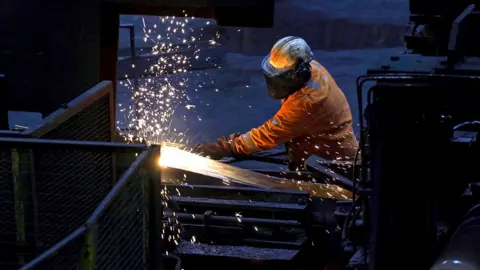 Danny Lawson / PA Media A steelworker wearing orange protective gear welds as sparks flies against a dark background in Scunthorpe Steel works in 2025.
bbc.com
Danny Lawson / PA Media A steelworker wearing orange protective gear welds as sparks flies against a dark background in Scunthorpe Steel works in 2025.
bbc.com
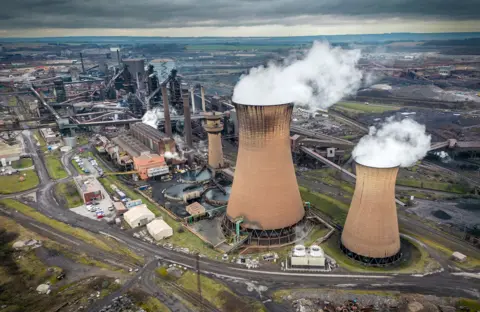 The large operation in Scunthorpe has been the subject of cost-cutting discussions and government intervention in the past
bbc.com
The large operation in Scunthorpe has been the subject of cost-cutting discussions and government intervention in the past
bbc.com
British Steel is set to be brought into public ownership after Prime Minister Keir Starmer said legislation would be introduced this week to allow the UK government to take full ownership, subject to a public interest test. The BBC reports the move follows years of stopgap state control at the Scunthorpe steelworks after the government seized control from its Chinese owner Jingye in April 2023 to prevent the blast furnaces being shut down. The National Audit Office has already put a price tag on the supervision regime: about £377 million spent on operations, workers and raw materials, with costs that could exceed £1.5 billion by 2028 depending on policy choices.
The decision lands in a sector where the UK has repeatedly tried to avoid making a clean call between closure, subsidy and ownership. Starmer’s government had previously sought private investors, but the BBC says talks with Jingye did not yield a commercial sale. The core technical constraint is the blast furnaces themselves: if they are switched off, restarting is difficult and expensive, and the UK would lose the ability to make “virgin steel” — iron extracted and purified for uses such as rail and large construction projects.
For unions and industry bodies, nationalisation offers continuity rather than a turnaround. UK Steel director-general Gareth Stace welcomed the announcement as “certainty” for the 2,700 workforce and customers, while stressing that public ownership should be the start of a long-term investment plan, not the end point. The GMB union similarly backed the government doing “everything possible” to secure the plant’s future.
But the numbers disclosed so far describe a familiar pattern: the state takes over when losses are unavoidable, while the long-term plan remains undefined. The BBC notes the UK previously took over British Steel in 2019, with the Insolvency Service running it for nine months at a cost of £600 million. Jingye had argued the Scunthorpe site was losing £700,000 per day and was no longer sustainable — a claim that, even if contested, frames the problem the government inherits once it becomes the owner.
In practice, full public ownership shifts the bargaining position with suppliers, customers and potential future partners, because the government can keep paying when a private buyer would walk away. It also changes the politics of closure: a loss-making plant becomes a line item rather than a bankruptcy, and each additional month of operation creates a larger constituency for continued support.
The legislation, the BBC reports, will be introduced this week. The cost of nationalisation itself has not been given, but the UK has already been paying to keep the furnaces lit.