
Plaid Cymru wins Welsh election and prepares to form government
Labour falls to third behind Reform UK surge, devolution talks begin with payrolls and budgets at stake
Images
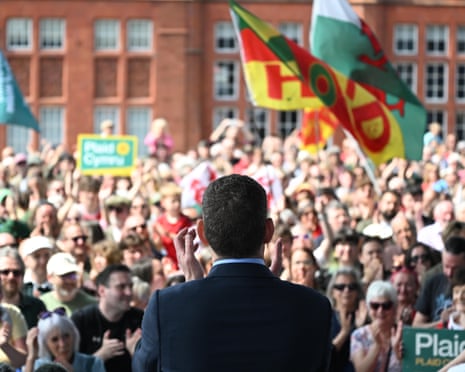 Rhun ap Iorwerth speaks to Plaid Cymru supporters on the steps of the Senedd, Cardiff, 9 May 2026. Photograph: Matthew Horwood/Getty Images
theguardian.com
Rhun ap Iorwerth speaks to Plaid Cymru supporters on the steps of the Senedd, Cardiff, 9 May 2026. Photograph: Matthew Horwood/Getty Images
theguardian.com
 Will Hayward
theguardian.com
Will Hayward
theguardian.com
On 9 May, Plaid Cymru leader Rhun ap Iorwerth addressed supporters on the steps of the Senedd in Cardiff after his party won 43 seats—enough to become the largest force in Wales’s devolved parliament, according to The Guardian. For the first time in more than a century of Plaid Cymru’s existence, it is poised to form the Welsh government. It would also be the first time Wales’s highest-ranking political figure comes from a party committed to independence.
The result lands inside a UK that has been trying to present itself as administratively steady: a Labour government in Westminster, a cost-of-living hangover, and a political class that has leaned on “delivery” as a substitute for constitutional argument. Wales’s vote cuts across that messaging in two directions at once. Plaid’s victory turns devolution from a settled compromise into a live bargaining process, with a “100-day plan” that includes seeking negotiations over rail, justice and the crown estate—three levers that determine not just policy, but patronage, procurement and who gets to write the cheques.
At the same time, Reform UK’s surge makes Wales a test market for a different kind of opposition. The Guardian reports Reform won 34 seats on 29% of the vote, giving the party a sizable bloc of MSs who will each draw an £80,000 salary and be supported by three to four staff, plus £1.2 million in group-staff funding. That is not just a headline; it is an institutional foothold. Parties that previously operated as campaign brands acquire payrolls, offices, researchers and routines—and with them, a stronger ability to set agendas, generate content, and recruit candidates for Westminster.
Labour’s collapse to third place leaves Westminster facing an awkward choice. If it refuses Plaid’s demand for more powers, it risks accelerating its own decline in Wales, the article argues. If it concedes, it validates the idea that the union’s terms are negotiable when an election produces enough leverage. Either way, the costs are socialised: the UK government does not negotiate with a single Welsh electorate, but with parties whose incentives are shaped by the next contest—Plaid’s need to show momentum toward independence, Reform’s need to prove insurgency can be converted into state-funded permanence, and Labour’s need to avoid looking weak while it loses ground.
The Guardian describes the crowd singing Hen Wlad Fy Nhadau as some Plaid Senedd members cried. The next negotiation is likely to be over rail funding, justice administration and the crown estate—assets that do not sing back.