
Adolescence wins four BAFTA TV awards
Netflix one-take drama leads night as Gaza documentary dropped by BBC takes prize, a two-hour broadcast delay becomes part of the editorial workflow
Images
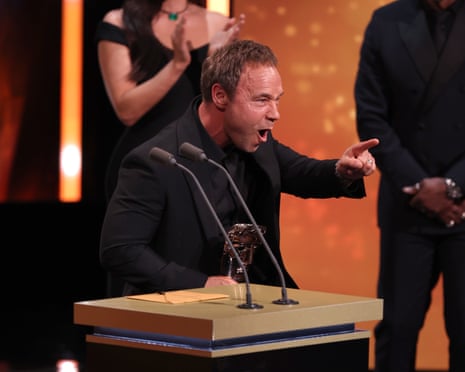 Stephen Graham had been nominated for a Bafta eight times before Sunday’s ceremony. Photograph: John Phillips/Bafta/Getty Images
theguardian.com
Stephen Graham had been nominated for a Bafta eight times before Sunday’s ceremony. Photograph: John Phillips/Bafta/Getty Images
theguardian.com
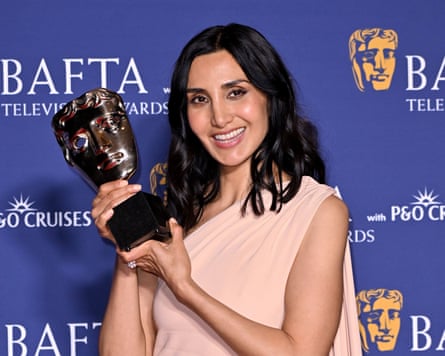 Narges Rashidi won the best leading actress Bafta for her role in Prisoner 951. Photograph: Alan West/Hogan Media/Shutterstock
theguardian.com
Narges Rashidi won the best leading actress Bafta for her role in Prisoner 951. Photograph: Alan West/Hogan Media/Shutterstock
theguardian.com
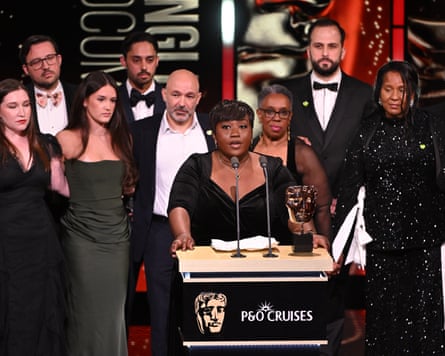 Olaide Sadiq won the Bafta for best single documentary for Grenfell: Uncovered. Photograph: Jeff Spicer/Bafta/Getty Images for Bafta
theguardian.com
Olaide Sadiq won the Bafta for best single documentary for Grenfell: Uncovered. Photograph: Jeff Spicer/Bafta/Getty Images for Bafta
theguardian.com
BAFTA handed Netflix drama Adolescence four prizes at its TV awards on Sunday, including best limited drama and a leading-actor win for co-creator Stephen Graham, according to The Guardian. The four-part series is built around episodes filmed in a single take, a production constraint that doubles as a marketing hook in a crowded streaming catalogue. The same ceremony also rewarded documentaries tied to recent public controversies, including Grenfell: Uncovered and Gaza: Doctors Under Attack.
The awards list reads like a map of how British TV now competes: not only by commissioning “important” subjects, but by packaging them into formats that travel well on global platforms. Adolescence centres on a teenager arrested for murdering a girl at his school; the supporting-actor prize went to Owen Cooper for playing the 13-year-old suspect, while Christine Tremarco won supporting actress. Netflix’s Grenfell: Uncovered, which combines inquiry footage with testimony from survivors and bereaved families, won best single documentary. In the current affairs category, Gaza: Doctors Under Attack won after being commissioned by the BBC and then dropped over impartiality fears, before Channel 4 picked it up.
That sequence—commission, reputational worry, cancellation, rescue by a rival—has become a parallel distribution system for contentious reporting. A project can be effectively shelved without a formal ban; it just needs a broadcaster willing to decide the risk is not worth the complaints, the headlines, or the internal meetings. The Guardian reports that the BAFTA ceremony was broadcast on a two-hour delay, and that Channel 4 executive producer Ben De Pear challenged the BBC about editing out critical remarks from the stage. Even the acceptance speeches are now treated as live ammunition: a delay buys time to remove lines that might become the clip.
The rest of the night underlined the same economics. Channel 4 was recognised for its news coverage of the Israel-Iran war, beating Sky News and a BBC Newsnight programme on grooming gang survivors, The Guardian writes. Simon Schama won a factual category for a BBC Two documentary, The Road to Auschwitz, while Channel 4’s See No Evil won for a series about the Church of England scandal involving abuser John Smyth. The categories reward institutions for “public service” output, but the incentives are private: audience attention, brand positioning, and the ability to tell regulators and funders that the mission is being met.
BAFTA can only hand out trophies; it cannot settle the underlying dispute about who gets to decide what is too risky to show. But it did, in one night, reward both the film the BBC would not broadcast and the industry that still expects the BBC to act as the country’s default editor.
The ceremony ran on a time delay. One of the winners was a film the BBC had already decided not to air.