
Iran sends response to US peace proposals
Details withheld as Strait of Hormuz stays constrained and drone incidents continue, shipping security meeting convenes in London
Images
 bbc.com
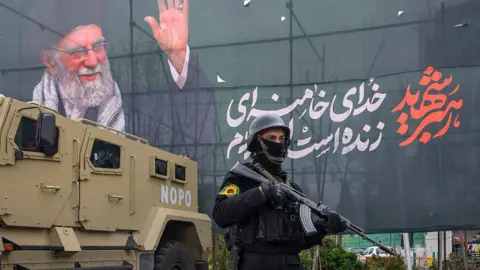 Getty Images A police officer stands near an armoured-vehicle and a poster featuring the late Supreme Leader Ali Khamenei on 28 March 2026 in Tehran, Iran.
bbc.com
Getty Images A police officer stands near an armoured-vehicle and a poster featuring the late Supreme Leader Ali Khamenei on 28 March 2026 in Tehran, Iran.
bbc.com
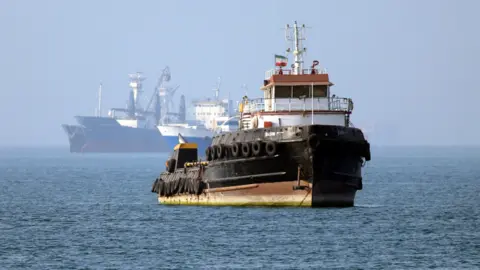 Traffic through the Strait of Hormuz, a vital route for oil and gas, has largely stopped
bbc.com
Traffic through the Strait of Hormuz, a vital route for oil and gas, has largely stopped
bbc.com
Iran has sent a formal response to US proposals to end the war, delivering it via mediators in Pakistan, according to Iranian state media cited by the BBC. Neither Tehran nor Washington has published the text, leaving markets and regional governments to infer intent from continued disruption around the Strait of Hormuz and from public statements by Iranian President Masoud Pezeshkian that “dialogue” does not mean “surrender”.
The BBC reports that the war began with US and Israeli strikes on 28 February and that a ceasefire announced in February has largely held, despite occasional exchanges of fire. Yet the strategic leverage point has remained unchanged: Iran has continued to block the Strait of Hormuz, while the US has enforced a naval blockade of Iranian ports to pressure Tehran to accept its terms. That combination turns civilian shipping into a bargaining chip. The BBC cites Axios reporting that the US offer is framed as a 14-point memorandum of understanding that could lead to negotiations on Iran’s nuclear ambitions, with terms including suspension of enrichment, lifting of sanctions, and restoring free transit through the strait—many of them contingent on a final agreement.
On the water and in the air, the negotiation channel runs alongside a readiness posture. The UK’s Maritime Trade Operations Centre reported that a bulk carrier was hit by an unknown projectile northeast of Doha, causing a small fire but no casualties, while Kuwait said drones entered its airspace and the UAE said it intercepted two drones coming from Iran, according to the BBC. Iranian messaging has also targeted the region’s compliance problem: Tehran has warned neighbours about cooperating with US sanctions, and an Iranian military spokesman was quoted by Irna as saying vessels transiting Hormuz would face “severe consequences” if they did not first cooperate with Tehran.
For Europe, the near-term question is less the fine print of a memo than whether traffic through Hormuz can be normalised without a wider settlement. The BBC notes that about a fifth of the world’s oil and natural gas usually flows through the strait, and that the disruption has pushed up global oil prices. It also reports that defence ministers from more than 40 nations are due to meet in London to discuss UK-led plans to protect shipping, an effort that would require rules on escorting, interdiction, and escalation management while the US blockade and Iran’s counter-pressure remain in place.
Iran’s response has been sent, but the public still has no document—only a strait where commercial vessels are being treated as leverage.