
Putin says Ukraine war nearing an end
Signals talks with Europe via Gerhard Schröder channel, ceasefire accusations and prisoner-swap logistics show how little trust is priced in
Images
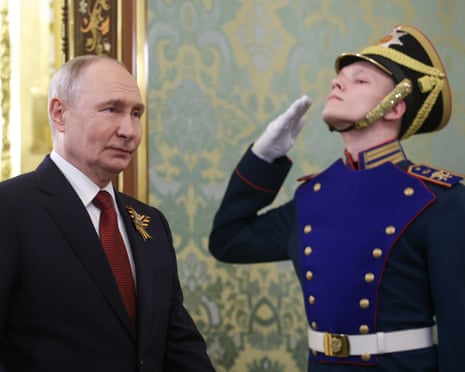 Vladimir Putin said the war remained a ‘serious matter’ but he thought it was coming to an end and foreshadowed negotiations with Europe. Photograph: Maxim Shipenkov/EPA
theguardian.com
Vladimir Putin said the war remained a ‘serious matter’ but he thought it was coming to an end and foreshadowed negotiations with Europe. Photograph: Maxim Shipenkov/EPA
theguardian.com
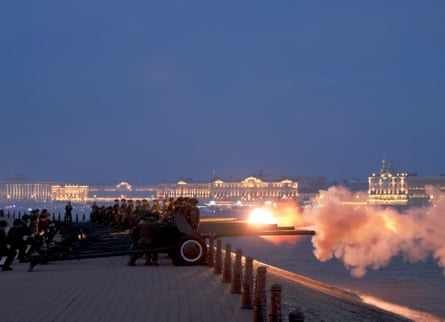 Russian servicemen fire artillery pieces during Victory Day in St Petersburg. Photograph: Anatoly Maltsev/EPA
theguardian.com
Russian servicemen fire artillery pieces during Victory Day in St Petersburg. Photograph: Anatoly Maltsev/EPA
theguardian.com
Vladimir Putin said on Saturday that Russia’s war in Ukraine was “coming to an end”, speaking hours after using Moscow’s Victory Day ceremonies to promise defeat for Kyiv. According to The Guardian, the remarks were paired with a hint of future negotiations with Europe over “new security arrangements” and an unusual suggestion of a preferred channel: Germany’s former chancellor Gerhard Schröder.
The timing matters because it places a conciliatory-sounding message directly alongside a show of wartime continuity. The Victory Day parade itself was described as the most scaled-back in years, even as artillery salutes and official rhetoric continued in St Petersburg and Moscow. On the same weekend, Russia, Ukraine and Donald Trump announced a three-day ceasefire, yet both sides immediately traded accusations of violations amid continuing drone activity and reports of civilian casualties. The Kremlin, The Guardian reports, said there were no plans to extend the ceasefire.
Putin’s precondition for a meeting with Ukraine’s president is also a way of defining who bears the burden of movement first. He said he would be ready to meet Volodymyr Zelenskyy in a third country only after “all conditions” for a peace agreement were settled, describing a leaders’ meeting as the final point, not the start of negotiations. That is a demand for a finished document before the photo-op—useful for a side that believes it can improve its position on the ground while talks drag on.
The proposed European interlocutor adds another layer. Schröder is not just a former German leader; he is a long-time Putin associate with past ties to Russian energy projects including Nord Stream, and was publicly denounced by Zelenskyy in 2022 for meeting Putin and speaking in his favour. Choosing him as a preferred partner signals that Moscow is still looking for a European route that bypasses current office-holders, and that it expects energy-era relationships to retain value even after relations with Europe have sunk to their worst level since the Cold War.
Meanwhile, the battlefield and administrative details keep intruding on the diplomacy. Russia controls just under one-fifth of Ukrainian territory, advances have slowed since 2023, and Russian forces have not taken the entire Donbas; Ukrainian troops have been pushed back to a line of fortress cities, The Guardian notes. Even a planned confidence-building measure—an agreement to swap 1,000 prisoners each—was already mired in sequencing disputes, with Putin saying Russia had not yet received proposals from Ukraine.
Putin has now placed “end of war” language next to a ceasefire he says will not be prolonged. The most concrete item on offer this weekend was a prisoner list that, by Moscow’s account, still had not arrived.