
Israeli strikes kill civilians in southern Lebanon
Ceasefire with Hezbollah holds on paper as air raids continue, border security zone turns into a rolling target list
Images
 The strike on Saksakiyeh also injured 15 people including three children, the Lebanese ministry said
bbc.com
The strike on Saksakiyeh also injured 15 people including three children, the Lebanese ministry said
bbc.com
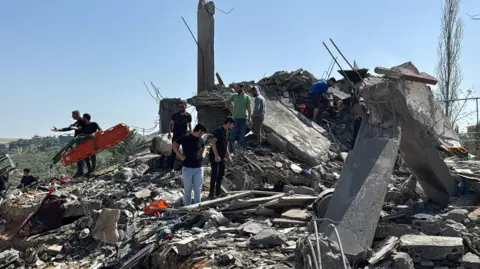 The strike on Saksakiyeh also injured 15 people including three children, the Lebanese ministry said
bbc.com
The strike on Saksakiyeh also injured 15 people including three children, the Lebanese ministry said
bbc.com
At least seven people were killed in an Israeli strike on the southern Lebanese town of Saksakiyeh, Lebanon’s health ministry said, with 15 more wounded including three children. Lebanese state media also reported a separate drone strike near Nabatieh that killed a Syrian national and seriously injured his 12-year-old daughter. The incidents come weeks into a ceasefire announced by US President Donald Trump, but with Israeli air activity continuing across the south.
According to the BBC, Lebanon’s health ministry says Israeli attacks have killed more than 120 people across the country in the past week, including women and children, while not distinguishing between combatants and civilians. Israel says it is striking Hezbollah-linked people and infrastructure, and Israeli forces still hold a strip of territory along the border that officials describe as a Hezbollah-free security zone. The result is a ceasefire that functions less like a stop to hostilities and more like a new rulebook for what still counts as permissible force.
The pattern has practical consequences for civilians trying to return to towns that have been repeatedly hit, and for the state institutions meant to document and compensate losses. When strikes are frequent and attribution disputes are routine, the burden shifts to local communities to prove what happened and to whom, often after the fact and without access to the airspace that produced the damage. Rights groups cited by the BBC say some Israeli actions could amount to war crimes, while Israel’s stated objective—keeping Hezbollah away from the border—creates a standing justification for continued operations inside Lebanon.
Hezbollah, for its part, has continued to use drones and rockets against Israeli forces in Lebanon and northern Israel. The BBC reports that Hezbollah launched an explosive drone near the northern border, wounding three Israeli reservists, one seriously, and described it as a response to ongoing Israeli attacks. That exchange highlights the asymmetry of exposure: drones and rockets can injure soldiers and disrupt life in northern Israel, but air power can reach deeper into Lebanon and impose costs on towns that cannot move.
Even the details of a single incident show how escalation can occur without formal announcements. In Nabatieh, Lebanese officials said a drone hit a motorcycle carrying a father and daughter, then struck again after they moved, and then again, leaving the girl undergoing life-saving surgery, according to the BBC. Israel has not publicly commented on the reported strikes.
The ceasefire began with a date on a calendar. In southern Lebanon, it is now being measured in ambulance runs and the number of villages that remain intact enough to inhabit.