
Two men face charges over antisemitic TikTok videos
Prosecutors say Stamford Hill residents were harassed for social media content, out-of-hours CPS work follows online attention cycle
Images
 bbc.com
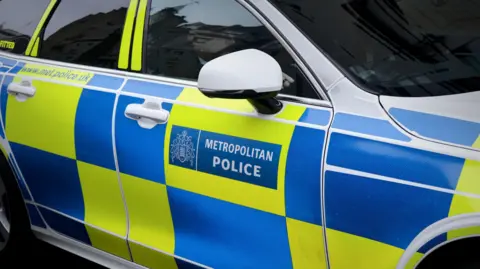 Getty Images A police car with a Metropolitan Police log and blue and yellow chequerboard pattern on the side
bbc.com
Getty Images A police car with a Metropolitan Police log and blue and yellow chequerboard pattern on the side
bbc.com
Two men are due in a London magistrates’ court on Saturday after prosecutors charged them over antisemitic TikTok videos allegedly filmed in Stamford Hill, a neighbourhood with a large Orthodox Jewish community.
According to the BBC, Adam Bedoui, 20, and Abdelkader Amir Bousloub, 21, both from Hillingdon in west London, are accused of travelling across the city to approach, harass and film Jewish residents for social-media content. The Crown Prosecution Service said the pair face charges of religiously aggravated intentional harassment under the Crime and Disorder Act 1998, alongside harassment charges under the Public Order Act 1986.
The case lands in a familiar gap between online incentives and offline policing. Short-form video rewards provocation with reach, and the most “successful” clip is often the one that triggers the strongest reaction in the shortest time. That logic pushes creators toward confrontations that can be staged quickly — a street interaction, a shouted insult, a person visibly uncomfortable on camera — while the costs are borne by the people who happen to live in the targeted area.
For law enforcement, the raw material is unusually abundant: the alleged conduct is recorded, shareable and time-stamped, making it easier to reconstruct a sequence of events than in many street-harassment cases. But the same dynamics that produce evidence also accelerate copycat behaviour. A viral clip can be replicated in days by others chasing the same attention, and the “audience” is not local; it is algorithmic.
The CPS said out-of-hours prosecutors worked with the Metropolitan Police to establish enough evidence and that bringing charges was in the public interest. That detail points to the practical problem for authorities: once a clip circulates, delay becomes part of the harm, because the content keeps travelling even if the people who filmed it stop.
Bedoui and Bousloub will appear at Thames Magistrates’ Court on Saturday. The alleged videos were shot in a neighbourhood where residents already expect to be watched — only this time, the camera was the point.