
Virginia Supreme Court overturns voter-approved congressional map
Referendum-backed redistricting power shift is voided on constitutional procedure, a 10–1 seat projection dissolves in litigation
Images
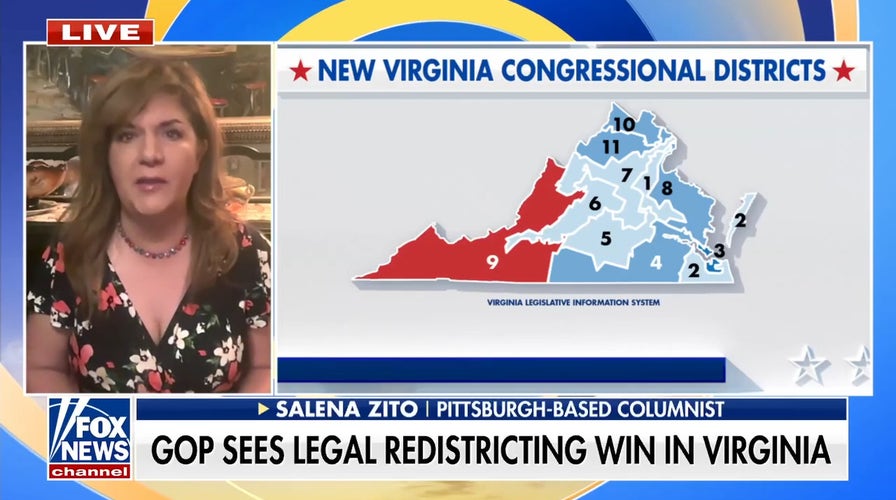 Virginia redistricting map ruled unconstitutional, sparking nationwide debate
foxnews.com
Virginia redistricting map ruled unconstitutional, sparking nationwide debate
foxnews.com
 Virginia Supreme Court
foxnews.com
Virginia Supreme Court
foxnews.com
 Republican National Committee Chair Joe Gruters
foxnews.com
Republican National Committee Chair Joe Gruters
foxnews.com
Virginia Supreme Court overturns voter-approved congressional map, referendum-backed power shift to legislature is voided on procedural grounds, redistricting becomes a court fight ahead of midterms
The Supreme Court of Virginia has invalidated a new congressional map that voters approved by a narrow 51% to 49% margin, ruling that the process used to put the referendum on the ballot violated the state constitution. The decision, reported by Fox News, blocks a plan that would have handed the Democrat-controlled legislature temporary redistricting authority through 2030.
The immediate effect is to throw Virginia’s next set of House lines back into uncertainty at a moment when both parties are treating district boundaries as a midterm weapon rather than a once-a-decade chore. The map struck down was expected to produce a 10–1 Democratic advantage in the state’s congressional delegation, up from the current 6–5 split, according to Fox News. Republicans sued to stop the change, and the court said the constitutional defect “nullifies the legal efficacy” of the referendum vote—meaning the electorate’s approval does not cure a flawed legislative pathway.
Virginia’s dispute sits inside a broader national pattern: when legislatures cannot lock in an advantage through ordinary statute, they increasingly try to route power through commissions, ballot questions, or bespoke one-off procedures that are harder to unwind later. Each workaround creates a new choke point for litigation, and litigation has become the cheapest way to delay an opponent’s map until the electoral calendar forces a temporary default. Fox News notes that the Virginia court heard oral arguments last month, a timeline that keeps the fight close to candidate filing and campaign planning.
The ruling also highlights how “voter-approved” does not necessarily mean “settled.” A referendum can ratify the political goal, but courts still control whether the steps taken to reach the ballot complied with the constitutional rulebook. That matters because redistricting is not just about who wins seats; it determines where parties spend money, which incumbents retire, and what kinds of candidates get recruited for districts that suddenly look winnable.
National party organizations are treating these state-level fights as portfolio management. The Republican National Committee intervened in the Virginia case, and its chair Joe Gruters publicly celebrated the decision as an election-integrity win, according to Fox News. The same logic is visible on the other side in Democratic-backed legal efforts in Republican-led states: if a court can erase an opponent’s expected advantage with one opinion, the return on legal spending can exceed the return on advertising.
Virginia voters approved a map that was supposed to reshape the state’s delegation for the rest of the decade. The state’s highest court has now said the vote counts for nothing if the paperwork was wrong.