
Iran war trading windfalls lift banks and oil majors
Hormuz disruption turns volatility into quarterly profits, households pay higher bills while desks clip the spread
Images
 bbc.com
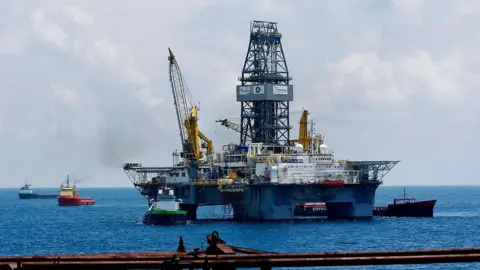 Getty Images An oil rig with ships around it.
bbc.com
Getty Images An oil rig with ships around it.
bbc.com
BP said its first-quarter profit more than doubled to $3.2bn as its trading division outperformed during the market turmoil triggered by the Iran war, according to BBC News. The report links the gains to Iran’s effective closure of the Strait of Hormuz at the end of February, a chokepoint that carries roughly a fifth of the world’s oil and gas. With shipments disrupted and prices whipsawing, energy and financial firms with large trading operations booked some of the clearest early winners.
The mechanism is familiar: when physical flows become uncertain, the value shifts from producing barrels to managing risk around them. Oil majors with trading arms can arbitrage regional price gaps, hedge exposures for customers, and profit from volatility that punishes less sophisticated buyers. Shell reported first-quarter profits of $6.92bn, beating analysts’ expectations, while TotalEnergies said profits rose by almost a third to $5.4bn, with both companies pointing to exceptional performance in trading amid volatile oil and power markets, the BBC reports.
The same volatility has been a fee engine for Wall Street. JPMorgan’s trading arm generated a record $11.6bn in revenue in Q1, helping deliver the bank’s second-biggest quarterly profit, according to the BBC. Across the “Big Six” US banks—JPMorgan, Bank of America, Morgan Stanley, Citigroup, Goldman Sachs and Wells Fargo—profits totalled $47.7bn for the quarter, with heavy trading volumes cited as a key driver. The flows came from both directions: investors selling risk assets on escalation fears, and others buying into the dips as markets bounced, producing the kind of two-way traffic that market-makers and prime brokers charge for.
Even companies that did not report eye-catching year-on-year gains still benefited from the pricing environment. ExxonMobil and Chevron saw earnings fall compared with a year earlier amid Middle East supply disruptions, but both beat analysts’ forecasts and indicated profits could grow through 2026 as higher oil prices persist, the BBC reports.
The defence sector is the other immediate beneficiary. The war has exposed gaps in air defence and counter-drone capability, accelerating procurement plans in Europe and the US as governments replenish stocks and order new systems. BAE Systems has pointed to strong expected sales and profit growth in 2026, with the company supplying components for platforms such as the F-35.
For consumers and non-financial businesses, the same conditions show up as higher energy bills, higher transport and insurance costs, and a wider set of “war premiums” embedded into everyday prices. The quarter’s standout numbers, however, were posted by desks designed to thrive when everyone else is trying to insure themselves.
Iran’s move at Hormuz halted shipments; the most visible early cash flows went to traders, not shippers.