
China sentences two former defence ministers to suspended death
Li Shangfu and Wei Fenghe convicted in PLA bribery cases, Xi purge shrinks Central Military Commission to near-solo rule
Images
 China's ex-defence minister Li Shangfu at the Shangri-La Dialogue in Singapore 2 June, 2023. Photograph: Caroline Chia/Reuters
theguardian.com
China's ex-defence minister Li Shangfu at the Shangri-La Dialogue in Singapore 2 June, 2023. Photograph: Caroline Chia/Reuters
theguardian.com
 Former defence minister Gen Wei Fenghe in September 2018. Photograph: Adriano Machado/Reuters
theguardian.com
Former defence minister Gen Wei Fenghe in September 2018. Photograph: Adriano Machado/Reuters
theguardian.com
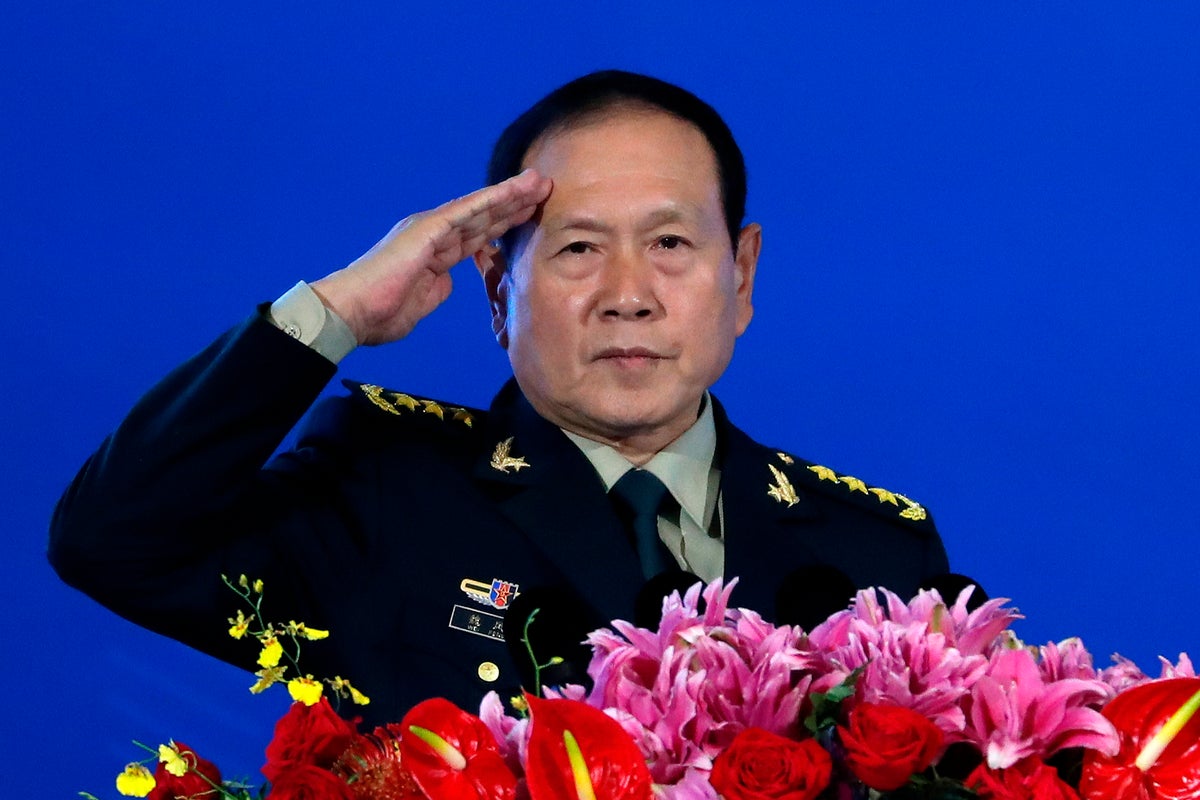 China gives suspended death sentences to 2 former defense ministers accused of bribery
independent.co.uk
China gives suspended death sentences to 2 former defense ministers accused of bribery
independent.co.uk
A Chinese military court has handed suspended death sentences to two former defence ministers, Li Shangfu and Wei Fenghe, in one of the most severe outcomes yet in Beijing’s rolling purge of senior officers. According to China’s state news agency Xinhua, both men were convicted of bribery and given death sentences with a two-year reprieve, a penalty that in practice is typically commuted to life imprisonment. The Guardian reports the court also stripped them of political rights for life and ordered all personal property confiscated, with no further parole allowed.
The defendants are not minor figures. Wei, defence minister from 2018 to 2023, previously led the People’s Liberation Army Rocket Force, the branch responsible for China’s nuclear arsenal. Li, who served only seven months as defence minister in 2023 before disappearing from public view and later being removed, spent much of his career in the military’s procurement and equipment bureaucracy, including leading the department overseeing weapons purchases. Those posts sit closer to the money than the largely ceremonial defence-minister role itself, and they are also where contracting decisions, promotions and access to sensitive systems intersect.
The sentences land inside a campaign that has been running for more than a decade under Xi Jinping, but which has recently cut deeper into the armed forces. The Guardian cites a Center for Strategic and International Studies study estimating that since 2022 more than 100 senior officers have been purged or potentially purged, including figures who simply vanished from public view without explanation. The Associated Press notes that the Central Military Commission — the Communist Party body that actually controls the military — previously had 11 members and now has only one member besides Xi. Even the current defence minister, Dong Jun, has not been appointed to the commission, a break with the usual arrangement.
That combination changes how the institution works day to day. A procurement system where senior officials can be executed on paper and bankrupted in reality encourages risk-avoidance as much as honesty: fewer signatures, more paperwork, and decisions pushed upward. At the same time, a top command repeatedly emptied by investigations can struggle to plan, train and coordinate across services, especially as China tries to modernise its forces and manage multiple flashpoints from the South China Sea to Taiwan.
Li and Wei are now formally out of the system, with their assets confiscated and their political lives ended. The Central Military Commission, by official count, remains smaller than it used to be.