
David Attenborough marks 100th birthday
BBC stages Royal Albert Hall concert after rare audio message, a private day becomes prime-time programming
Images
 Over the years, Sir David has had countless animal encounters, including this iguana in Living with Dinosaurs
bbc.com
Over the years, Sir David has had countless animal encounters, including this iguana in Living with Dinosaurs
bbc.com
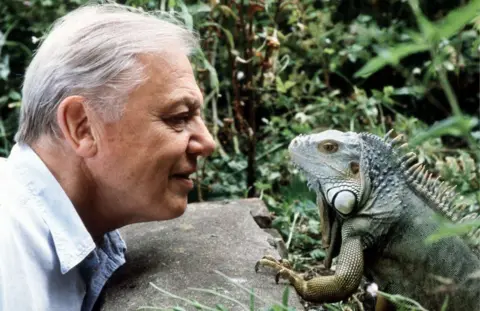 Over the years, Sir David has had countless animal encounters, including this iguana in Living with Dinosaurs
bbc.com
Over the years, Sir David has had countless animal encounters, including this iguana in Living with Dinosaurs
bbc.com
 Sir David Attenborough shares rare public message to mark 100th birthday
independent.co.uk
Sir David Attenborough shares rare public message to mark 100th birthday
independent.co.uk
 Musician reveals ‘secret’ alcohol addiction that almost killed him
independent.co.uk
Musician reveals ‘secret’ alcohol addiction that almost killed him
independent.co.uk
 Matt Tebbutt breaks silence on MasterChef exit: ‘I was really upset’
independent.co.uk
Matt Tebbutt breaks silence on MasterChef exit: ‘I was really upset’
independent.co.uk
 Tears and screams as 50,000 BTS fans flood city square in Mexico
independent.co.uk
Tears and screams as 50,000 BTS fans flood city square in Mexico
independent.co.uk
 Simon Cowell breaks silence on Jennifer Hudson Show clapping video
independent.co.uk
Simon Cowell breaks silence on Jennifer Hudson Show clapping video
independent.co.uk
Sir David Attenborough turns 100 on 8 May and the BBC is marking the milestone with a Royal Albert Hall concert broadcast on BBC One and iPlayer. In an audio message released on 7 May, Attenborough said he had hoped for a quiet birthday but felt “completely overwhelmed” by the volume of greetings, from pre-school groups to care home residents, according to the BBC.
The programme is being treated less like a private celebration than a week-long piece of broadcast scheduling. The 90-minute concert, hosted by Kirsty Young, is built around archive sequences from the BBC’s natural history catalogue and live music by the BBC Concert Orchestra, with guest appearances including Michael Palin, Steve Backshall, Liz Bonnin and Chris Packham. Musical selections are tied to recognisable television moments—such as the snakes-and-iguanas chase from Planet Earth II and the wave-washing orcas from Frozen Planet II—while Bastille’s Dan Smith and Sigur Rós are billed to perform tracks used in Planet Earth promotions.
Attenborough’s centenary also underlines how a single presenter became a durable asset class for a public broadcaster: a voice that can be repackaged across new formats, from streaming collections to anniversary documentaries. The BBC notes he joined the corporation in 1952 and fronted landmark series from Life on Earth to The Blue Planet, building a style that pairs spectacle with careful narration rather than overt campaigning. That restraint has helped his work travel across borders and political moods, making his films usable both as entertainment and as reference material in debates about biodiversity and climate.
Other institutions are attaching their own markers to the date. The Natural History Museum has named a parasitic wasp—Attenboroughnculus tau—after him, the BBC reports, a gesture that places his name inside the taxonomy of the wildlife he spent a career popularising. The Independent reports Attenborough plans to spend the day itself with close family, even as public events proliferate around him.
On Friday evening, while Attenborough spends his birthday privately, the Royal Albert Hall will be selling the centenary to a mass audience in prime time. The broadcast starts at 20:30 BST, with the BBC’s most bankable wildlife images doing the public speaking.