
Argentina traces MV Hondius hantavirus contacts after three deaths
Andes strain raises rare person-to-person risk, passengers dispersed across borders before alerts caught up
Images
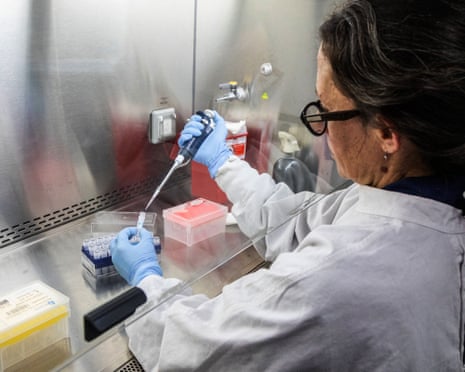 A scientist from the Malbran Institute handling containers used to diagnose the Andes hantavirus, in Buenos Aires on 6 May, 2026. Photograph: ARGENTINE HEALTH MINISTRY/AFP/Getty Images
theguardian.com
A scientist from the Malbran Institute handling containers used to diagnose the Andes hantavirus, in Buenos Aires on 6 May, 2026. Photograph: ARGENTINE HEALTH MINISTRY/AFP/Getty Images
theguardian.com
 Hantavirus hell: passengers stuck on cruise ship with deadly virus – The Latest
theguardian.com
Hantavirus hell: passengers stuck on cruise ship with deadly virus – The Latest
theguardian.com
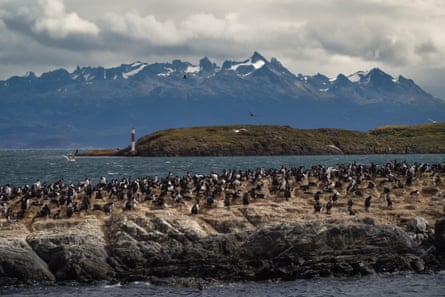 Imperial cormorant in one island of the Beagle Channel in front Ushuaia. Photograph: Erlantz Perez Rodriguez/Alamy
theguardian.com
Imperial cormorant in one island of the Beagle Channel in front Ushuaia. Photograph: Erlantz Perez Rodriguez/Alamy
theguardian.com
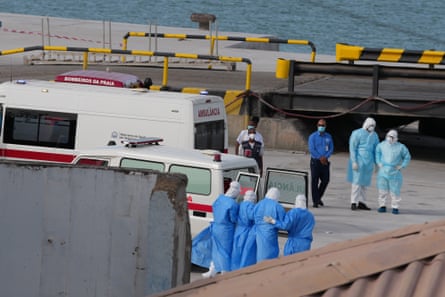 Health workers in protective gear evacuate patients from the MV Hondius cruise ship. Photograph: Misper Apawu/AP
theguardian.com
Health workers in protective gear evacuate patients from the MV Hondius cruise ship. Photograph: Misper Apawu/AP
theguardian.com
Argentine health officials are tracing contacts from the Dutch-flagged cruise ship MV Hondius after passengers tested positive for the Andes strain of hantavirus and three people died, according to The Guardian. The ship sailed from Ushuaia, and one passenger who left earlier in the voyage later tested positive in Switzerland, widening the investigation beyond Argentina’s borders. Authorities say 23 passengers disembarked on Saint Helena on 23 April and dispersed to multiple countries before some were contacted, a delay described to El País by a passenger.
Hantavirus is not a cruise-ship disease in the way norovirus is; it typically begins with rodents, their droppings, or contaminated dust. That is what makes the Hondius cluster so operationally awkward: officials must reconstruct where passengers went before boarding—hotels, excursions, ports, and transport—rather than focusing only on the vessel. Argentina’s health ministry says the country has recorded 101 hantavirus infections since June 2025, roughly double the previous year, and that nearly one-third of cases in the past year were fatal. The WHO has long ranked Argentina as having the highest hantavirus incidence in Latin America, which turns a single travel-linked cluster into a test of routine capacity rather than a once-in-a-generation shock.
The Andes strain adds another complication. Human-to-human transmission is rare for hantaviruses, but limited spread among close contacts has been documented with Andes virus, meaning contact tracing cannot stop at “shared environment” assumptions. The Guardian reports that Argentina shipped genetic material and testing equipment to Spain, Senegal, South Africa, the Netherlands and the UK to speed up detection, an implicit acknowledgement that passengers’ onward travel is now part of the public-health perimeter. In the United States, passengers were being monitored in Georgia, California and Arizona, with no reported symptoms at the time of publication.
The timeline described by the WHO and Argentine officials is blunt. The first death on board was a 70-year-old Dutch man on 11 April; his body was not removed until Saint Helena nearly two weeks later. His 69-year-old wife flew onward and collapsed at Johannesburg airport, dying on 26 April. A German woman died on 2 May, and one patient was reported in intensive care in South Africa. Each handoff—from ship to island to aircraft to hospital—creates a new set of contacts to notify, and a new jurisdiction to persuade.
Argentina is still trying to determine where the infected passengers travelled within Argentina, Uruguay and Chile before boarding in Ushuaia. For now, the most concrete fact is also the most mundane: the people who left the ship first are the hardest to find.