
US disables Iranian-flagged tanker in Strait of Hormuz
Blockade enforcement tightens as Trump links deal to renewed bombing, commercial shipping pays the risk premium
Images
 People in Tehran drive past an anti-US billboard depicting Donald Trump and the strait of Hormuz. Photograph: Majid Asgaripour/Wana/Reuters
theguardian.com
People in Tehran drive past an anti-US billboard depicting Donald Trump and the strait of Hormuz. Photograph: Majid Asgaripour/Wana/Reuters
theguardian.com
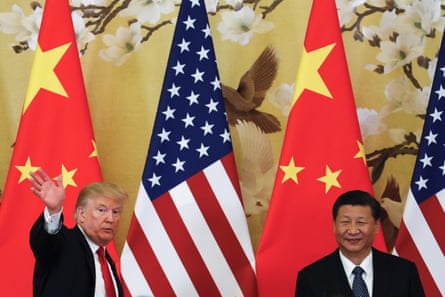 Donald Trump will visit Beijing next week for the first time since 2017. It is hoped China will become a guarantor in the peace deal. Photograph: Andy Wong/AP
theguardian.com
Donald Trump will visit Beijing next week for the first time since 2017. It is hoped China will become a guarantor in the peace deal. Photograph: Andy Wong/AP
theguardian.com
 First responders gather at the site of an Israeli airstrike in Beirut’s southern suburb of Haret Hreik neighbourhood on 6 May. Photograph: AFP/Getty Images
theguardian.com
First responders gather at the site of an Israeli airstrike in Beirut’s southern suburb of Haret Hreik neighbourhood on 6 May. Photograph: AFP/Getty Images
theguardian.com
The US military fired on an Iranian-flagged oil tanker in the Strait of Hormuz on Wednesday, disabling its rudder as it tried to breach Washington’s blockade of Iranian ports, according to The Guardian. The incident came hours after Donald Trump issued Tehran a fresh ultimatum: accept a deal to end the war or face “a much higher level and intensity” of bombing. US Central Command announced the strike on social media, framing it as enforcement rather than escalation.
The sequence underlines how the conflict has shifted from headline airstrikes to paperwork, routing and maritime chokepoints. More than 800 ships and roughly 20,000 crew members remain stranded west of Hormuz, The Guardian reports, because insurers, shipowners and flag states are treating the strait as a live combat zone even when no missiles are flying. Trump has now paused “Project Freedom”, the US escort effort meant to guide trapped commercial traffic through the passage, while keeping the port blockade itself intact. That combination—reduced protection for third-country shipping but continued pressure on Iranian exports—pushes risk and cost outward to private actors who must decide whether to sail.
Diplomacy is running in parallel, but on a short fuse. Axios cited by The Guardian reported the sides were close to a one-page memorandum of understanding, with the US expecting an Iranian response within 48 hours. Iranian parliament speaker Mohammad Bagher Ghalibaf described the blockade as an attempt to force surrender through economic pressure and information operations, language that signals Tehran is treating shipping access as a core war aim rather than a technical dispute. The strait has become the bargaining chip because it is measurable: ships either move or they do not, and the price of fuel moves with them.
Regional constraints are also showing through. NBC, cited by The Guardian, reported the escort pause followed Saudi opposition, including threats to restrict US use of Prince Sultan airbase and Saudi airspace. For Washington, a naval blockade is easier to sustain than a large escort mission that depends on basing permissions and allied tolerance. For commercial shipping, the result is a corridor where the biggest variable is not sea state or capacity, but whether a tanker’s next course change triggers a warning shot.
The tanker’s rudder was disabled with “several rounds,” The Guardian reports. Hundreds of other vessels remained stationary on tracking maps as officials discussed a one-page deal and an indefinite pause in escorts.