
Jeffrey Epstein alleged suicide note is unsealed
New York Times petition and Justice Department support bring 2019 jail document into public record, authenticity still not independently verified
Images
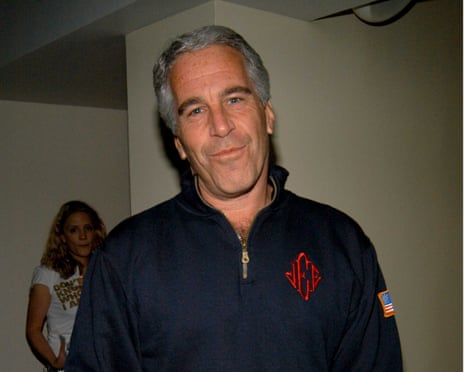 Jeffrey Epstein in New York City on 18 May 2005. Photograph: Sipa Press/Rex Features
theguardian.com
Jeffrey Epstein in New York City on 18 May 2005. Photograph: Sipa Press/Rex Features
theguardian.com
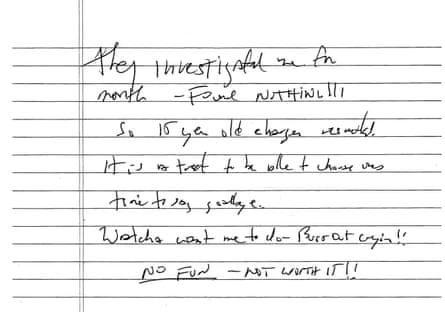 Jeffery Epstein’s alleged suicide note. Photograph: United States district judge, southern district of New York
theguardian.com
Jeffery Epstein’s alleged suicide note. Photograph: United States district judge, southern district of New York
theguardian.com
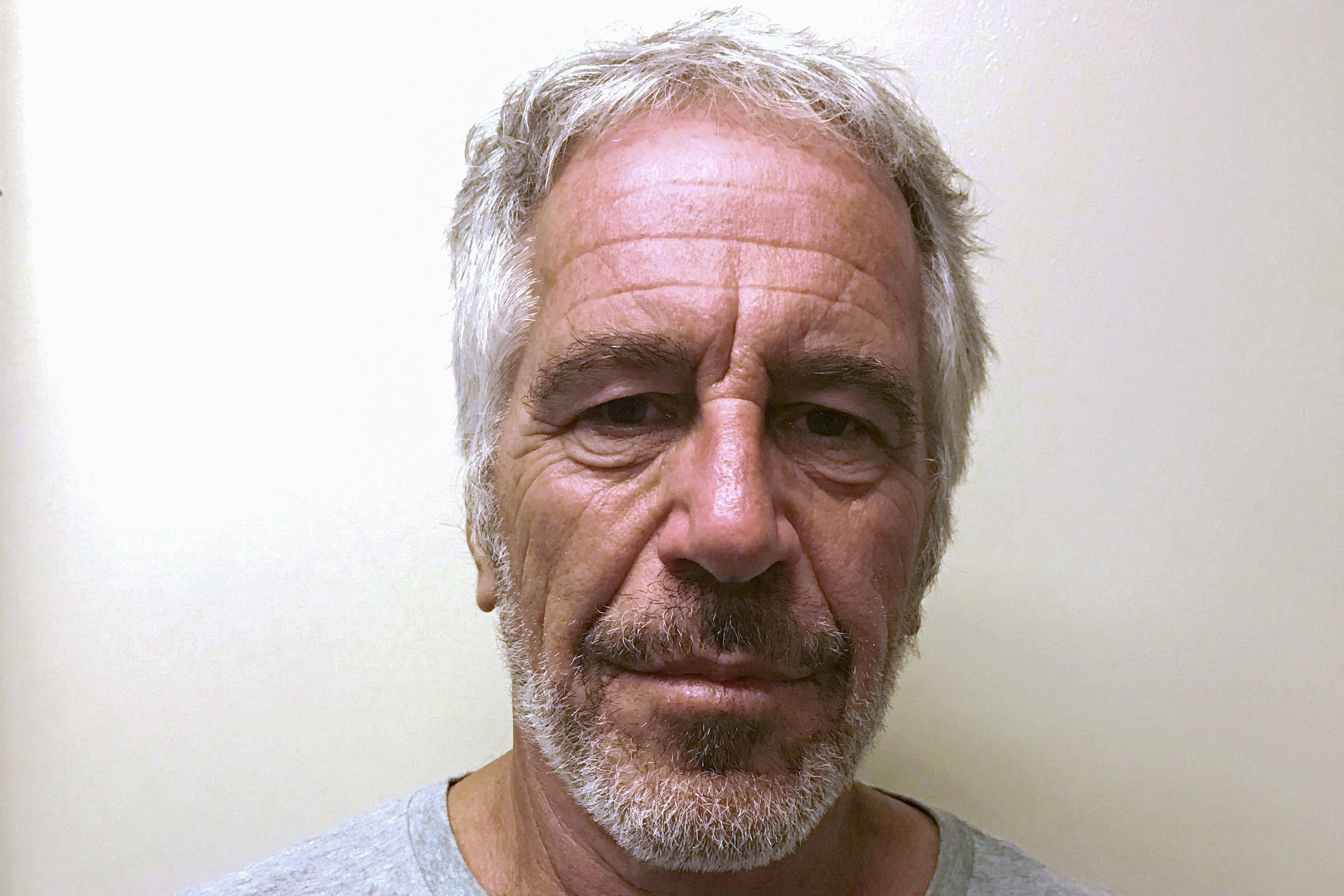 A New York federal court on Wednesday unsealed a suicide note that Jeffrey Epstein allegedly wrote prior to his death behind bars in 2019 (New York State Division of Criminal Justice)
New York State Division of Criminal Justice
A New York federal court on Wednesday unsealed a suicide note that Jeffrey Epstein allegedly wrote prior to his death behind bars in 2019 (New York State Division of Criminal Justice)
New York State Division of Criminal Justice
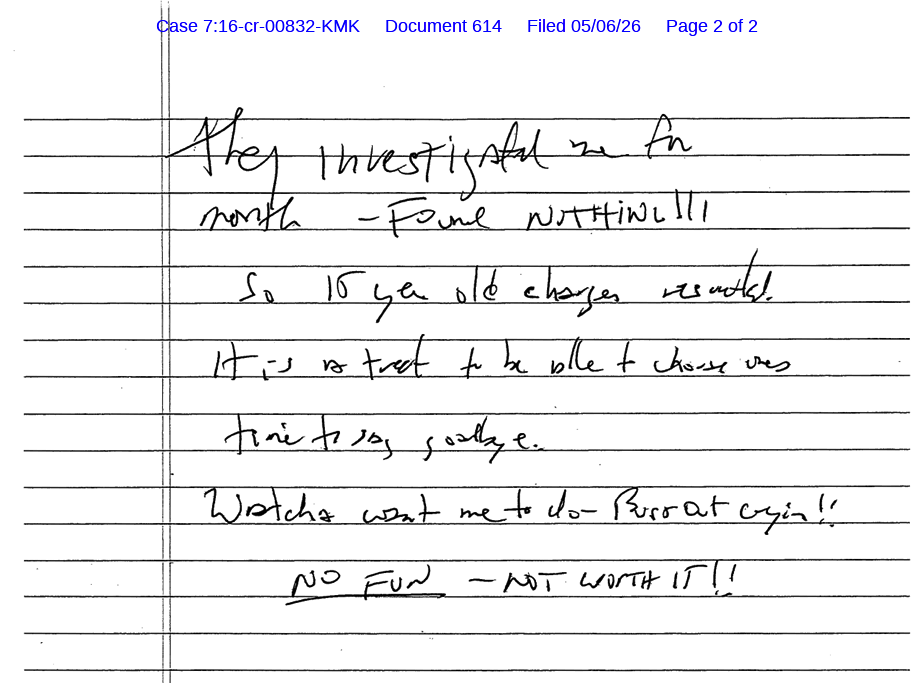 Epstein’s alleged suicide note will likely not quiet speculation about his death (U.S. District Court for the Southern District of New York)
independent.co.uk
Epstein’s alleged suicide note will likely not quiet speculation about his death (U.S. District Court for the Southern District of New York)
independent.co.uk
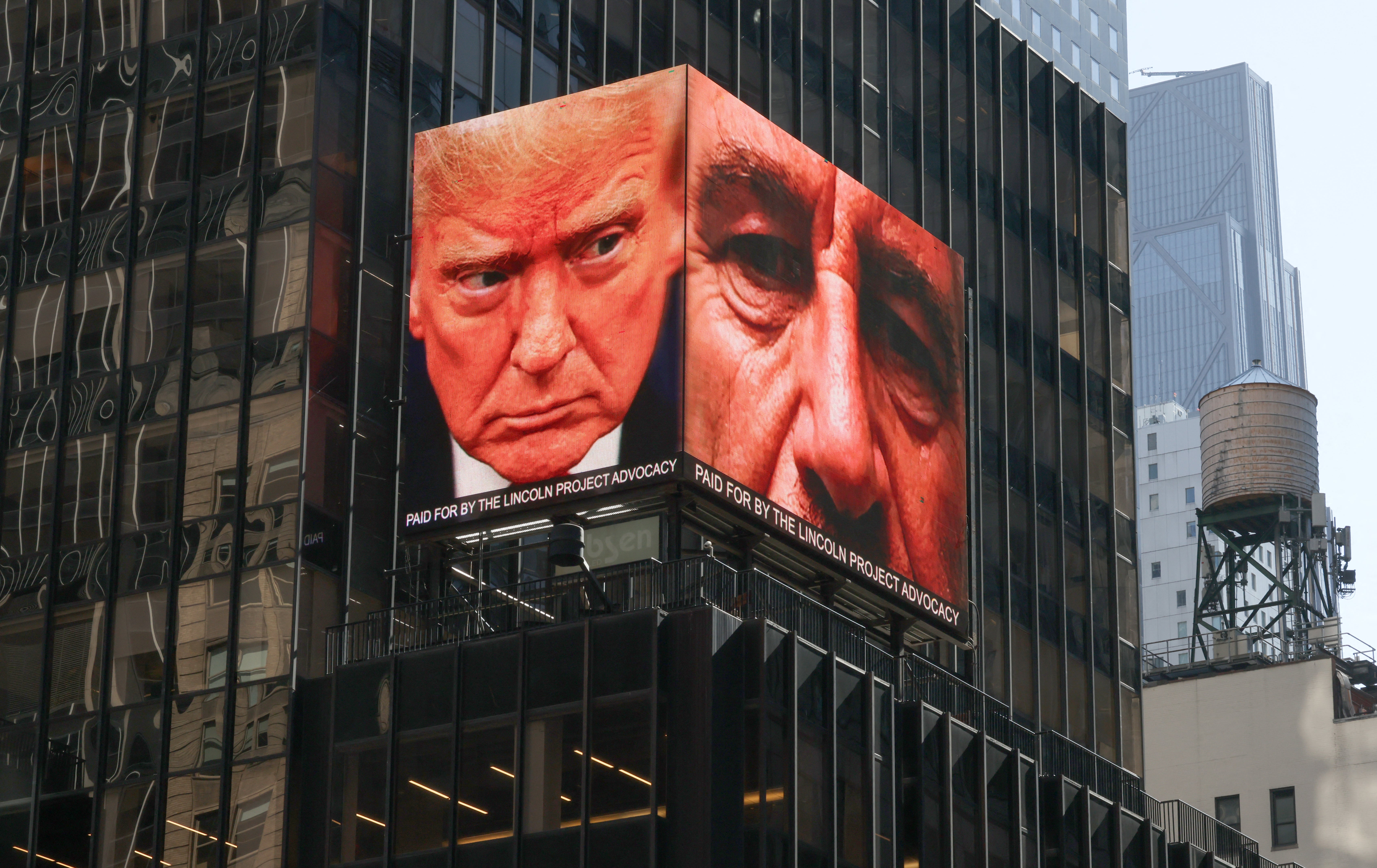 The Epstein scandal continues to haunt the Trump administration, which released thousands of Epstein files over the course of the last year but was accused of covering up aspects of Donald Trump’s own friendship with the sex trafficker (AFP/Getty)
AFP/Getty
The Epstein scandal continues to haunt the Trump administration, which released thousands of Epstein files over the course of the last year but was accused of covering up aspects of Donald Trump’s own friendship with the sex trafficker (AFP/Getty)
AFP/Getty
A federal judge in New York has unsealed a handwritten note that Jeffrey Epstein allegedly wrote while held at the Metropolitan Correctional Center in 2019. The document was released after the New York Times petitioned the court, and the Justice Department backed unsealing, arguing that Epstein’s former cellmate had already discussed its contents publicly, according to The Guardian.
The note is brief, unsigned, and written in a style that reads like a performance for an audience: “They investigated me for months — FOUND NOTHING!!! … Watcha want me to do — Bust out cryin!! NO FUN – NOT WORTH IT!!” The Guardian reports it emerged from litigation involving Nicholas Tartaglione, the former police officer who shared a cell with Epstein after Epstein was found unresponsive but alive in July 2019. Tartaglione has said he discovered the note inside a book after that first incident; Epstein at the time claimed Tartaglione had tried to kill him, an allegation he did not repeat after being moved to another cell.
The unsealing does not settle the argument that has kept the case alive for nearly seven years; it shows how much of the Epstein story now runs through court procedure rather than new investigative findings. The note’s release is a byproduct of a separate criminal case file and a media petition, not a new inquiry into the jail’s failures — the missing camera footage, staffing shortages, and broken monitoring that were central to earlier official reviews. Even the authenticity question remains open in the public record: The Guardian notes it has not verified that Epstein wrote the letter.
What it does change is the litigation and reputational terrain around the people who orbited Epstein. The Independent reports that the Trump administration has released thousands of Epstein-related files over the last year, while lawmakers continue to use depositions to test whether prominent figures misled the public about their ties. It notes that Commerce Secretary Howard Lutnick faced questions in a closed-door House Oversight deposition about contact with Epstein, including visits to Epstein’s private island and continued communication into 2018, which Lutnick has denied involved wrongdoing.
The note itself is now public, but the incentives that kept it sealed were mundane: a court file in a different man’s murder case, and a judge weighing whether disclosure would prejudice proceedings. Once Tartaglione and others described it, the sealing rationale weakened, and the document became another artifact that can be cited, excerpted, and litigated over.
Epstein died in federal custody in August 2019. In 2026, a single page of handwriting is still moving through the system more smoothly than the questions about how he was left alone long enough to die.