
Trump pauses Project Freedom escort mission
US keeps Iran port blockade while talks advance, shipping risk premiums now price political timing
Images
 bbc.com
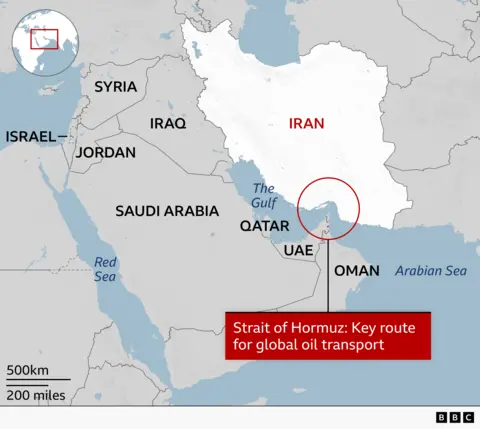 Map of Strait of Hormuz
bbc.com
Map of Strait of Hormuz
bbc.com
 President Donald Trump in the Oval Office. Photograph: Jacquelyn Martin/AP
theguardian.com
President Donald Trump in the Oval Office. Photograph: Jacquelyn Martin/AP
theguardian.com
Donald Trump paused the US naval escort effort known as Project Freedom after roughly a day in operation, telling followers on Truth Social that Washington and Tehran had “mutually agreed” to stop guiding ships through the Strait of Hormuz. According to the BBC, the pause comes as the White House claims “great progress” toward a deal with Iran, even as the broader US blockade of Iranian ports is set to remain in place.
Project Freedom was sold as a practical fix for a strategic choke point: the strait normally carries about a fifth of the world’s oil and liquefied natural gas, and Tehran’s interference has left shipping queues, higher insurance costs and jittery energy markets. The administration had tried to separate the escort mission from the economic pressure campaign, with officials presenting the blockade as punishment and the escorts as a public good for global commerce. Pausing the escorts while keeping the blockade collapses that distinction in practice: ships are asked to trust that the same actor restricting trade can also guarantee safe passage when it chooses.
The decision also exposes how quickly “freedom of navigation” becomes a negotiable talking point once it collides with diplomacy and domestic politics. Trump said the pause followed requests from Pakistan and other countries, casting intermediaries as a reason to throttle back an operation that senior officials had framed as non-optional. Iranian state media described the move as a victory and portrayed the US as retreating after failing to reopen the waterway, a narrative that becomes easier to sustain when the escort plan is suspended before it has time to demonstrate results.
Meanwhile the security picture remains noisy. The BBC notes that the UK Maritime Trade Operations agency reported a cargo vessel struck by an unknown projectile in the strait on Tuesday, and the UAE said its air defenses were engaging missiles and drones for a second day, allegations Iran denied. Even if these incidents are unrelated, they are the kind of ambiguity that drives up freight rates and war-risk premiums—and the extra costs flow straight into fuel prices and consumer supply chains.
Rubio said the earlier US-Israeli air campaign, Operation Epic Fury, had achieved its objectives, but the shipping corridor still depends on ad hoc announcements and unverifiable assurances. In the Strait of Hormuz, the escort operation was launched, branded and paused faster than many vessels can complete a single voyage.