
Romanian government collapses after no confidence vote
Ilie Bolojan exits as President Nicuşor Dan seeks new coalition, leu slides as EU reform deadline stays fixed
Images
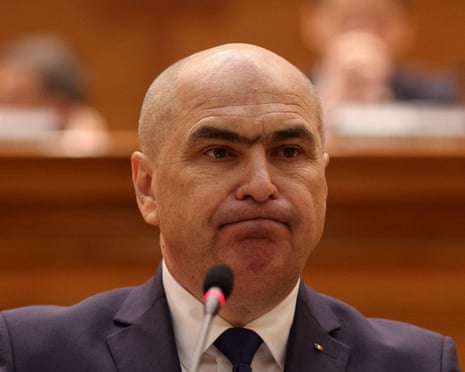 Ousted Romanian PM Ilie Bolojan delivers a speech before a vote of no confidence, in Bucharest, Romania. Photograph: Inquam Photos/Octav Ganea/Reuters
theguardian.com
Ousted Romanian PM Ilie Bolojan delivers a speech before a vote of no confidence, in Bucharest, Romania. Photograph: Inquam Photos/Octav Ganea/Reuters
theguardian.com
Romania’s government fell on Monday after Prime Minister Ilie Bolojan lost a no-confidence vote in parliament, triggering weeks of coalition bargaining and a caretaker administration. The Guardian’s Europe live blog reports President Nicuşor Dan will begin consultations to nominate a new prime minister, who must then win a confidence vote in Bucharest. The parties that brought Bolojan down—Social Democrats, the far-right AUR and smaller groups—have not signalled they can govern together.
The immediate cost showed up in the currency market. The Romanian leu weakened, with the euro hitting a record 5.21 lei, according to the Guardian. For a government that had been selling fiscal discipline as a route back to stability, the message from investors was blunt: politics can reprice a country faster than any budget line.
Bolojan had reduced Romania’s deficit from 9.3% of GDP to 7.9%, the report says, but the measures were politically combustible: cuts to education, culture and social spending alongside a VAT increase. These are the kinds of consolidations that look clean in spreadsheets and messy in households, especially in a country still dealing with high inflation. The vote suggests the coalition’s tolerance for austerity ran out before the arithmetic did.
Romania also has a deadline that does not move with parliamentary drama. It must complete EU-mandated reforms by August to unlock roughly €11.4 billion in recovery funds, the Guardian notes, and many of the relevant portfolios were previously overseen by the Social Democrats—now part of the bloc that toppled the cabinet. In practice, that means Brussels’ leverage runs through ministries whose political incentives may no longer align with the timetable.
President Dan has said AUR, which leads opinion polls at around 37% support, will have no role in any future government. That narrows the viable majority options to a pro-European arrangement—Liberals (PNL), Save Romania Union (USR) and the Hungarian minority party UDMR—possibly under a new Liberal leader or a technocrat, according to the Guardian. But excluding the polling leader while asking voters to accept further cuts is a formula that tends to produce more protest parties, not fewer.
In the meantime, the caretaker government must keep paying bills while negotiating with creditors, Brussels and its own legislature. Romania’s largest fiscal gap in the EU is still there, and the exchange rate is now advertising it every day.
The country’s next prime minister will inherit an EU funding deadline in August and a currency that has already moved to reflect the wait.