
Starmer warns Iran after Golders Green terror stabbing
UK plans state backed group law and new campus reporting duties, extra £1m security funding arrives after the attacks
Images
 standard.co.uk
 standard.co.uk
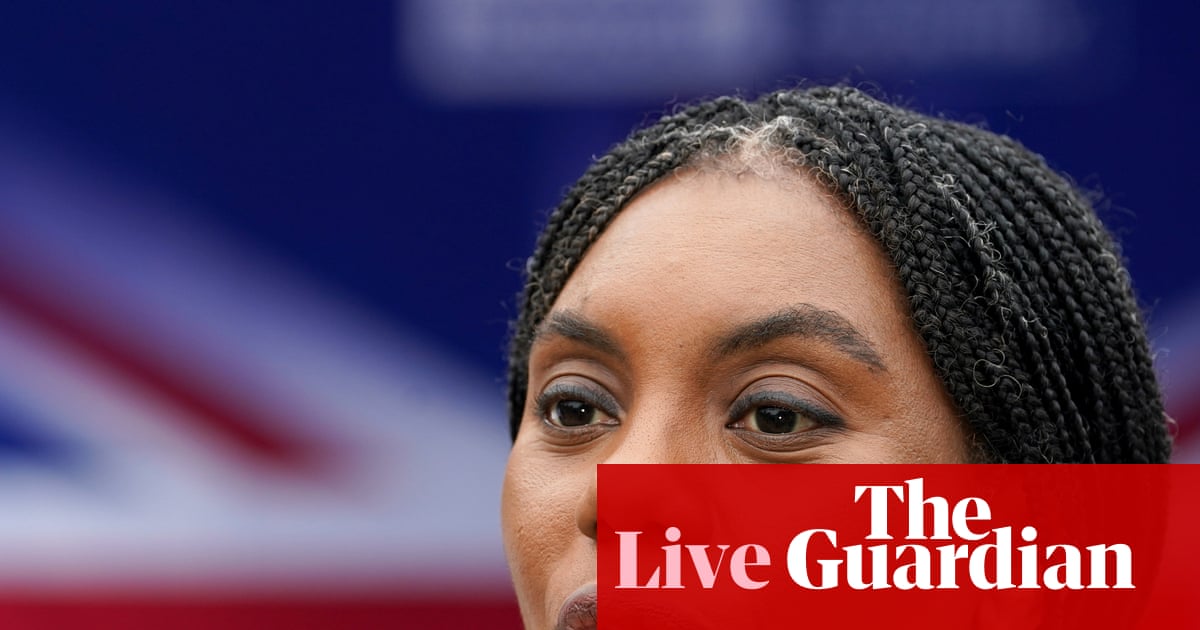 Badenoch defends seeking a ban on pro-Palestine marches but not Tommy Robinson ones – UK politics live
theguardian.com
Badenoch defends seeking a ban on pro-Palestine marches but not Tommy Robinson ones – UK politics live
theguardian.com
Prime Minister Keir Starmer convened police chiefs and community leaders after last week’s knife attack on two Jewish men in Golders Green, as counter-terrorism officers investigate a string of incidents targeting Britain’s Jewish community. The London Evening Standard reports Starmer warned Iran that attempts to “stir up violence and hatred” in the UK would “not be tolerated”, with Downing Street saying a foreign-state link is one line of inquiry. The government also announced an extra £1 million for Jewish community security.
The meeting illustrates how domestic public order is increasingly being discussed in the language of national security. According to the Standard, ministers are preparing legislation aimed at “state-backed groups”, a framing that shifts the centre of gravity from policing individual suspects to treating networks as extensions of hostile governments. That approach can make operational sense—especially where intimidation, arson attempts and online incitement overlap—but it also lowers the bar for policy responses that bypass the ordinary evidentiary grind of criminal cases.
Starmer’s package mixes hard and soft levers. Universities will be expected to publish the scale of antisemitism on campus and the steps taken to address it, with “zero tolerance for inaction”, the Standard says. The Arts Council is to be pushed to withdraw funding and claw it back from anyone found to promote antisemitism, turning grant-making into an enforcement channel. An “independent audit” will review how antisemitism allegations are handled, a sign that ministers do not trust existing processes to deliver consistent outcomes.
At the same time, the political argument over which public demonstrations deserve restrictions is becoming more explicit. In the Guardian’s UK politics live blog, Conservative leader Kemi Badenoch defended calls to ban pro-Palestine marches on the grounds that they “platform antisemitism”, while arguing that marches organised by far-right activist Tommy Robinson should be allowed, describing them as “different”. The effect is to turn policing decisions—often justified as neutral risk management—into an openly partisan taxonomy of acceptable protest.
There is also a practical question of what government can buy. An extra £1 million for community safety is meaningful at the margin, but it does not substitute for the slow work of investigations, prosecutions, and deterrence. When ministers talk about “consequences” for a foreign state without presenting evidence publicly, the gap is filled by speculation, and the burden of day-to-day vigilance remains with local communities.
Counter-terror officers are now probing the Golders Green stabbing and, the Standard reports, a suspected arson attack at a former synagogue in Tower Hamlets. The government is promising new laws; the police are still collecting facts.