
Iran vows fight for Hormuz control
US Project Freedom escorts test ceasefire claims, South Korea weighs joining after ship fire off UAE
Images
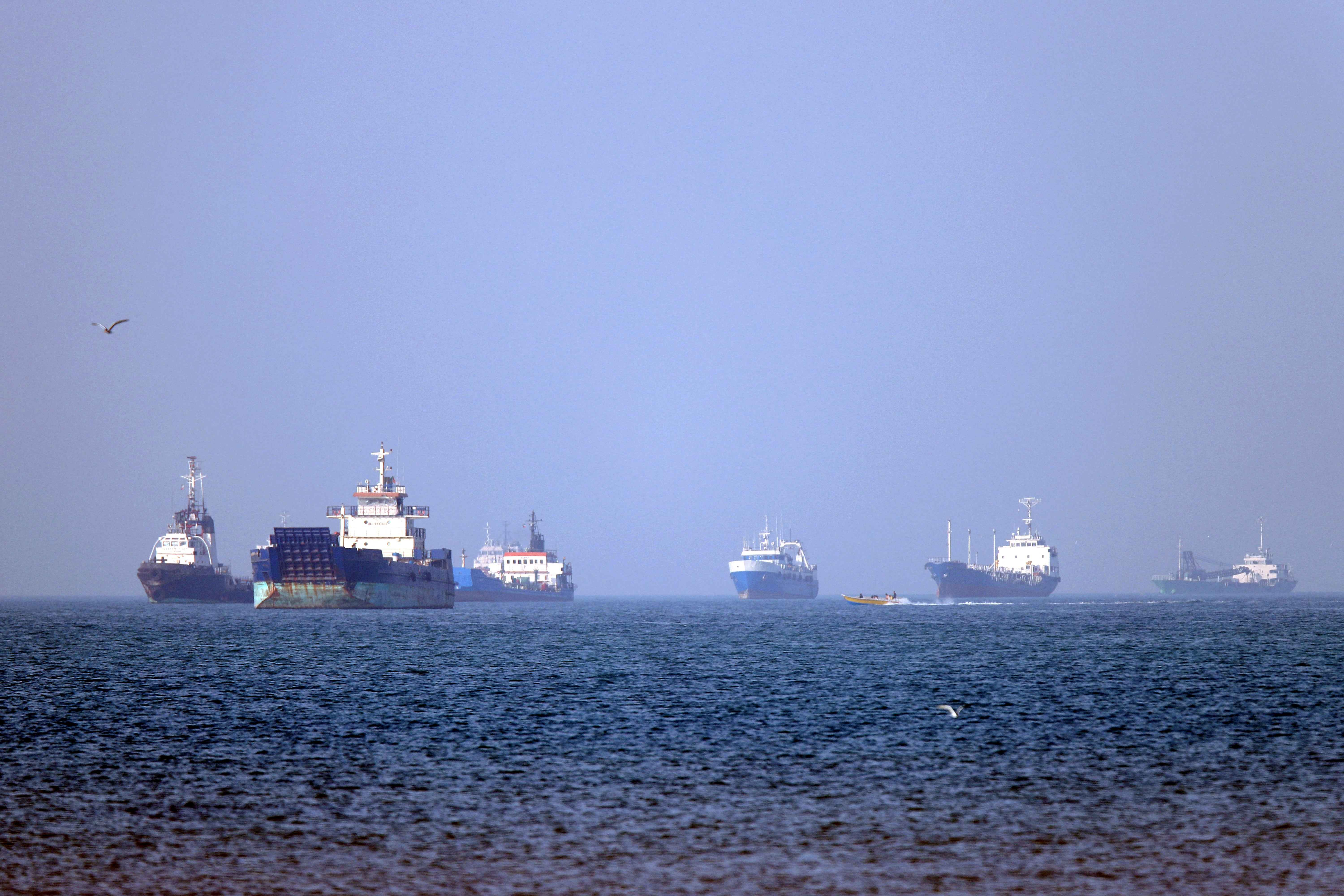 Ships anchored in the Strait of Hormuz off Bandar Abbas in southern Iran (ISNA)
ISNA
Ships anchored in the Strait of Hormuz off Bandar Abbas in southern Iran (ISNA)
ISNA
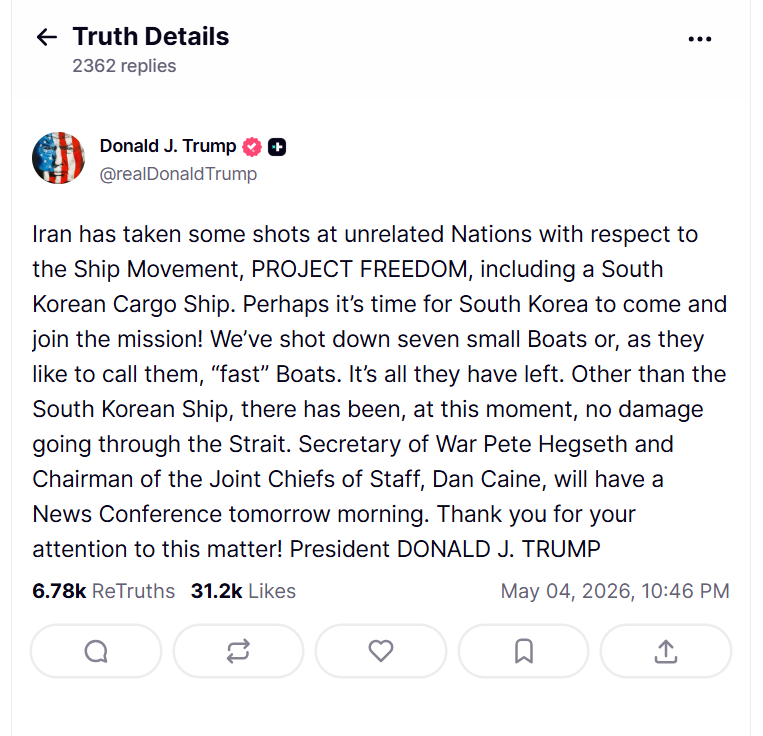 Trump blames explosion on South Korean bulk carrier on Iran (TruthSocial/@realDonaldTrump)
TruthSocial/@realDonaldTrump
Trump blames explosion on South Korean bulk carrier on Iran (TruthSocial/@realDonaldTrump)
TruthSocial/@realDonaldTrump
 independent.co.uk
 independent.co.uk
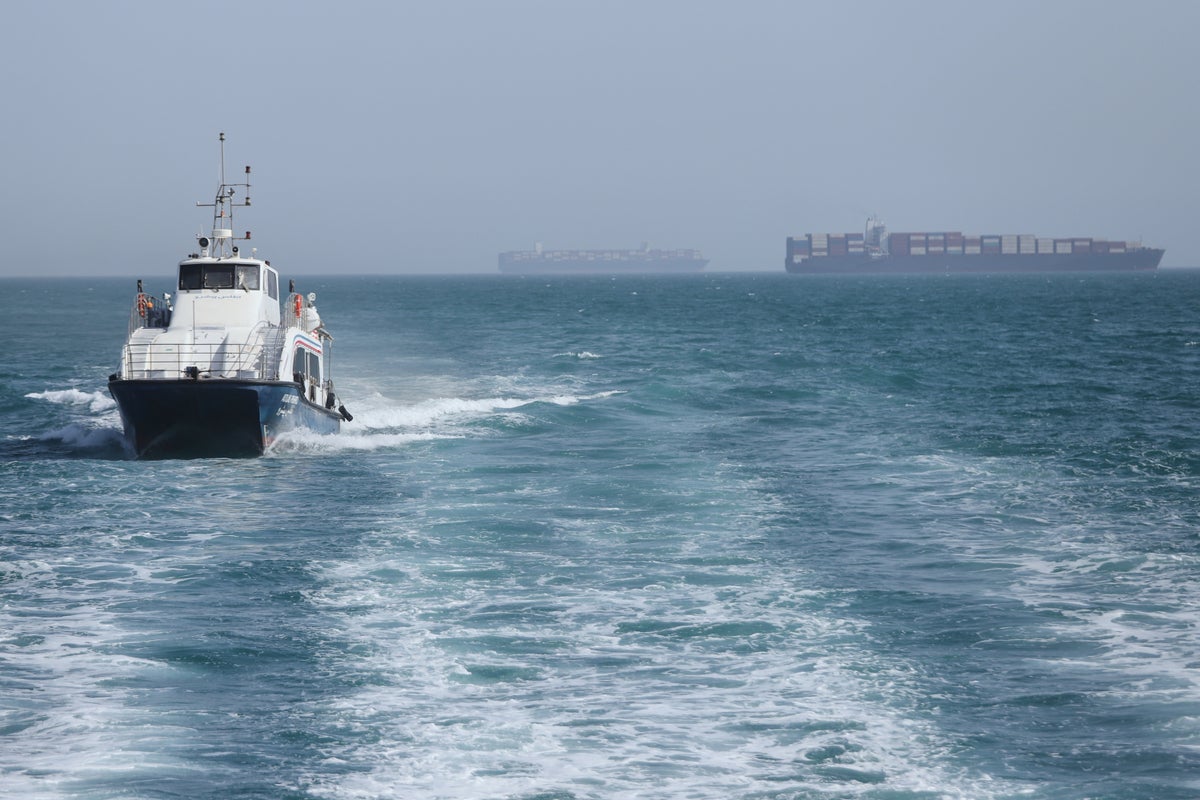
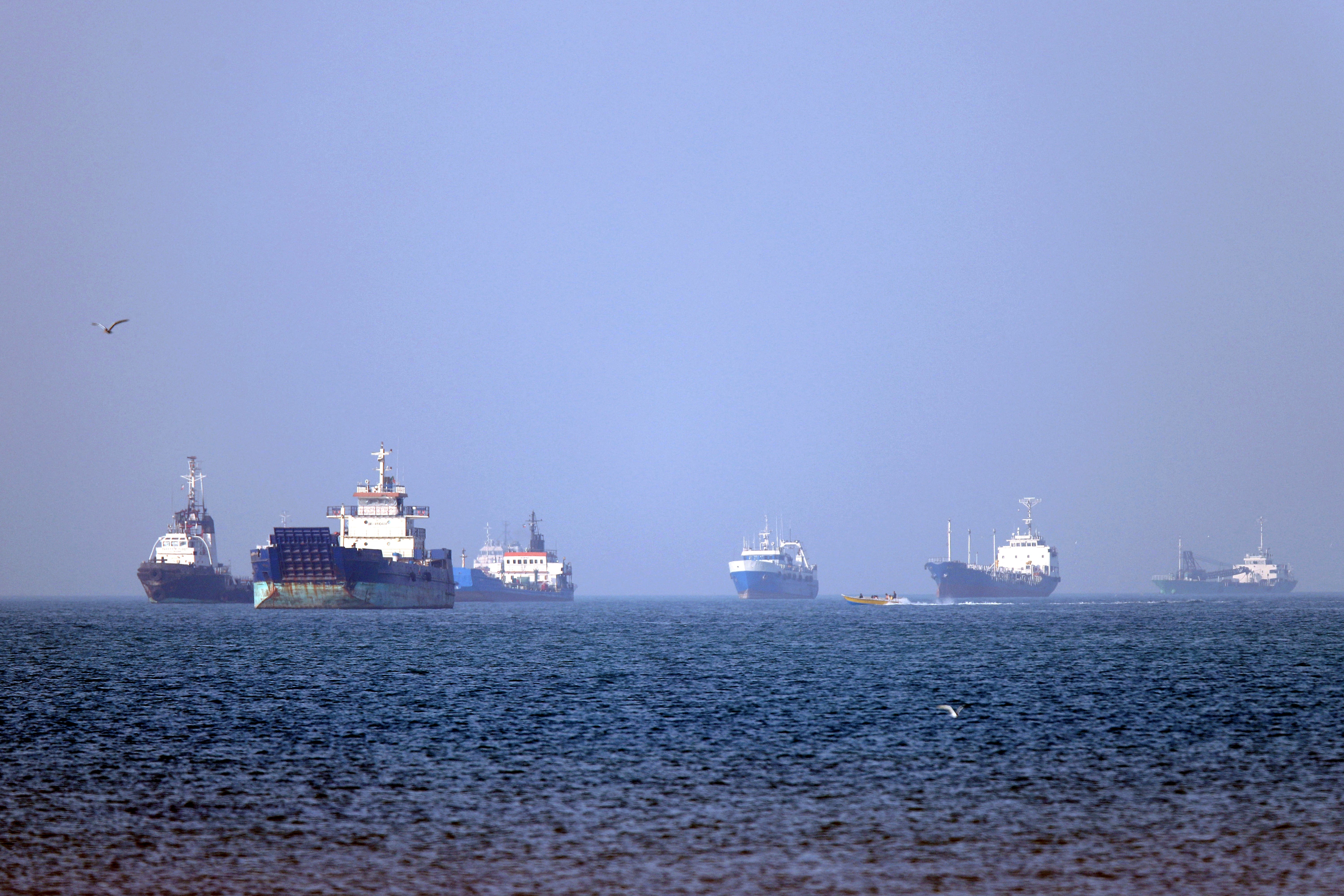 Vessels are pictured anchored in the Strait of Hormuz off Bandar Abbas in southern Iran, on Monday (AFP/Getty)
AFP/Getty
Vessels are pictured anchored in the Strait of Hormuz off Bandar Abbas in southern Iran, on Monday (AFP/Getty)
AFP/Getty
 independent.co.uk
Iran’s parliament speaker Mohammad Bagher Ghalibaf said on 5 May that Tehran is “only getting started” in its battle for control of the Strait of Hormuz, as the United States tries to restart traffic through the chokepoint with naval escorts. According to The Independent, Donald Trump’s administration has launched “Project Freedom” to guide merchant ships through the strait after weeks of disruption, with both sides trading claims about attacks and successful transits.
The practical dispute is no longer just about missiles and patrol boats; it is about who gets to decide what “normal shipping” means when a ceasefire exists on paper but enforcement is done at sea, ship by ship. Washington says it is escorting “innocent bystander” countries’ vessels and has reported destroying or sinking multiple Iranian small boats that it says were targeting civilian traffic; Iran has denied key elements of those claims, including that any escorted crossings occurred in recent hours. The same gap appears around incidents: several merchant ships reported explosions or fires in the Gulf on 4 May, and a UAE oil port was set ablaze in what US-linked reporting attributes to Iranian missiles, while Tehran has not offered a clear public accounting.
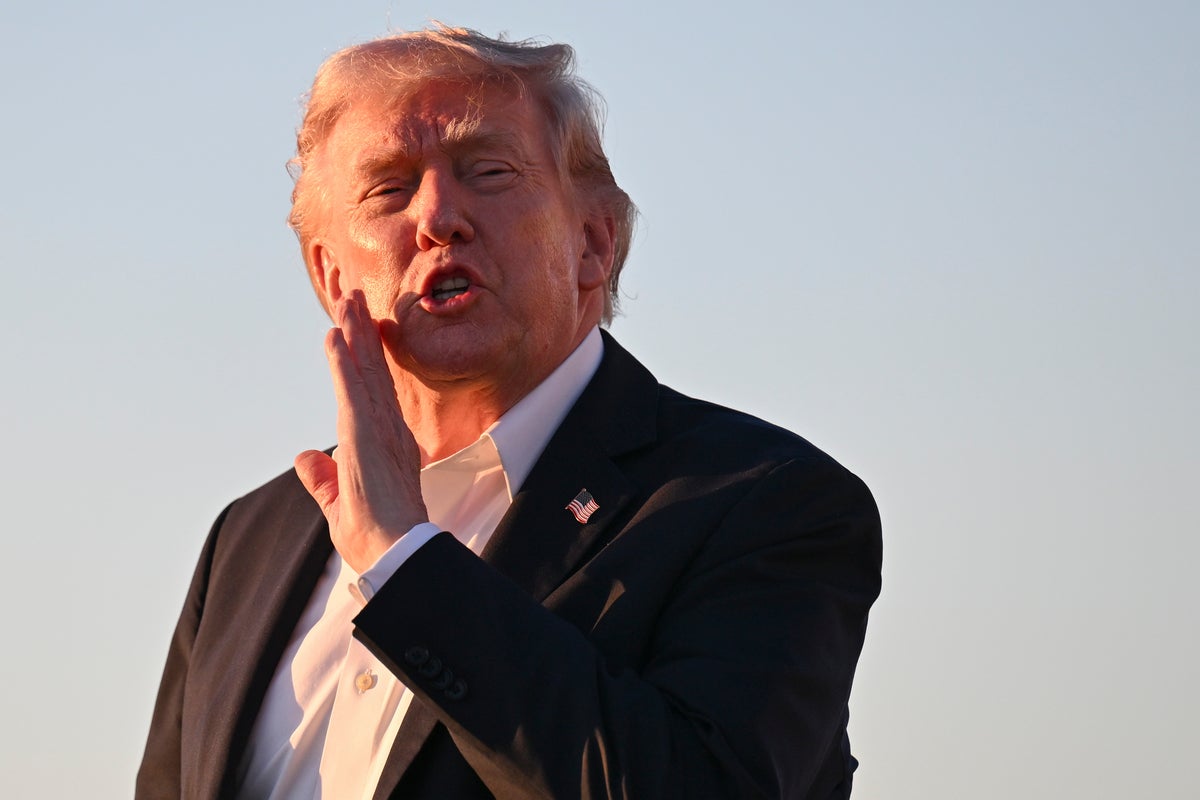
South Korea’s reaction shows how quickly a regional war becomes an accounting problem for import-dependent states. After an explosion and fire aboard the HMM Namu while anchored off the UAE, Seoul said it was investigating the cause and confirmed the crew was safe, but its presidential office began reviewing whether to join the US escort effort, The Independent reports. Trump publicly urged South Korea to participate, framing the mission as protection for third countries rather than an extension of the US-Israel war with Iran.
For Iran, the leverage lies in the strait’s role as an energy artery: roughly a fifth of global oil and gas normally transits Hormuz. For the US, the leverage is the ability to turn passage into a permissioned system—through escorts, inspections, and the credible threat of force—without formally declaring a blockade on everyone. The second-order effects show up first in insurance and scheduling: when shipowners cannot price the risk, they wait; when they wait, refiners and traders pay for inventory buffers; and when buffers thin, governments start calling naval deployments “stability”.
On Monday, the US military said two merchant ships made it through the strait with guided-missile destroyer support. Iran said no such crossings had taken place.
The traffic lane is a few kilometres wide in places, and the argument over who escorted what is now part of the fighting.