
Cape Verde holds MV Hondius offshore after suspected hantavirus deaths
WHO logs seven cases and passengers confined to cabins, cruise itinerary meets hard border control
Images
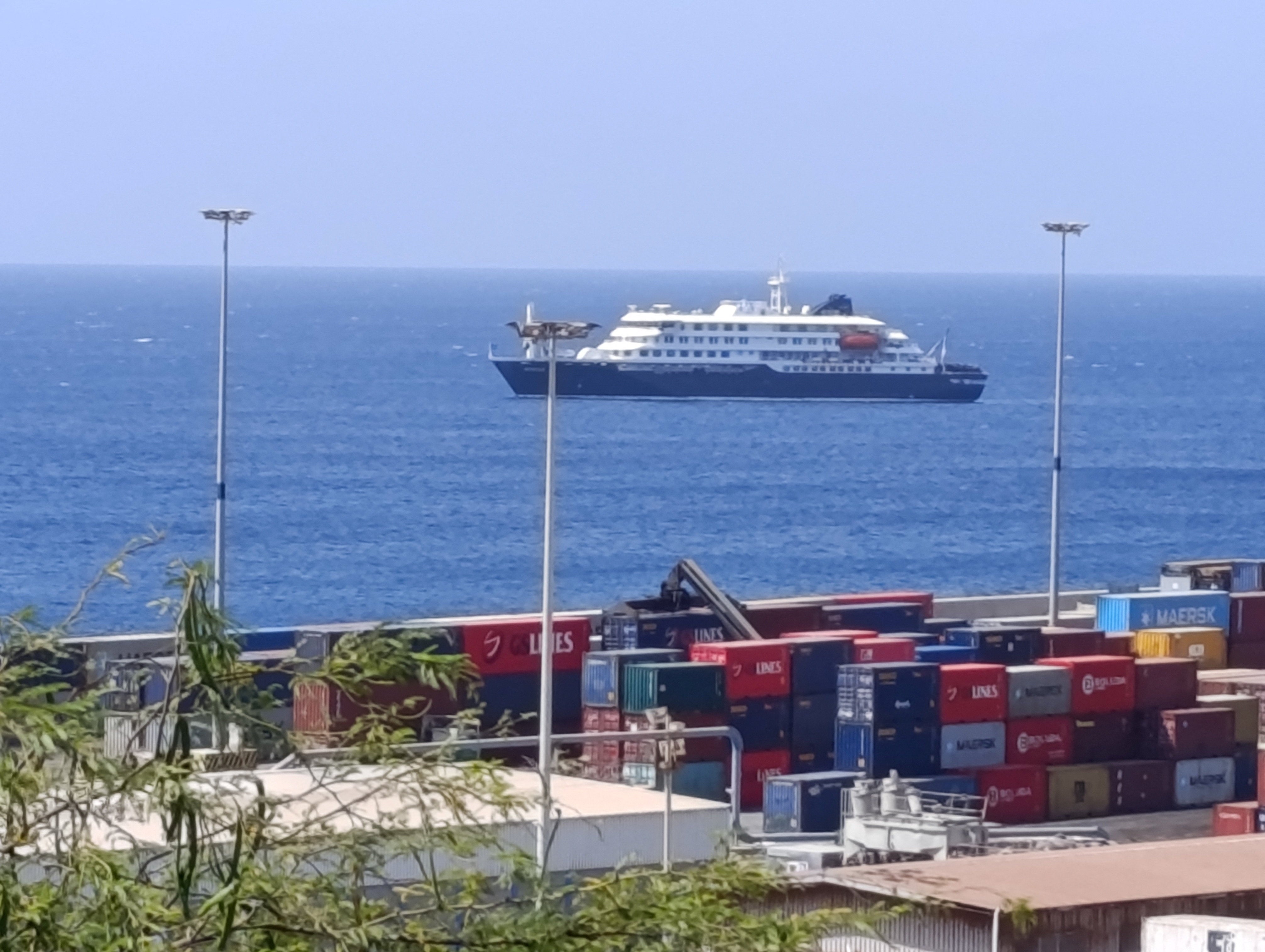 Cruise ship MV Hondius docks off Cape Verde port, as passengers were not allowed off the ship, while health authorities investigated suspected cases of hantavirus aboard the vessel, in Praia Port, Cape Verde, May 4, 2026. (Reuters)
Reuters
Cruise ship MV Hondius docks off Cape Verde port, as passengers were not allowed off the ship, while health authorities investigated suspected cases of hantavirus aboard the vessel, in Praia Port, Cape Verde, May 4, 2026. (Reuters)
Reuters
.png) Map shows journey of the polar expedition ship (The Independent)
The Independent
Map shows journey of the polar expedition ship (The Independent)
The Independent
A Dutch-flagged expedition cruise ship anchored off Cape Verde has been placed under cabin confinement as health officials investigate a suspected hantavirus outbreak that has left at least three people dead. According to The Independent, the MV Hondius reported deaths of a Dutch couple and a German national, while the World Health Organization has logged seven cases on board—two confirmed and five suspected.
The incident shows how quickly a niche form of tourism can turn into a jurisdictional problem. The Hondius sailed on 1 April from Argentina toward Cape Verde on a remote itinerary designed to keep passengers far from ports and hospitals; once severe respiratory symptoms appeared, the ship’s isolation became a constraint rather than a selling point. Cape Verde barred passengers from disembarking while a small medical team—two doctors, a nurse and a laboratory specialist—was ferried out to the vessel, a reminder that “international” cruise travel still depends on the capacity of the next coastal authority to improvise.
Hantavirus is typically associated with exposure to infected rodents’ urine or feces, and WHO says human-to-human transmission is rare, but the practical issue for operators is the incubation window and the absence of a specific cure. Oceanwide Expeditions has reportedly isolated symptomatic crew, imposed hygiene protocols and medical monitoring, and begun arranging repatriation for two crew members—one British and one Dutch—showing acute respiratory symptoms. A British passenger has been medically evacuated to intensive care in South Africa, described as critical but stable, while a British crew member is said to need urgent care.
Ports, meanwhile, face asymmetric incentives. Letting a ship dock and disperse passengers can export risk and political blame, while refusing entry strands hundreds of people in a confined environment where respiratory illness spreads most easily. The operator has explored screening and disembarkation options in Spain’s Canary Islands, including Las Palmas and Tenerife, but Spanish authorities have not received a request to accept the ship, The Independent reports. WHO’s Europe director Hans Kluge has said the wider public risk remains low and that there is no need for panic or travel restrictions—language that reassures markets and travellers, but does not solve the immediate problem of where sick people go when a ship is effectively a floating quarantine ward.
The MV Hondius remains off Cape Verde with passengers told to stay inside their cabins while test results and docking decisions catch up with the timetable of a virus.