
China fireworks factory blast kills 21 in Liuyang
Rescue robots and 3km evacuation follow as warehouses threaten secondary explosions, world’s biggest fireworks hub again tests safety enforcement
Images
 The explosion happened at the Changsha Liuyang Huasheng Fireworks plant in Hunan province
bbc.com
The explosion happened at the Changsha Liuyang Huasheng Fireworks plant in Hunan province
bbc.com
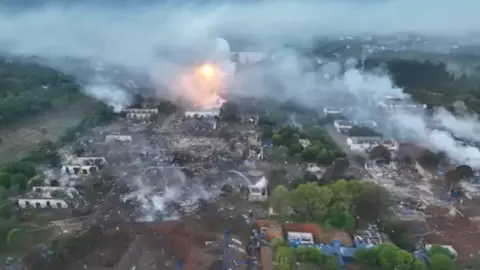 The explosion happened at the Changsha Liuyang Huasheng Fireworks plant in Hunan province
bbc.com
The explosion happened at the Changsha Liuyang Huasheng Fireworks plant in Hunan province
bbc.com
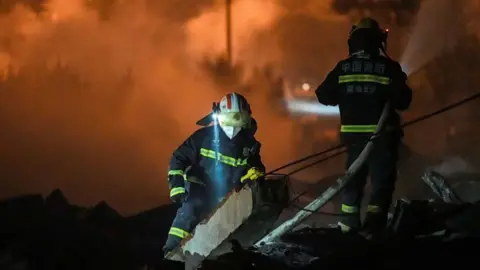 Nearly 500 emergency workers were deployed to the scene after the blast
bbc.com
Nearly 500 emergency workers were deployed to the scene after the blast
bbc.com
Twenty-one people were killed and 61 injured when the Huasheng Fireworks plant in Liuyang, China, exploded on Monday afternoon, according to Chinese state media cited by the BBC. The blast, reported at about 16:40 local time in Hunan province, shattered windows in nearby homes and forced rescuers to evacuate everyone within a three-kilometre radius.
Liuyang is not just another county-level industrial town: it is widely described as the world’s largest producer of fireworks, a dense cluster of workshops, warehouses and logistics firms that supply global celebrations. That concentration creates a familiar pattern after major accidents—large-scale rescue mobilisation, official pledges of accountability, and then a return to production pressure once the headlines fade. This time, nearly 500 personnel were deployed, and robots were used to search for people trapped inside the damaged building, the BBC reports.
The rescue itself was shaped by the product being made. Two gunpowder warehouses inside the factory area were described as a high risk during operations, prompting teams to humidify the area to reduce the chance of secondary explosions. That detail points to the practical limits of emergency response when sites store large volumes of energetic material: firefighters can be on scene, but the environment dictates what they can safely do and how fast.
Authorities said police were investigating the cause and that “control measures” had been taken against the person in charge of the company—a standard formulation in Chinese accident reporting that often signals detention or restrictions while investigators assemble a narrative of responsibility. President Xi Jinping called for “all-out efforts” to search for missing people and treat the injured, and for an investigation to hold those responsible to account.
Deadly fireworks accidents are not rare in China. The BBC notes that in February, 12 people were killed in an explosion at a fireworks store in Hubei province. The repetition matters because it suggests the problem is not a single bad actor but a production ecosystem where small margins, seasonal demand spikes and subcontracting can reward corner-cutting—especially when enforcement is local and the economic benefits are local too.
On Monday, residents a kilometre away reported stones blasted onto roads, twisted metal doors and deformed window frames. By the time investigators finish their work, Liuyang’s factories will still be sitting on the same supply chain that turns gunpowder into export revenue.